


Large splittings of the 4f shell of Ce3+ in garnets
Literature Information
Publication Date
2013-11-25
DOI
10.1039/C3CP53549E
Impact Factor
3.676
Authors
View Original
Abstract
Ab initio embedded cluster calculations on Ce3+-doped Y3Al5O12, Lu3Al5O12, Gd3Al5O12, Y3Ga5O12, Lu3Ga5O12, and Gd3Ga5O12, which do not make use of any adjustable parameter, support recent assignments of the seventh 4f level of Ce3+ in garnets [Przybylińska et al., Appl. Phys. Lett., 2013, 102, 241112] and that the splitting of the 4f shell of Ce3+ in these materials is slightly smaller than 4000 cm−1 and much larger than the 2000–2500 cm−1 commonly assumed in analyses of 5d → 4f emission bands. Why this wrong assumption has been working well so far is explained by the fact that the intensity of the emission to the seventh level of the 4f1 configuration is found to be only one hundredth of the integrated intensity of the emissions to the other six levels, which group themselves into two sets of three individual levels separated by 2000–2500 cm−1. The effective field splitting and the spin–orbit coupling splitting are found to be of the same size. From a strong field coupling point of view, the first six levels result from the interactions between 2T2u and 2T1u cubic levels and the higher, isolated seventh level comes directly from the cubic 2A2u. From a weak field coupling point of view, the first three levels result from the splitting of 2F5/2, the second three levels from the splitting of 2F7/2 and the seventh level from a strong, cubic field driven interaction between 2F7/2 and 2F5/2 components [Herrmann et al., J. Appl. Phys., 1966, 37, 1312].
Recommended Journals

Fibre Chemistry

Planta Medica

Journal of Heterocyclic Chemistry

Israel Journal of Chemistry

Nature

European Journal of Wood and Wood Products

Helvetica Chimica Acta

Pure and Applied Chemistry

Proceedings of the National Academy of Sciences of the United States of America

Journal of Physics and Chemistry of Solids
Related Literature
Reactions of 5-mercaptoazoles and pyridine-2-thiones with acetylenic esters. Selectivity of the formation of novel fused thiazin-4-ones and thiazolidin-4-ones
Vasiliy A. Bakulev, Vera S. Berseneva, Natalia P. Belskaia, Yury Yu. Morzherin, Andreiy Zaitsev, Wim Dehaen, Ingrid Luyten, Suzanne Toppet
2002-12-05
Paper
DOI: 10.1039/B207854F
Fluorinated triazole-containing sphingosine analogues. Syntheses and in vitro evaluation as SPHK inhibitors
Margarita Escudero-Casao, Adrià Cardona, Raúl Beltrán-Debón, Yolanda Díaz, M. Isabel Matheu, Sergio Castillón
2018-09-24
Paper
DOI: 10.1039/C8OB01867G
Metal-free synthesis of fulleropyrrolidin-2-ols: a novel reaction of [60]fullerene with amines and 2,2-disubstituted acetaldehydes
Gang Huang, Meng Zhang, Hui-Juan Wang, Fa-Bao Li, Fei Yang, Li Liu, Chao-Yang Liu, Abdullah M. Asiri, Khalid A. Alamry
2018-09-27
Paper
DOI: 10.1039/C8OB01903G
Synthesis of CID-cleavable protein crosslinking agents containing quaternary amines for structural mass spectrometry
Susan E. Hagen, Kun Liu, Yafei Jin, Lolita Piersimoni, Hollis D. Showalter
2018-03-07
Communication
DOI: 10.1039/C8OB00329G
Diastereoselective synthesis and profiling of bicyclic imidazolidinone derivatives bearing a difluoromethylated catechol unit as potent phosphodiesterase 4 inhibitors
Ivan S. Golovanov, Vladimir A. Tartakovsky, Alexey Yu. Sukhorukov, Sema L. Ioffe
2018-07-10
Paper
DOI: 10.1039/C8OB01039K
Vinyl sulfonyl chemistry-driven unidirectional transport of a macrocycle through a [2]rotaxane
Arthur H. G. David, Pablo García–Cerezo, Araceli G. Campaña, Francisco Santoyo–González, Victor Blanco
2021-11-26
Research Article
DOI: 10.1039/D1QO01491A
One-pot synthesis of natural-product inspired spiroindolines with anti-cancer activities
Shi-Qiang Li, Liu-Jun He, Ming Zhang, Dian-Yong Tang, Hong-yu Li, Zhong-Zhu Chen, Zhi-Gang Xu
2021-12-15
Research Article
DOI: 10.1039/D1QO01694F
l-Dopa and dopamine conjugated naphthalenediimides modulate amyloid β toxicity
Madhu Ramesh, Pandeeswar Makam, Chandrashekhar Voshavar, Harshavardhan Khare, Kolla Rajasekhar, Suryanarayanarao Ramakumar, Thimmaiah Govindaraju
2018-09-28
Paper
DOI: 10.1039/C8OB01691G
You might also like
Compound Q&A
What is the market or research trend for N-(4-Methoxybenzyl)-2-pyridinamine (CAS: 52818-63-0)?
N-(4-Methoxybenzyl)-2-pyridinamine (CAS: 52818-63-0) is increasingly being used ...
52818-63-0N-(4-Methoxybenzyl)-...
Compound Q&A
What precautions should be taken when handling Ethyl 4-(2-chlorophenyl)-1,3-thiazole-2-carboxylate (CAS: 1050507-06-6)?
When handling Ethyl 4-(2-chlorophenyl)-1,3-thiazole-2-carboxylate, appropriate p...
1050507-06-6Ethyl 4-(2-chlorophe...
Compound Q&A
What regulatory guidelines apply to diethyldiselane (CAS: 628-39-7)?
Diethyldiselane (CAS: 628-39-7) is classified under the Globally Harmonized Syst...
628-39-7Diethyldiselane
Compound Q&A
What is the market or research trend for oxocopper (CAS: 12053-18-8)?
The market for oxocopper (CAS: 12053-18-8) is primarily driven by its use in cat...
12053-18-8oxocopper; oxo-(oxoc...
Compound Q&A
What is the market or research trend for 5-{[(2-Methyl-2-propanyl)oxy]carbonyl}-5-azaspiro[2.4]heptane-7-carboxylic acid?
The market for 5-{[(2-Methyl-2-propanyl)oxy]carbonyl}-5-azaspiro[2.4]heptane-7-c...
1268519-54-55-{[(2-Methyl-2-prop...
Compound Q&A
What is 2-(1-Pyrrolidinyl)-4-pyridinamine (CAS: 35981-63-6)?
2-(1-Pyrrolidinyl)-4-pyridinamine is a chemical compound with the CAS number 359...
35981-63-62-(1-Pyrrolidinyl)-4...
Compound Q&A
What are the physical and chemical properties of 2-(3-Pyridinyl)-1-azabicyclo[2.2.2]octane (CAS: 91556-75-1)?
2-(3-Pyridinyl)-1-azabicyclo[2.2.2]octane (CAS: 91556-75-1) is a crystalline sol...
91556-75-12-(3-Pyridinyl)-1-az...
Compound Q&A
How is (S)-Alpha-allyl-proline hydrochloride (CAS: 129704-91-2) typically synthesized?
(S)-Alpha-allyl-proline hydrochloride is usually synthesized via a Wittig reacti...
129704-91-2(S)-Alpha-allyl-prol...
Compound Q&A
What is 3-Methyl-1,2-oxazole-5-carboxylic acid (CAS: 4857-42-5)?
3-Methyl-1,2-oxazole-5-carboxylic acid (CAS: 4857-42-5) is an organic compound w...
4857-42-53-Methyl-1,2-oxazole...
Compound Q&A
How is Lys-SMCC-DM1 (CAS: 1281816-04-3) typically synthesized?
Lys-SMCC-DM1 is synthesized via a multi-step process involving the coupling of S...
1281816-04-3Lys-SMCC-DM1
Source Journal
Physical Chemistry Chemical Physics

CiteScore:
5.5
Self-citation Rate:
10.3%
Articles per Year:
3036
Physical Chemistry Chemical Physics (PCCP) is an international journal co-owned by 19 physical chemistry and physics societies from around the world. This journal publishes original, cutting-edge research in physical chemistry, chemical physics and biophysical chemistry. To be suitable for publication in PCCP, articles must include significant innovation and/or insight into physical chemistry; this is the most important criterion that reviewers and Editors will judge against when evaluating submissions. The journal has a broad scope and welcomes contributions spanning experiment, theory, computation and data science. Topical coverage includes spectroscopy, dynamics, kinetics, statistical mechanics, thermodynamics, electrochemistry, catalysis, surface science, quantum mechanics, quantum computing and machine learning. Interdisciplinary research areas such as polymers and soft matter, materials, nanoscience, energy, surfaces/interfaces, and biophysical chemistry are welcomed if they demonstrate significant innovation and/or insight into physical chemistry. Joined experimental/theoretical studies are particularly appreciated when complementary and based on up-to-date approaches.
Recommended Compounds
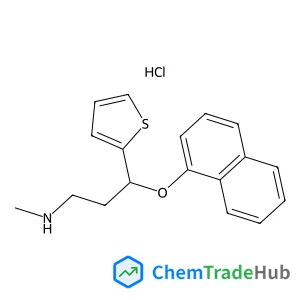
N-Methyl-3-(1-naphthyloxy)-3-(2-thienyl)-1-propanamine hydrochloride (1:1)
CAS Number:
1188266-11-6
Molecular Formula:
C18H20ClNOS
![1-oxaspiro[4.4]nonan-6-one structure](https://static.chemtradehub.com/structs/134/134179-01-4-e051.webp "1-oxaspiro[4.4]nonan-6-one structure")
Recommended Suppliers





Disclaimer
This page provides academic journal information for reference and research purposes only. We are not affiliated with any journal publishers and do not handle publication submissions. For publication-related inquiries, please contact the respective journal publishers directly.
If you notice any inaccuracies in the information displayed, please contact us at support@chemtradehub.com. We will promptly review and address your concerns.