












Incoherent dynamic light scattering by dilute dispersions of spherical particles: wavelength-dependent dynamics
Literature Information
Publication Date
2013-10-02
DOI
10.1039/C3CP53220H
Impact Factor
3.676
Authors
View Original
Abstract
Dynamic light scattering (DLS) was performed on dilute suspensions of colloidal particles, where the scattering intensity was minimised by ellipsometric optics as in ellipsometric light scattering. Measurements at minimum intensity settings are dominated by the incoherent scattering properties, i.e. the deviations from the average scattering properties. The observed relaxation dynamics does not vary with the scattering angle, but depends on the wavelength λ of the employed light. Therefore, the process has a λ-dependence beyond the dependence included in the scattering vector. Such incoherent ellipsometric DLS could be applied to determine the residence time of particles in volumes with an extension comparable to λ, and to obtain detailed information on the dynamics of complex systems which is usually hidden by the dominating diffusive process.
Related Literature
Nuclear localization signal-tagged systems: relevant nuclear import principles in the context of current therapeutic design
Ritabrita Goswami, Aarohi Gupta, Olga Bednova, Gaël Coulombe, Dipika Patel, Vincent M. Rotello
2023-11-30
Review Article
DOI: 10.1039/D1CS00269D
Boryl-substituted low-valent heavy group 14 compounds
Chenxi Duan, Chunming Cui
2023-12-12
Review Article
DOI: 10.1039/D3CS00791J
Visible light-mediated halogenation of organic compounds
Alexey A. Festa, Olga A. Storozhenko, Leonid G. Voskressensky
2023-11-17
Review Article
DOI: 10.1039/D3CS00366C
The semisynthesis of nucleolar human selenoprotein H
Rebecca Notis Dardashti, Shay Laps, Jacob S. Gichtin
2023-10-24
Edge Article
DOI: 10.1039/D3SC03059H
Sequence-independent, site-specific incorporation of chemical modifications to generate light-activated plasmids
Khoa Chung
2023-10-13
Edge Article
DOI: 10.1039/D3SC02761A
Correction: Fast and scalable solvent-free access to Lappert's heavier tetrylenes E{N(SiMe3)2}2 (E = Ge, Sn, Pb) and ECl{N(SiMe3)2} (E = Ge, Sn)
Javier A. Cabeza, Javier F. Reynes, Pablo García-Álvarez, Rubén García-Soriano
2023-11-03
Correction
DOI: 10.1039/D3SC90211K
Photocatalysis with atomically thin sheets
Yingying Fan, Jinguang Hu, Hyeon Suk Shin, Damien Voiry, Qingye Lu, Jimmy C. Yu
2023-10-25
Tutorial Review
DOI: 10.1039/D2CS00205A
Ligand-enforced geometric constraints and associated reactivity in p-block compounds
Tyler J. Hannah, Saurabh S. Chitnis
2023-12-15
Review Article
DOI: 10.1039/D3CS00765K
The synthesis and application of crystalline–amorphous hybrid materials
Hao Lan, Jiawei Wang, Liwei Cheng, Dandan Yu, Hua Wang, Lin Guo
2023-12-20
Review Article
DOI: 10.1039/D3CS00860F
Advances in glycoside and oligosaccharide synthesis
Conor J. Crawford
2023-10-13
Review Article
DOI: 10.1039/D3CS00321C
You might also like
Compound Q&A
How should waste containing 6-Chloro-5-(2'-hydroxy-3'-methoxy-4-biphenylyl)-3-(3-methoxyphenyl)-1H-pyrrolo[3,2-d]pyrimidine-2,4(3H,5H)-dione (CAS: 1346607-05-3) be handled?
Waste containing 6-Chloro-5-(2'-hydroxy-3'-methoxy-4-biphenylyl)-3-(3-methoxyphe...
1346607-05-36-Chloro-5-(2'-hydro...
Compound Q&A
What are the main uses of (3alpha,5alpha)-3-Hydroxypregnane-11,20-dione (CAS: 23930-19-0)?
(3alpha,5alpha)-3-Hydroxypregnane-11,20-dione is primarily used in the pharmaceu...
23930-19-0(3alpha,5alpha)-3-Hy...
Compound Q&A
What is the market or research trend for 4-Amino-6-chloro-2-pyridinecarboxylic acid (CAS: 546141-56-4)?
The market for 4-Amino-6-chloro-2-pyridinecarboxylic acid (CAS: 546141-56-4) is ...
546141-56-44-Amino-6-chloro-2-p...
Compound Q&A
Are there alternatives to (2-Benzoylethyl)trimethylammonium chloride (CAS: 24472-88-6) in synthesis?
Alternatives to (2-Benzoylethyl)trimethylammonium chloride (CAS: 24472-88-6) in ...
24472-88-6(2-Benzoylethyl)trim...
Compound Q&A
Is N-[4-Nitro-3-(trifluoromethyl)phenyl]acetamide (CAS: 393-12-4) safe?
N-[4-Nitro-3-(trifluoromethyl)phenyl]acetamide (CAS: 393-12-4) is generally safe...
393-12-4N-[4-Nitro-3-(triflu...
Compound Q&A
Are there alternatives to [(4R,5R,6S)-5-hydroxy-10-imino-3,7-dioxa-1,9-diazatricyclo[6.4.0.02,6]dodeca-8,11-dien-4-yl]methyl dihydrogen phosphate (CAS: 39679-56-6) in synthesis?
Alternative reagents such as other phosphates or similar functional groups can b...
39679-56-6[(4R,5R,6S)-5-hydrox...
Compound Q&A
Are there alternatives to N,N'-Bis(3-aminopropyl)-1,3-propanediamine (CAS: 4605-14-5) in synthesis?
There are alternatives to N,N'-Bis(3-aminopropyl)-1,3-propanediamine (CAS: 4605-...
4605-14-5N,N'-Bis(3-aminoprop...
Compound Q&A
What precautions should be taken when handling Aluminium trihexadecanoate (CAS: 555-35-1)?
When handling Aluminium trihexadecanoate, it is important to use appropriate per...
555-35-1Aluminium trihexadec...
Compound Q&A
What is (1,1-Dioxido-3-oxo-1,2-benzothiazol-2(3H)-yl)acetic acid (CAS: 52188-11-1)?
(1,1-Dioxido-3-oxo-1,2-benzothiazol-2(3H)-yl)acetic acid is a chemical compound ...
52188-11-1(1,1-Dioxido-3-oxo-1...
Compound Q&A
Are there alternatives to 5,5-dimethyloxolan-2-one (CAS: 3123-97-5) in synthesis?
Several alternatives to 5,5-dimethyloxolan-2-one (CAS: 3123-97-5) can be used in...
3123-97-55,5-dimethyloxolan-2...
Source Journal
Physical Chemistry Chemical Physics

CiteScore:
5.5
Self-citation Rate:
10.3%
Articles per Year:
3036
Physical Chemistry Chemical Physics (PCCP) is an international journal co-owned by 19 physical chemistry and physics societies from around the world. This journal publishes original, cutting-edge research in physical chemistry, chemical physics and biophysical chemistry. To be suitable for publication in PCCP, articles must include significant innovation and/or insight into physical chemistry; this is the most important criterion that reviewers and Editors will judge against when evaluating submissions. The journal has a broad scope and welcomes contributions spanning experiment, theory, computation and data science. Topical coverage includes spectroscopy, dynamics, kinetics, statistical mechanics, thermodynamics, electrochemistry, catalysis, surface science, quantum mechanics, quantum computing and machine learning. Interdisciplinary research areas such as polymers and soft matter, materials, nanoscience, energy, surfaces/interfaces, and biophysical chemistry are welcomed if they demonstrate significant innovation and/or insight into physical chemistry. Joined experimental/theoretical studies are particularly appreciated when complementary and based on up-to-date approaches.
Recommended Compounds
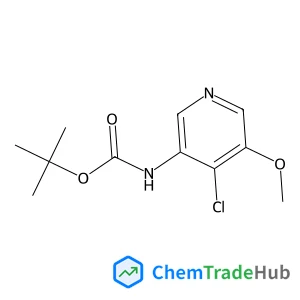
tert-Butyl 4-chloro-5-methoxypyridin-3-ylcarbamate
CAS Number:
1045858-17-0
Molecular Formula:
C11H15ClN2O3
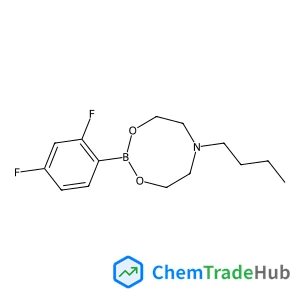
6-Butyl-2-(2,4-difluorophenyl)-1,3,6,2-dioxazaborocane
CAS Number:
1190988-98-7
Molecular Formula:
C14H20BF2NO2
![(3-{[4-(Aminomethyl)-6-(trifluoromethyl)-2-pyridinyl]oxy}phenyl)[(3R,4R)-3-fluoro-4-hydroxy-1-pyrrolidinyl]methanone structure](https://static.chemtradehub.com/structs/200/2007885-39-2-affc.webp "(3-{[4-(Aminomethyl)-6-(trifluoromethyl)-2-pyridinyl]oxy}phenyl)[(3R,4R)-3-fluoro-4-hydroxy-1-pyrrolidinyl]methanone structure")
(3-{[4-(Aminomethyl)-6-(trifluoromethyl)-2-pyridinyl]oxy}phenyl)[(3R,4R)-3-fluoro-4-hydroxy-1-pyrrolidinyl]methanone
CAS Number:
2007885-39-2
Molecular Formula:
C18H17F4N3O3
Recommended Suppliers




Disclaimer
This page provides academic journal information for reference and research purposes only. We are not affiliated with any journal publishers and do not handle publication submissions. For publication-related inquiries, please contact the respective journal publishers directly.
If you notice any inaccuracies in the information displayed, please contact us at support@chemtradehub.com. We will promptly review and address your concerns.