


Faster nucleation at lower pH: amorphous phase mediated nucleation kinetics
Literature Information
Publication Date
2013-06-04
DOI
10.1039/C3CP51466H
Impact Factor
3.676
Authors
Haihua Pan, Yin-Jia Zhang, Ruikang Tang
View Original
Abstract
Faster nucleation of hydroxyapatite (HAP) at lower pH (with lower supersaturation) contradicts classical understanding. We find that the residue calcium ion in the mother liquor is the key to trigger ACP phase transformation, which gives an understanding of nonclassical nucleation kinetics of ACP-mediated crystallization and sheds light on biomineralization.
Recommended Journals

Angewandte Chemie International Edition

CrystEngComm

Photochemical & Photobiological Sciences

Molecules

European Journal of Organic Chemistry

Current Pharmaceutical Biotechnology

Advanced Engineering Materials

Journal of Medical Biochemistry

Nature Reviews Drug Discovery

Environmental Toxicology and Pharmacology
Related Literature
Physicochemical properties and plastic crystal structures of phosphonium fluorohydrogenate salts
Takeshi Enomoto, Shunsuke Kanematsu, Katsuhiko Tsunashima, Kazuhiko Matsumoto, Rika Hagiwara
2011-06-10
Paper
DOI: 10.1039/C1CP20285E
Durable electrocatalytic-activity of Pt–Au/C cathode in PEMFCs
S. Vinod Selvaganesh, G. Selvarani, P. Sridhar, S. Pitchumani, A. K. Shukla
2011-06-14
Paper
DOI: 10.1039/C1CP20243J
Solute–solvent friction kernels and solution properties of methyl oxazoline–phenyl oxazoline (MeOx–PhOx) copolymers in binary ethanol–water mixtures
Ashok K. Das, Po-Da Hong
2011-05-27
Paper
DOI: 10.1039/C0CP02982C
Phase behavior of PCBM blends with different conjugated polymers
Sabine Bertho, Joke Vandenbergh, Guy Van Assche, Xiaoqing Yin, Jingdan Shi, Thomas Cleij, Laurence Lutsen, Bruno Van Mele
2011-06-02
Paper
DOI: 10.1039/C0CP02814B
The growth of single crystal silver wires at the nitrobenzene|water interface
Ulrich Hasse, Gottfried J. Palm, Winfried Hinrichs, Fritz Scholz
2011-06-01
Paper
DOI: 10.1039/C0CP01469A
Hydrogen bond formation of formamide and N-methylformamide in aqueous solution studied by quantum mechanical charge field-molecular dynamics (QMCF-MD)
Alexander K. H. Weiss, Thomas S. Hofer, Bernhard R. Randolf, Anirban Bhattacharjee, Bernd M. Rode
2011-06-06
Paper
DOI: 10.1039/C1CP20669A
In situ infrared monitoring of the solid/liquid catalyst interface during the three-phase hydrogenation of nitrobenzene over nanosized Au on TiO2
Gilles Richner, Yorck-Michael Neuhold, Martin Makosch, Konrad Hungerbühler
2011-06-09
Paper
DOI: 10.1039/C1CP20238C
Enhanced role of Al or Ga-doped graphene on the adsorption and dissociation of N2O under electric field
Yong-an Lv, Gui-lin Zhuang, Jian-guo Wang, Ya-bo Jia, Qin Xie
2011-06-09
Paper
DOI: 10.1039/C1CP20694J
Electrochemical stability of self-assembled monolayers on nanoporous Au
Masataka Hakamada, Masaki Takahashi, Toshiyuki Furukawa, Kazuki Tajima, Kazuki Yoshimura, Yasumasa Chino, Mamoru Mabuchi
2011-05-31
Paper
DOI: 10.1039/C0CP02553D
You might also like
Compound Q&A
What are the main uses of 1H-Indazole-6-carbonitrile (CAS: 141290-59-7)?
1H-Indazole-6-carbonitrile finds applications in pharmaceuticals, where it serve...
141290-59-71H-Indazole-6-carbon...
Compound Q&A
How should waste containing Dioctyl (2E)-2-butenedioate (CAS: 2997-85-5) be handled?
Waste containing Dioctyl (2E)-2-butenedioate (CAS: 2997-85-5) should be collecte...
2997-85-5Dioctyl (2E)-2-buten...
Compound Q&A
What industries use Sodium [(1,2-benzoxazol-3-ylmethyl)sulfonyl]azanide (CAS: 68291-98-5)?
Sodium [(1,2-benzoxazol-3-ylmethyl)sulfonyl]azanide is primarily used in pharmac...
68291-98-5Sodium [(1,2-benzoxa...
Compound Q&A
Are there alternatives to Dimethyl 4-(4,4,5,5-tetramethyl-1,3,2-dioxaborolan-2-yl)-2,6-pyridinedicarboxylate (CAS: 741709-66-0) in synthesis?
Dimethyl 4-(4,4,5,5-tetramethyl-1,3,2-dioxaborolan-2-yl)-2,6-pyridinedicarboxyla...
741709-66-0Dimethyl 4-(4,4,5,5-...
Compound Q&A
How should waste containing 2-Fluoro-6-hydrazinopyridine (CAS: 80714-39-2) be handled?
Waste containing 2-Fluoro-6-hydrazinopyridine (CAS: 80714-39-2) should be manage...
80714-39-22-Fluoro-6-hydrazino...
Compound Q&A
What is 6-Formyl-2-pyridinecarboxylic acid (CAS: 499214-11-8)?
6-Formyl-2-pyridinecarboxylic acid is an organic compound with the molecular for...
499214-11-86-Formyl-2-pyridinec...
Compound Q&A
What is the market or research trend for 3-(3,4-dimethoxyphenyl)-2,5-dimethyl-N-(2-morpholin-4-ylethyl)pyrazolo[1,5-a]pyrimidin-7-amine (CAS: 900874-91-1)?
Research trends for this compound indicate a focus on its potential applications...
900874-91-13-(3,4-dimethoxyphen...
Compound Q&A
How is 9H-Tribenzo[b,d,f]azepine (CAS: 29875-73-8) typically synthesized?
9H-Tribenzo[b,d,f]azepine is typically synthesized via a multi-step process invo...
29875-73-89H-Tribenzo[b,d,f]az...
Compound Q&A
How is 1-Cyclopropyl-7-ethoxy-6-fluoro-8-methoxy-4-oxo-1,4-dihydro-3-quinolinecarboxylic acid (CAS: 1797982-51-4) typically synthesized?
1-Cyclopropyl-7-ethoxy-6-fluoro-8-methoxy-4-oxo-1,4-dihydro-3-quinolinecarboxyli...
1797982-51-41-Cyclopropyl-7-etho...
Compound Q&A
How should waste containing Methyl 3-oxo-1,2,3,4-tetrahydro-6-quinoxalinecarboxylate (CAS: 671820-52-3) be handled?
Waste containing Methyl 3-oxo-1,2,3,4-tetrahydro-6-quinoxalinecarboxylate (CAS: ...
671820-52-3Methyl 3-oxo-1,2,3,4...
Source Journal
Physical Chemistry Chemical Physics

CiteScore:
5.5
Self-citation Rate:
10.3%
Articles per Year:
3036
Physical Chemistry Chemical Physics (PCCP) is an international journal co-owned by 19 physical chemistry and physics societies from around the world. This journal publishes original, cutting-edge research in physical chemistry, chemical physics and biophysical chemistry. To be suitable for publication in PCCP, articles must include significant innovation and/or insight into physical chemistry; this is the most important criterion that reviewers and Editors will judge against when evaluating submissions. The journal has a broad scope and welcomes contributions spanning experiment, theory, computation and data science. Topical coverage includes spectroscopy, dynamics, kinetics, statistical mechanics, thermodynamics, electrochemistry, catalysis, surface science, quantum mechanics, quantum computing and machine learning. Interdisciplinary research areas such as polymers and soft matter, materials, nanoscience, energy, surfaces/interfaces, and biophysical chemistry are welcomed if they demonstrate significant innovation and/or insight into physical chemistry. Joined experimental/theoretical studies are particularly appreciated when complementary and based on up-to-date approaches.
Recommended Compounds
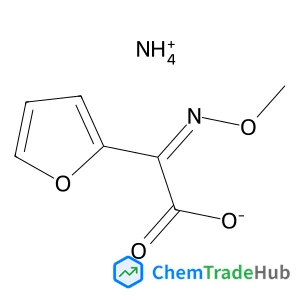
Ammonium (Z)-2-(furan-2-yl)-2-(methoxyimino)acetate
CAS Number:
97148-39-5
Molecular Formula:
C7H10N2O4
Recommended Suppliers





Disclaimer
This page provides academic journal information for reference and research purposes only. We are not affiliated with any journal publishers and do not handle publication submissions. For publication-related inquiries, please contact the respective journal publishers directly.
If you notice any inaccuracies in the information displayed, please contact us at support@chemtradehub.com. We will promptly review and address your concerns.