












Electrochemical stability of self-assembled monolayers on nanoporous Au
Literature Information
Publication Date
2011-05-31
DOI
10.1039/C0CP02553D
Impact Factor
3.676
Authors
Masataka Hakamada, Masaki Takahashi, Toshiyuki Furukawa, Kazuki Tajima, Kazuki Yoshimura, Yasumasa Chino, Mamoru Mabuchi
View Original
Abstract
Desorption of thiolate self-assembled monolayers (SAMs) seriously limits the fabrication of thiol-based devices. Here we demonstrate that nanoporous Au produced by dealloying Au–Ag alloys exhibits high electrochemical stability against thiolate desorption. Nanoporous Au has many defective sites, lattice strain and residual Ag on the ligament surface. First-principles calculations indicate that these surface aspects increase the binding energy between a SAM and the surface of nanoporous Au.
Related Literature
A ternary system for delayed curing inverse vulcanisation
Bowen Zhang, Samuel Petcher, Tom Hasell
2019-08-14
Communication
DOI: 10.1039/C9CC04380B
Droplet incubation and splitting in open microfluidic channels
Samuel B. Berry, Jing J. Lee, Jean Berthier, Erwin Berthier
2019-08-28
Paper
DOI: 10.1039/C9AY00758J
Droplet-based microfluidic synthesis of (Au nanorod@Ag)–polyaniline Janus nanoparticles and their application as a surface-enhanced Raman scattering nanosensor for mercury detection
Yue Wang, Mengxue Shang, Yaning Wang, Zhangrun Xu
2019-07-12
Paper
DOI: 10.1039/C9AY01213C
Simultaneous determination of 12 antibacterial drugs in cream disinfection products with EMR-Lipid cleanup using ultra-high-performance liquid chromatography tandem mass spectrometry
Feng Zhu, Xiaosong Wu, Fang Li, Wei Wang, Wenliang Ji, Zongli Huo, Yan Xu
2019-07-02
Paper
DOI: 10.1039/C9AY00937J
A novel Mn–Cu bimetallic complex for enhanced chemodynamic therapy with simultaneous glutathione depletion
Jiangli Fan, Wen Sun, Fahui Li, Kaoxue Li, Xishi Tai, Xiaojun Peng
2019-10-02
Communication
DOI: 10.1039/C9CC06040E
A facile method to fabricate a porous Si/C composite with excellent cycling stability for use as the anode in a lithium ion battery
Xiaosong Zhang, Le Zhou, Yi Zhang, Shunrong Yan, Junjie Huang, Zebo Fang
2019-10-11
Communication
DOI: 10.1039/C9CC06661F
Highly specific enrichment of N-glycoproteome through a nonreductive amination reaction using Fe3O4@SiO2-aniline nanoparticles
Meng Yu, Yali Wang, Yi Di, Changchun Wang
2015-02-13
Communication
DOI: 10.1039/C4CC10285A
Molecular brass: Cu4Zn4, a ligand protected superatom cluster
Kerstin Freitag, Hung Banh, Christian Gemel, Rüdiger W. Seidel, Samia Kahlal, Jean-Yves Saillard, Roland A. Fischer
2014-06-19
Communication
DOI: 10.1039/C4CC03401E
Quantitative analysis of toxic elements in polypropylene (PP) via laser-induced breakdown spectroscopy (LIBS) coupled with random forest regression based on variable importance (VI-RFR)
Ke Liu, Di Tian, Heyi Xu, Hongxia Wang, Guang Yang
2019-08-28
Paper
DOI: 10.1039/C9AY01796H
Comparison of using two different labeling reagents for rapid analysis of triterpenic acids by pre-column derivatization with RP-HPLC-FLD and application to plant samples
Zhi Zeng, Wu Zhou, Na Hu, Linyou Zou, Bo Bai, Honglun Wang
2019-07-30
Paper
DOI: 10.1039/C9AY01357A
You might also like
Compound Q&A
What are the main uses of 1H-Indazole-6-carbonitrile (CAS: 141290-59-7)?
1H-Indazole-6-carbonitrile finds applications in pharmaceuticals, where it serve...
141290-59-71H-Indazole-6-carbon...
Compound Q&A
How should waste containing Dioctyl (2E)-2-butenedioate (CAS: 2997-85-5) be handled?
Waste containing Dioctyl (2E)-2-butenedioate (CAS: 2997-85-5) should be collecte...
2997-85-5Dioctyl (2E)-2-buten...
Compound Q&A
What industries use Sodium [(1,2-benzoxazol-3-ylmethyl)sulfonyl]azanide (CAS: 68291-98-5)?
Sodium [(1,2-benzoxazol-3-ylmethyl)sulfonyl]azanide is primarily used in pharmac...
68291-98-5Sodium [(1,2-benzoxa...
Compound Q&A
Are there alternatives to Dimethyl 4-(4,4,5,5-tetramethyl-1,3,2-dioxaborolan-2-yl)-2,6-pyridinedicarboxylate (CAS: 741709-66-0) in synthesis?
Dimethyl 4-(4,4,5,5-tetramethyl-1,3,2-dioxaborolan-2-yl)-2,6-pyridinedicarboxyla...
741709-66-0Dimethyl 4-(4,4,5,5-...
Compound Q&A
How should waste containing 2-Fluoro-6-hydrazinopyridine (CAS: 80714-39-2) be handled?
Waste containing 2-Fluoro-6-hydrazinopyridine (CAS: 80714-39-2) should be manage...
80714-39-22-Fluoro-6-hydrazino...
Compound Q&A
What is 6-Formyl-2-pyridinecarboxylic acid (CAS: 499214-11-8)?
6-Formyl-2-pyridinecarboxylic acid is an organic compound with the molecular for...
499214-11-86-Formyl-2-pyridinec...
Compound Q&A
What is the market or research trend for 3-(3,4-dimethoxyphenyl)-2,5-dimethyl-N-(2-morpholin-4-ylethyl)pyrazolo[1,5-a]pyrimidin-7-amine (CAS: 900874-91-1)?
Research trends for this compound indicate a focus on its potential applications...
900874-91-13-(3,4-dimethoxyphen...
Compound Q&A
How is 9H-Tribenzo[b,d,f]azepine (CAS: 29875-73-8) typically synthesized?
9H-Tribenzo[b,d,f]azepine is typically synthesized via a multi-step process invo...
29875-73-89H-Tribenzo[b,d,f]az...
Compound Q&A
How is 1-Cyclopropyl-7-ethoxy-6-fluoro-8-methoxy-4-oxo-1,4-dihydro-3-quinolinecarboxylic acid (CAS: 1797982-51-4) typically synthesized?
1-Cyclopropyl-7-ethoxy-6-fluoro-8-methoxy-4-oxo-1,4-dihydro-3-quinolinecarboxyli...
1797982-51-41-Cyclopropyl-7-etho...
Compound Q&A
How should waste containing Methyl 3-oxo-1,2,3,4-tetrahydro-6-quinoxalinecarboxylate (CAS: 671820-52-3) be handled?
Waste containing Methyl 3-oxo-1,2,3,4-tetrahydro-6-quinoxalinecarboxylate (CAS: ...
671820-52-3Methyl 3-oxo-1,2,3,4...
Source Journal
Physical Chemistry Chemical Physics

CiteScore:
5.5
Self-citation Rate:
10.3%
Articles per Year:
3036
Physical Chemistry Chemical Physics (PCCP) is an international journal co-owned by 19 physical chemistry and physics societies from around the world. This journal publishes original, cutting-edge research in physical chemistry, chemical physics and biophysical chemistry. To be suitable for publication in PCCP, articles must include significant innovation and/or insight into physical chemistry; this is the most important criterion that reviewers and Editors will judge against when evaluating submissions. The journal has a broad scope and welcomes contributions spanning experiment, theory, computation and data science. Topical coverage includes spectroscopy, dynamics, kinetics, statistical mechanics, thermodynamics, electrochemistry, catalysis, surface science, quantum mechanics, quantum computing and machine learning. Interdisciplinary research areas such as polymers and soft matter, materials, nanoscience, energy, surfaces/interfaces, and biophysical chemistry are welcomed if they demonstrate significant innovation and/or insight into physical chemistry. Joined experimental/theoretical studies are particularly appreciated when complementary and based on up-to-date approaches.
Recommended Compounds
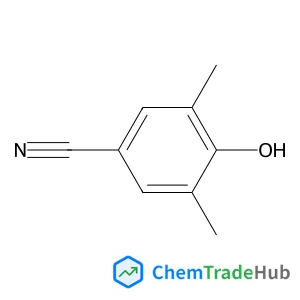
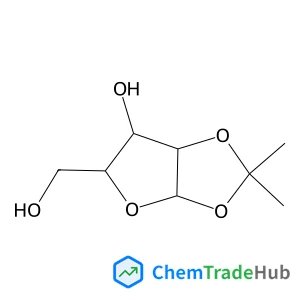
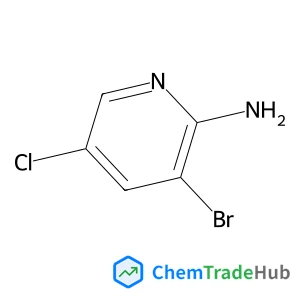

Recommended Suppliers





Disclaimer
This page provides academic journal information for reference and research purposes only. We are not affiliated with any journal publishers and do not handle publication submissions. For publication-related inquiries, please contact the respective journal publishers directly.
If you notice any inaccuracies in the information displayed, please contact us at support@chemtradehub.com. We will promptly review and address your concerns.