












Back cover
Literature Information
Publication Date
DOI
10.1039/C1CP90095A
Impact Factor
3.676
Authors
View Original
Abstract
A graphical abstract is available for this content
Related Literature
Combined transparency and optical nonlinearity enhancement in flexible covalent multimers by operating through-space interactions between dipolar chromophores
Ravindra Pandey, Francesca Terenziani, Puspendu K. Das
2014-03-17
Paper
DOI: 10.1039/C4CP00715H
Highly stable Au atomic contacts covered with benzenedithiol under ambient conditions
Daigo Murai, Tomoka Nakazumi, Shintaro Fujii, Yuki Komoto, Kazuhito Tsukagoshi, Carlo Motta, Manabu Kiguchi
2014-06-16
Paper
DOI: 10.1039/C4CP01950D
Surface conformations of an anti-ricin aptamer and its affinity for ricin determined by atomic force microscopy and surface plasmon resonance
B. Wang, Z. Lou, B. Park, Y. Kwon, H. Zhang, B. Xu
2014-08-11
Paper
DOI: 10.1039/C4CP03190C
Supramolecular gel from folic acid with multiple responsiveness, rapid self-recovery and orthogonal self-assemblies
Pengyao Xing, Xiaoxiao Chu, Mingfang Ma, Shangyang Li, Aiyou Hao
2014-02-11
Paper
DOI: 10.1039/C4CP00367E
Quantum dot-sensitized solar cells based on directly adsorbed zinc copper indium sulfide colloids
Néstor Guijarro, Elena Guillén, Teresa Lana-Villarreal, Roberto Gómez
2014-03-26
Paper
DOI: 10.1039/C4CP00294F
Recent advances in synthesis and applications of clay-based photocatalysts: a review
Jin Liu
2014-02-27
Perspective
DOI: 10.1039/C3CP54146K
Electrochemical studies of decamethylferrocene in supercritical carbon dioxide mixtures
Jack A. Branch, David A. Cook, Philip N. Bartlett
2014-11-12
Paper
DOI: 10.1039/C4CP04545A
Designing patchy particles for optimum interfacial activity
Hossein Rezvantalab
2014-02-11
Paper
DOI: 10.1039/C3CP55512G
TiO2 nanotubes sensitized with CdSe via RF magnetron sputtering for photoelectrochemical applications under visible light irradiation
Jesum A. Fernandes, Pedro Migowski, Zacarias Fabrim, Adriano F. Feil, Guilherme Rosa, Sherdil Khan, Guilherme J. Machado, Paulo F. P. Fichtner, Sérgio R. Teixeira, Marcos J. L. Santos, Jairton Dupont
2014-03-27
Paper
DOI: 10.1039/C4CP00361F
Do encapsulated heat storage materials really retain their original thermal properties?
Preeyaporn Chaiyasat, Sayrung Noppalit, Amorn Chaiyasat
2014-11-05
Paper
DOI: 10.1039/C4CP03458A
You might also like
Compound Q&A
What are the main uses of 1H-Indazole-6-carbonitrile (CAS: 141290-59-7)?
1H-Indazole-6-carbonitrile finds applications in pharmaceuticals, where it serve...
141290-59-71H-Indazole-6-carbon...
Compound Q&A
How should waste containing Dioctyl (2E)-2-butenedioate (CAS: 2997-85-5) be handled?
Waste containing Dioctyl (2E)-2-butenedioate (CAS: 2997-85-5) should be collecte...
2997-85-5Dioctyl (2E)-2-buten...
Compound Q&A
What industries use Sodium [(1,2-benzoxazol-3-ylmethyl)sulfonyl]azanide (CAS: 68291-98-5)?
Sodium [(1,2-benzoxazol-3-ylmethyl)sulfonyl]azanide is primarily used in pharmac...
68291-98-5Sodium [(1,2-benzoxa...
Compound Q&A
Are there alternatives to Dimethyl 4-(4,4,5,5-tetramethyl-1,3,2-dioxaborolan-2-yl)-2,6-pyridinedicarboxylate (CAS: 741709-66-0) in synthesis?
Dimethyl 4-(4,4,5,5-tetramethyl-1,3,2-dioxaborolan-2-yl)-2,6-pyridinedicarboxyla...
741709-66-0Dimethyl 4-(4,4,5,5-...
Compound Q&A
How should waste containing 2-Fluoro-6-hydrazinopyridine (CAS: 80714-39-2) be handled?
Waste containing 2-Fluoro-6-hydrazinopyridine (CAS: 80714-39-2) should be manage...
80714-39-22-Fluoro-6-hydrazino...
Compound Q&A
What is 6-Formyl-2-pyridinecarboxylic acid (CAS: 499214-11-8)?
6-Formyl-2-pyridinecarboxylic acid is an organic compound with the molecular for...
499214-11-86-Formyl-2-pyridinec...
Compound Q&A
What is the market or research trend for 3-(3,4-dimethoxyphenyl)-2,5-dimethyl-N-(2-morpholin-4-ylethyl)pyrazolo[1,5-a]pyrimidin-7-amine (CAS: 900874-91-1)?
Research trends for this compound indicate a focus on its potential applications...
900874-91-13-(3,4-dimethoxyphen...
Compound Q&A
How is 9H-Tribenzo[b,d,f]azepine (CAS: 29875-73-8) typically synthesized?
9H-Tribenzo[b,d,f]azepine is typically synthesized via a multi-step process invo...
29875-73-89H-Tribenzo[b,d,f]az...
Compound Q&A
How is 1-Cyclopropyl-7-ethoxy-6-fluoro-8-methoxy-4-oxo-1,4-dihydro-3-quinolinecarboxylic acid (CAS: 1797982-51-4) typically synthesized?
1-Cyclopropyl-7-ethoxy-6-fluoro-8-methoxy-4-oxo-1,4-dihydro-3-quinolinecarboxyli...
1797982-51-41-Cyclopropyl-7-etho...
Compound Q&A
How should waste containing Methyl 3-oxo-1,2,3,4-tetrahydro-6-quinoxalinecarboxylate (CAS: 671820-52-3) be handled?
Waste containing Methyl 3-oxo-1,2,3,4-tetrahydro-6-quinoxalinecarboxylate (CAS: ...
671820-52-3Methyl 3-oxo-1,2,3,4...
Source Journal
Physical Chemistry Chemical Physics

CiteScore:
5.5
Self-citation Rate:
10.3%
Articles per Year:
3036
Physical Chemistry Chemical Physics (PCCP) is an international journal co-owned by 19 physical chemistry and physics societies from around the world. This journal publishes original, cutting-edge research in physical chemistry, chemical physics and biophysical chemistry. To be suitable for publication in PCCP, articles must include significant innovation and/or insight into physical chemistry; this is the most important criterion that reviewers and Editors will judge against when evaluating submissions. The journal has a broad scope and welcomes contributions spanning experiment, theory, computation and data science. Topical coverage includes spectroscopy, dynamics, kinetics, statistical mechanics, thermodynamics, electrochemistry, catalysis, surface science, quantum mechanics, quantum computing and machine learning. Interdisciplinary research areas such as polymers and soft matter, materials, nanoscience, energy, surfaces/interfaces, and biophysical chemistry are welcomed if they demonstrate significant innovation and/or insight into physical chemistry. Joined experimental/theoretical studies are particularly appreciated when complementary and based on up-to-date approaches.
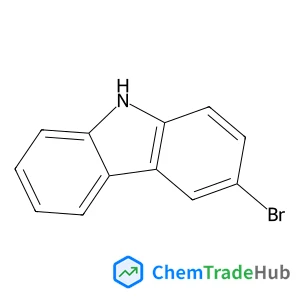
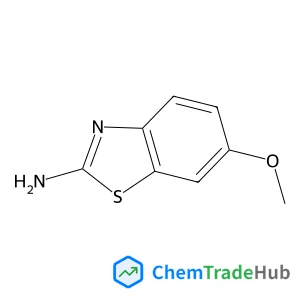
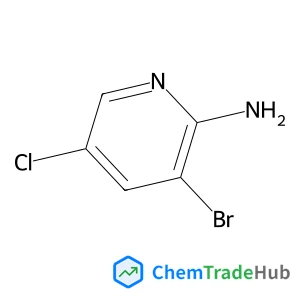
Recommended Compounds
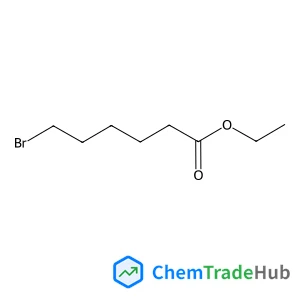
Recommended Suppliers




Disclaimer
This page provides academic journal information for reference and research purposes only. We are not affiliated with any journal publishers and do not handle publication submissions. For publication-related inquiries, please contact the respective journal publishers directly.
If you notice any inaccuracies in the information displayed, please contact us at support@chemtradehub.com. We will promptly review and address your concerns.