












The defect chemistry of non-stoichiometric PuO2±x
Literature Information
Publication Date
2021-02-11
DOI
10.1039/D0CP06497A
Impact Factor
3.676
Authors
William D. Neilson, Helen Steele, Samuel T. Murphy
View Original
Abstract
An increased knowledge of the chemistry of PuO2 is imperative for the design of procedures to store, dispose, or make use of PuO2. In this work, point defect concentrations in PuO2 are determined by combining density functional theory (DFT) defect energies and empirical potential calculations of vibrational entropies. The obtained defect concentrations are expressed as a function of temperature and oxygen partial pressure and used to calculate non-stoichiometry in PuO2±x. The results show that the defect chemistry of PuO2 is dominated by oxygen vacancies and interstitials. Hypo-stoichiometric PuO2−x is accommodated by both the uncharged oxygen vacancy and positively charged oxygen vacancy at small values of x, with increasingly dominant with increasing x. The negatively charged oxygen interstitial (O2−i) is found to accommodate hyper-stoichiometry (PuO2+x), but reluctance to form hyper-stoichiometric PuO2+x is observed, with oxygen interstitials present only in very low concentrations irrespective of conditions. The small degree of hyper-stoichiometry found is favoured by low temperatures.
Related Literature
Bioinspired nanoreactors for the biomineralisation of metallic-based nanoparticles for nanomedicine
Jennifer Bain, Sarah S Staniland
2015-04-02
Perspective
DOI: 10.1039/C5CP00375J
Symmetries of quantum transport with Rashba spin–orbit: graphene spintronics
Leonor Chico, Andrea Latgé, Luis Brey
2015-05-21
Paper
DOI: 10.1039/C5CP01637A
Tuning magnetism by biaxial strain in native ZnO
Chengxiao Peng, Yuanxu Wang, Guangbiao Zhang, Chao Wang, Gui Yang
2015-05-27
Paper
DOI: 10.1039/C5CP00364D
Supramolecular amphipathicity for probing antimicrobial propensity of host defence peptides
Jascindra Ravi, Angelo Bella, Ana J. V. Correia, Baptiste Lamarre, Maxim G. Ryadnov
2015-05-06
Paper
DOI: 10.1039/C5CP01185J
Twice as smart behavior of tert-butylthiacalix[4]arene derivative in glassy and crystalline form
K. V. Gataullina, M. A. Ziganshin, I. I. Stoikov, A. T. Gubaidullin, V. V. Gorbatchuk
2015-05-12
Paper
DOI: 10.1039/C5CP02042E
Thermostructural behaviour of Ni–Cr materials: modelling of bulk and nanoparticle systems
Jose M. Ortiz-Roldan, A. Rabdel Ruiz-Salvador, Sofía Calero, Francisco Montero-Chacón, Elena García-Pérez, Javier Segurado, Ignacio Martin-Bragado, Said Hamad
2015-05-07
Paper
DOI: 10.1039/C5CP01785H
Intriguing emission properties of triphenylamine–carborane systems
So-Yoen Kim, Yang-Jin Cho, Guo Fan Jin, Won-Sik Han, Ho-Jin Son
2015-05-13
Communication
DOI: 10.1039/C5CP01658D
Interaction of 4-imidazolemethanol with a copper electrode revealed by isotope-edited SERS and theoretical modeling
Ieva Matulaitienė, Eglė Pociūtė, Zenonas Kuodis, Olegas Eicher-Lorka, Gediminas Niaura
2015-05-28
Paper
DOI: 10.1039/C5CP01290B
Nature's lessons in design: nanomachines to scaffold, remodel and shape membrane compartments
Paul A. Beales
2015-03-16
Perspective
DOI: 10.1039/C5CP00480B
Protein synthesis in artificial cells: using compartmentalisation for spatial organisation in vesicle bioreactors
2015-05-01
Communication
DOI: 10.1039/C4CP05933F
You might also like
Compound Q&A
How should waste containing 6-Chloro-5-(2'-hydroxy-3'-methoxy-4-biphenylyl)-3-(3-methoxyphenyl)-1H-pyrrolo[3,2-d]pyrimidine-2,4(3H,5H)-dione (CAS: 1346607-05-3) be handled?
Waste containing 6-Chloro-5-(2'-hydroxy-3'-methoxy-4-biphenylyl)-3-(3-methoxyphe...
1346607-05-36-Chloro-5-(2'-hydro...
Compound Q&A
What are the main uses of (3alpha,5alpha)-3-Hydroxypregnane-11,20-dione (CAS: 23930-19-0)?
(3alpha,5alpha)-3-Hydroxypregnane-11,20-dione is primarily used in the pharmaceu...
23930-19-0(3alpha,5alpha)-3-Hy...
Compound Q&A
What is the market or research trend for 4-Amino-6-chloro-2-pyridinecarboxylic acid (CAS: 546141-56-4)?
The market for 4-Amino-6-chloro-2-pyridinecarboxylic acid (CAS: 546141-56-4) is ...
546141-56-44-Amino-6-chloro-2-p...
Compound Q&A
Are there alternatives to (2-Benzoylethyl)trimethylammonium chloride (CAS: 24472-88-6) in synthesis?
Alternatives to (2-Benzoylethyl)trimethylammonium chloride (CAS: 24472-88-6) in ...
24472-88-6(2-Benzoylethyl)trim...
Compound Q&A
Is N-[4-Nitro-3-(trifluoromethyl)phenyl]acetamide (CAS: 393-12-4) safe?
N-[4-Nitro-3-(trifluoromethyl)phenyl]acetamide (CAS: 393-12-4) is generally safe...
393-12-4N-[4-Nitro-3-(triflu...
Compound Q&A
Are there alternatives to [(4R,5R,6S)-5-hydroxy-10-imino-3,7-dioxa-1,9-diazatricyclo[6.4.0.02,6]dodeca-8,11-dien-4-yl]methyl dihydrogen phosphate (CAS: 39679-56-6) in synthesis?
Alternative reagents such as other phosphates or similar functional groups can b...
39679-56-6[(4R,5R,6S)-5-hydrox...
Compound Q&A
Are there alternatives to N,N'-Bis(3-aminopropyl)-1,3-propanediamine (CAS: 4605-14-5) in synthesis?
There are alternatives to N,N'-Bis(3-aminopropyl)-1,3-propanediamine (CAS: 4605-...
4605-14-5N,N'-Bis(3-aminoprop...
Compound Q&A
What precautions should be taken when handling Aluminium trihexadecanoate (CAS: 555-35-1)?
When handling Aluminium trihexadecanoate, it is important to use appropriate per...
555-35-1Aluminium trihexadec...
Compound Q&A
What is (1,1-Dioxido-3-oxo-1,2-benzothiazol-2(3H)-yl)acetic acid (CAS: 52188-11-1)?
(1,1-Dioxido-3-oxo-1,2-benzothiazol-2(3H)-yl)acetic acid is a chemical compound ...
52188-11-1(1,1-Dioxido-3-oxo-1...
Compound Q&A
Are there alternatives to 5,5-dimethyloxolan-2-one (CAS: 3123-97-5) in synthesis?
Several alternatives to 5,5-dimethyloxolan-2-one (CAS: 3123-97-5) can be used in...
3123-97-55,5-dimethyloxolan-2...
Source Journal
Physical Chemistry Chemical Physics

CiteScore:
5.5
Self-citation Rate:
10.3%
Articles per Year:
3036
Physical Chemistry Chemical Physics (PCCP) is an international journal co-owned by 19 physical chemistry and physics societies from around the world. This journal publishes original, cutting-edge research in physical chemistry, chemical physics and biophysical chemistry. To be suitable for publication in PCCP, articles must include significant innovation and/or insight into physical chemistry; this is the most important criterion that reviewers and Editors will judge against when evaluating submissions. The journal has a broad scope and welcomes contributions spanning experiment, theory, computation and data science. Topical coverage includes spectroscopy, dynamics, kinetics, statistical mechanics, thermodynamics, electrochemistry, catalysis, surface science, quantum mechanics, quantum computing and machine learning. Interdisciplinary research areas such as polymers and soft matter, materials, nanoscience, energy, surfaces/interfaces, and biophysical chemistry are welcomed if they demonstrate significant innovation and/or insight into physical chemistry. Joined experimental/theoretical studies are particularly appreciated when complementary and based on up-to-date approaches.
Recommended Compounds
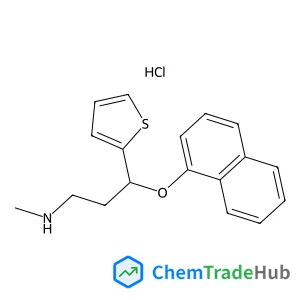
N-Methyl-3-(1-naphthyloxy)-3-(2-thienyl)-1-propanamine hydrochloride (1:1)
CAS Number:
1188266-11-6
Molecular Formula:
C18H20ClNOS

(2R)-2-(3-Bromophenyl)pyrrolidine hydrochloride (1:1)
CAS Number:
1391550-13-2
Molecular Formula:
C10H13BrClN

Recommended Suppliers




Disclaimer
This page provides academic journal information for reference and research purposes only. We are not affiliated with any journal publishers and do not handle publication submissions. For publication-related inquiries, please contact the respective journal publishers directly.
If you notice any inaccuracies in the information displayed, please contact us at support@chemtradehub.com. We will promptly review and address your concerns.