












A statistical description of the evolution of cloud condensation nuclei activity during the heterogeneous oxidation of squalane and bis(2-ethylhexyl) sebacate aerosol by hydroxyl radicals
Literature Information
Publication Date
2013-05-02
DOI
10.1039/C3CP50347J
Impact Factor
3.676
Authors
Christopher W. Harmon, Christopher R. Ruehl, Christopher D. Cappa, Kevin R. Wilson
View Original
Abstract
The heterogeneous reaction of hydroxyl radicals with chemically reduced organic aerosol comprised of either squalane or bis(2-ethylhexyl) sebacate are used as model systems to examine how cloud condensation nuclei (CCN) activity evolves with photochemical oxidation. Over the course of the reaction, the critical super-saturation evolves both by the formation of new oxygen functional groups and by changes in aerosol size through the formation of gas phase reaction products. A statistical model of the heterogeneous reaction reveals that it is the formation, volatilization, solubility, and surface activity of many generations of oxidation products that together control the average changes in aerosol hygroscopicity. The experimental observations and model demonstrate the importance of considering the underlying population or subpopulation of species within a particle and how they each uniquely contribute to the average hygroscopicity of a multi-component aerosol. To accurately predict changes in CCN activity upon oxidation requires a reduction in the surface tension of the activating droplet by a subpopulation of squalane reaction products. These results provide additional evidence that surface tension–concentration parameterizations based on macroscopic data should be modified for microscopic droplets.
Related Literature
Nanoplatelet cryoaerogels with potential application in photoelectrochemical sensing
2019-03-06
Paper
DOI: 10.1039/C9CP00281B
Tuning of the surface plasmon resonance of aluminum nanoshell near-infrared regimes
Parthasarathi, P. Senthil Kumar, R. P. Sharma
2019-04-23
Paper
DOI: 10.1039/C9CP01115C
Previtamin D: Z–E photoisomerization via a Hula-twist conical intersection
2019-03-06
Perspective
DOI: 10.1039/C9CP00500E
Surface-mediated spin dynamics probed by optical-pump–probe scanning tunneling microscopy
Zi-Han Wang, Cheul-Hyun Yoon, Shoji Yoshida, Yusuke Arashida, Osamu Takeuchi, Yuzo Ohno, Hidemi Shigekawa
2019-01-28
Communication
DOI: 10.1039/C8CP07786J
Molecular design of ionic liquids as novel non-metal catalysts for the acetylene hydrochlorination reaction
Yao Nian, Xiaoyan Li, Yan Wang, Wei Li, Pewee Datoo Kolubah
2019-03-12
Paper
DOI: 10.1039/C9CP01151J
Two-dimensional ferroelastic semiconductors in single-layer indium oxygen halide InOY (Y = Cl/Br)
Xilong Xu, Yandong Ma, Baibiao Huang, Ying Dai
2019-03-20
Paper
DOI: 10.1039/C9CP00011A
Tetrel bonds and conformational equilibria in the formamide–CO2 complex: a rotational study
Shuang Gao, Daniel A. Obenchain, Juncheng Lei, Gang Feng, Sven Herbers, Qian Gou, Jens-Uwe Grabow
2019-02-27
Paper
DOI: 10.1039/C9CP00055K
Spin trapping and flipping in FeCO through relativistic electron dynamics
Inga S. Ulusoy, Angela K. Wilson
2018-12-19
Paper
DOI: 10.1039/C8CP06583G
Ionic conductivity of deep eutectic solvents: the role of orientational dynamics and glassy freezing
Daniel Reuter, Catharina Binder, Peter Lunkenheimer, Alois Loidl
2019-02-26
Paper
DOI: 10.1039/C9CP00742C
Magnetically induced current density in triple-layered beryllium–boron clusters
Slađana Đorđević, Slavko Radenković
2019-03-11
Paper
DOI: 10.1039/C9CP00541B
You might also like
Compound Q&A
How is Ethyl 4-chlorothieno[2,3-b]pyridine-5-carboxylate (CAS: 59713-58-5) typically synthesized?
Ethyl 4-chlorothieno[2,3-b]pyridine-5-carboxylate (CAS: 59713-58-5) can be synth...
59713-58-5Ethyl 4-chlorothieno...
Compound Q&A
What regulatory guidelines apply to 5-Methyl-1H-indole-3-carbaldehyde (CAS: 52562-50-2)?
5-Methyl-1H-indole-3-carbaldehyde (CAS: 52562-50-2) is subject to various regula...
52562-50-25-Methyl-1H-indole-3...
Compound Q&A
What are the physical and chemical properties of (1,3-Dimethyl-2,4-dioxo-1,2,3,4-tetrahydro-5-pyrimidinyl)boronic acid (CAS: 223418-73-3)?
(1,3-Dimethyl-2,4-dioxo-1,2,3,4-tetrahydro-5-pyrimidinyl)boronic acid is a white...
223418-73-3(1,3-Dimethyl-2,4-di...
Compound Q&A
How should waste containing Sulfocostunolide A (CAS: 1016983-51-9) be handled?
Waste containing Sulfocostunolide A (CAS: 1016983-51-9) should be handled with c...
1016983-51-9Sulfocostunolide A
Compound Q&A
What precautions should be taken when handling Murraxocin (CAS: 88478-44-8)?
When handling Murraxocin (CAS: 88478-44-8), ensure proper personal protective eq...
88478-44-8Murraxocin
Compound Q&A
What are the physical and chemical properties of Formvar (CAS: 63148-64-1)?
Formvar (CAS: 63148-64-1) is an alkyd resin characterized by a high molecular we...
63148-64-1Formvar(R)
Compound Q&A
Is (S)-4-benzyl-2-((benzyloxy)methyl)morpholine (CAS: 205242-66-6) safe?
(S)-4-benzyl-2-((benzyloxy)methyl)morpholine is generally safe when handled with...
205242-66-6(S)-4-benzyl-2-((ben...
Compound Q&A
What industries use Methyl 1-(5-bromo-2-pyrimidinyl)cyclopropanecarboxylate (CAS: 1447607-69-3)?
Methyl 1-(5-bromo-2-pyrimidinyl)cyclopropanecarboxylate (CAS: 1447607-69-3) is p...
1447607-69-3Methyl 1-(5-bromo-2-...
Compound Q&A
Is 2-Methyl-1-phenyl-1-propanamine hydrochloride (CAS: 24290-47-9) safe?
2-Methyl-1-phenyl-1-propanamine hydrochloride (CAS: 24290-47-9) is generally con...
24290-47-92-Methyl-1-phenyl-1-...
Compound Q&A
How is 3-(4-Bromophenyl)-2-methylpropanoic acid (CAS: 66735-01-1) typically synthesized?
3-(4-Bromophenyl)-2-methylpropanoic acid is synthesized through a multi-step pro...
66735-01-13-(4-Bromophenyl)-2-...
Source Journal
Physical Chemistry Chemical Physics

CiteScore:
5.5
Self-citation Rate:
10.3%
Articles per Year:
3036
Physical Chemistry Chemical Physics (PCCP) is an international journal co-owned by 19 physical chemistry and physics societies from around the world. This journal publishes original, cutting-edge research in physical chemistry, chemical physics and biophysical chemistry. To be suitable for publication in PCCP, articles must include significant innovation and/or insight into physical chemistry; this is the most important criterion that reviewers and Editors will judge against when evaluating submissions. The journal has a broad scope and welcomes contributions spanning experiment, theory, computation and data science. Topical coverage includes spectroscopy, dynamics, kinetics, statistical mechanics, thermodynamics, electrochemistry, catalysis, surface science, quantum mechanics, quantum computing and machine learning. Interdisciplinary research areas such as polymers and soft matter, materials, nanoscience, energy, surfaces/interfaces, and biophysical chemistry are welcomed if they demonstrate significant innovation and/or insight into physical chemistry. Joined experimental/theoretical studies are particularly appreciated when complementary and based on up-to-date approaches.
Recommended Compounds
![4-{1-[4-(4,4,5,5-Tetramethyl-1,3,2-dioxaborolan-2-yl)phenyl]cyclopropyl}morpholine structure](https://static.chemtradehub.com/structs/120/1206594-08-2-7afb.webp "4-{1-[4-(4,4,5,5-Tetramethyl-1,3,2-dioxaborolan-2-yl)phenyl]cyclopropyl}morpholine structure")
4-{1-[4-(4,4,5,5-Tetramethyl-1,3,2-dioxaborolan-2-yl)phenyl]cyclopropyl}morpholine
CAS Number:
1206594-08-2
Molecular Formula:
C19H28BNO3
![2-Methyl-2-propanyl 1,6-diazaspiro[3.4]octane-6-carboxylate structure](https://static.chemtradehub.com/structs/115/1158749-79-1-81ee.webp "2-Methyl-2-propanyl 1,6-diazaspiro[3.4]octane-6-carboxylate structure")
2-Methyl-2-propanyl 1,6-diazaspiro[3.4]octane-6-carboxylate
CAS Number:
1158749-79-1
Molecular Formula:
C11H20N2O2
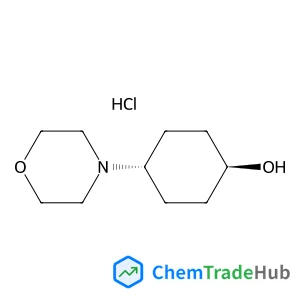
trans-4-(4-Morpholinyl)cyclohexanol hydrochloride (1:1)
CAS Number:
1588441-09-1
Molecular Formula:
C10H20ClNO2
Recommended Suppliers



Disclaimer
This page provides academic journal information for reference and research purposes only. We are not affiliated with any journal publishers and do not handle publication submissions. For publication-related inquiries, please contact the respective journal publishers directly.
If you notice any inaccuracies in the information displayed, please contact us at support@chemtradehub.com. We will promptly review and address your concerns.