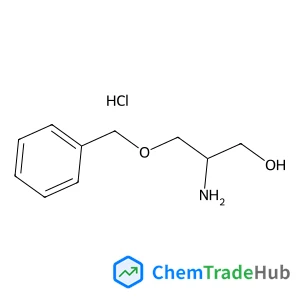
(R)-2-amino-3-(benzyloxy)propan-1-ol hydrochloride
CAS Number:
58577-95-0
Molecular Formula:
C10H16ClNO2
Daniel Reuter, Catharina Binder, Peter Lunkenheimer, Alois Loidl
We have performed a thorough examination of the reorientational relaxation dynamics and the ionic charge transport of three typical deep eutectic solvents, ethaline, glyceline and reline, by using broadband dielectric spectroscopy. Our experiments cover a broad temperature range from the low-viscosity liquid down to the deeply supercooled state, allowing us to investigate the significant influence of glassy freezing on the ionic charge transport in these systems. In addition, we provide evidence for a close coupling of the ionic conductivity in these materials to reorientational dipolar motions, which should be considered when searching for deep eutectic solvents optimized for electrochemical applications.
Xin Zhang, Xiaowei Feng, Leon Lee Zhou, Bin Liu, Zhengbo Chen, Xia Zuo
DOI: 10.1039/D1AN02109E
Rhiannon E. Boseley, Daryl L. Howard, Mark J. Hackett, Simon W. Lewis
DOI: 10.1039/D1AN01951A
Özlem Kap, Volkan Kılıç, Nesrin Horzum
DOI: 10.1039/D0AN02031A
Zhujun Li, Feng Xiao
DOI: 10.1039/C7CC09377B
Kumar Vikrant, Vanish Kumar, Ki-Hyun Kim
DOI: 10.1039/C8TA90287A
Chaoying Xu, Xiandeng Hou, Jing-Juan Xu, Hong-Yuan Chen
DOI: 10.1039/C5SC01497B
Sofia Rapti, Stavros A. Diamantis, Argyro Dafnomili, Anastasia Pournara, Euaggelia Skliri, Gerasimos S. Armatas, Athanassios C. Tsipis, Ioannis Spanopoulos, Christos D. Malliakas, Mercouri G. Kanatzidis, John C. Plakatouras, Fotini Noli, Theodore Lazarides, Manolis J. Manos
DOI: 10.1039/C8TA07901C
André A. Neves, Shaun Stairs, Heather Ireland-Zecchini, Kevin M. Brindle, Finian J. Leeper
DOI: 10.1039/C0SC00631A
Mika Matsunaga, Toshitaka Ishizaki, Takamasa Nonaka
DOI: 10.1039/C2CE06119H
Ethyl 4-chlorothieno[2,3-b]pyridine-5-carboxylate (CAS: 59713-58-5) can be synth...
5-Methyl-1H-indole-3-carbaldehyde (CAS: 52562-50-2) is subject to various regula...
(1,3-Dimethyl-2,4-dioxo-1,2,3,4-tetrahydro-5-pyrimidinyl)boronic acid is a white...
Waste containing Sulfocostunolide A (CAS: 1016983-51-9) should be handled with c...
When handling Murraxocin (CAS: 88478-44-8), ensure proper personal protective eq...
Formvar (CAS: 63148-64-1) is an alkyd resin characterized by a high molecular we...
(S)-4-benzyl-2-((benzyloxy)methyl)morpholine is generally safe when handled with...
Methyl 1-(5-bromo-2-pyrimidinyl)cyclopropanecarboxylate (CAS: 1447607-69-3) is p...
2-Methyl-1-phenyl-1-propanamine hydrochloride (CAS: 24290-47-9) is generally con...
3-(4-Bromophenyl)-2-methylpropanoic acid is synthesized through a multi-step pro...

Physical Chemistry Chemical Physics (PCCP) is an international journal co-owned by 19 physical chemistry and physics societies from around the world. This journal publishes original, cutting-edge research in physical chemistry, chemical physics and biophysical chemistry. To be suitable for publication in PCCP, articles must include significant innovation and/or insight into physical chemistry; this is the most important criterion that reviewers and Editors will judge against when evaluating submissions. The journal has a broad scope and welcomes contributions spanning experiment, theory, computation and data science. Topical coverage includes spectroscopy, dynamics, kinetics, statistical mechanics, thermodynamics, electrochemistry, catalysis, surface science, quantum mechanics, quantum computing and machine learning. Interdisciplinary research areas such as polymers and soft matter, materials, nanoscience, energy, surfaces/interfaces, and biophysical chemistry are welcomed if they demonstrate significant innovation and/or insight into physical chemistry. Joined experimental/theoretical studies are particularly appreciated when complementary and based on up-to-date approaches.