












![5-Bromo-3-isopropyl-1H-pyrrolo[2,3-b]pyridine structure](https://static.chemtradehub.com/structs/125/1256819-54-1-8620.webp "5-Bromo-3-isopropyl-1H-pyrrolo[2,3-b]pyridine structure")
Growth, solvent effects, and thermal desorption behavior of octylthiocyanate self-assembled monolayers on Au(111)
Literature Information
Publication Date
2013-01-16
DOI
10.1039/C3CP44425B
Impact Factor
3.676
Authors
Youngsik Choi, Eisuke Ito
View Original
Abstract
The growth process, solvent effects, and thermal desorption behavior of octylthiocyanate [OTC, CH3(CH2)7S–CN] self-assembled monolayers (SAMs) on Au(111) were characterized by scanning tunneling microscopy (STM), X-ray photoelectron spectroscopy (XPS), and thermal desorption spectroscopy (TDS). To investigate their growth processes, octanethiol [OT, CH3(CH2)7S–H] and OTC SAMs were prepared in 0.5 μM ethanol solution at room temperature as a function of immersion time: 10 min, 1 h, 2 h, and 24 h. STM imaging revealed that OT SAMs underwent a phase transition from the liquid phase containing striped-phase domains to the closely packed c(4 × 2) phase. OTC SAMs underwent a different phase transition from the liquid phase containing aggregated molecules to the disordered phase containing striped-phase domains. The adsorption amounts of OTC SAMs formed after immersion for 10 min and 24 h were measured to be 16% and 30% smaller than those of OT SAMs under the same conditions. STM and XPS results show that the growth kinetics of OTC SAMs on Au(111) are much slower than those of OT SAMs. Hexane resulted in OTC SAMs of higher structural quality than ethanol, DMF, or toluene. TDS measurements revealed that the relative desorption intensities of octanethiolate (C8S+, monomer) and dioctyl disulfide (C8SSC8+, dimer) to octanethiol (C8SH+) fragments for OTC SAMs were much weaker than those of OT SAMs. This is because desorption of monomers and dimers is strongly suppressed by low surface coverage of OTC SAMs, as revealed by STM observations.
Recommended Journals
Related Literature
Dendronization of chitosan to afford unprecedent thermoresponsiveness and tunable microconfinement
Yi Yao, Xiaoxin Shi, Zihong Zhao, Afang Zhang, Wen Li
2023-11-07
Perspective
DOI: 10.1039/D3TB01803B
High strength, self-healing sensitive ionogel sensor based on MXene/ionic liquid synergistic conductive network for human-motion detection
Xiao Wen, Zhipeng Deng, Hui Wang, Jianyang Shi, Shuang Wang, Haibo Wang, Yueming Song, Zongliang Du, Jinghong Qiu, Xu Cheng
2023-10-12
Paper
DOI: 10.1039/D3TB01570J
A specific amino-based fluorescent probe for mercury ion detection in water samples, cells, and zebrafish
Miaohui Yu, Tingting Fu, Wenzhai Li, Yan Zhang, Huayan Wen, Min Zheng, Moran Shi, Caiyun Liu, Meng Jin, Kechun Liu, Baocun Zhu
2023-11-23
Paper
DOI: 10.1039/D3NJ04746F
Co–MnO/C nanoparticles derived from MOFs with improved conductivity and reduced volume change for lithium-ion batteries
Yiting Wang, Jie Zheng, Changjian He, Xiaochun Li, Yichuan Rui, Bohejin Tang
2023-11-21
Paper
DOI: 10.1039/D3NJ04872A
Construction of a polymer-based fluorescent probe with dual responsive sites for monitoring changes of lysosomal viscosity
Faqi Yu, Ruiyang Fan, Yansheng Zhao, Yijun Chen, Xiuqi Kong
2023-12-05
Paper
DOI: 10.1039/D3TB02232C
Application of exosomes as nanocarriers in cancer therapy
Jiawei Hu, Junfei Zhu, Jingjing Chai, Yudie Zhao, Jiajie Luan, Yan Wang
2023-10-23
Review Article
DOI: 10.1039/D3TB01991H
Phosphate ions improve the performance of BiFeO3 piezoelectric photoelectrochemical water splitting
Jinzhe Li, Jianguo Zhou
2023-12-02
Paper
DOI: 10.1039/D3NJ02733C
You might also like
Compound Q&A
Is 6-(3-Fluorophenyl)picolinic acid (CAS: 887982-40-3) safe?
6-(3-Fluorophenyl)picolinic acid is generally considered safe for laboratory use...
887982-40-36-(3-Fluorophenyl)pi...
Compound Q&A
What industries use (3R)-3-Pyrrolidinol (CAS: 2799-21-5)?
(3R)-3-Pyrrolidinol is used in the pharmaceutical industry as a precursor for dr...
2799-21-5(3R)-3-Pyrrolidinol
Compound Q&A
What precautions should be taken when handling (4R,5R)-4,5-Diethoxycarbonyl-2,2-dimethyldioxolane (CAS: 59779-75-8)?
When handling (4R,5R)-4,5-Diethoxycarbonyl-2,2-dimethyldioxolane (CAS: 59779-75-...
59779-75-8(4R,5R)-4,5-Diethoxy...
Compound Q&A
How is 1-(6-Chloroimidazo[1,2-b]pyridazin-3-yl)ethanone (CAS: 90734-71-7) typically synthesized?
1-(6-Chloroimidazo[1,2-b]pyridazin-3-yl)ethanone is often synthesized via a mult...
90734-71-71-(6-Chloroimidazo[1...
Compound Q&A
What is the market or research trend for N-Ethyl-3,4-dimethylbenzylamine (CAS: 39180-83-1)?
The market for N-Ethyl-3,4-dimethylbenzylamine (CAS: 39180-83-1) remains steady,...
39180-83-1N-Ethyl-3,4-dimethyl...
Compound Q&A
What is Tert-butyl 3-(pyrrolidin-1-yl)azetidine-1-carboxylate (CAS: 1019008-21-9)?
Tert-butyl 3-(pyrrolidin-1-yl)azetidine-1-carboxylate is a chemical compound wit...
1019008-21-9Tert-butyl 3-(pyrrol...
Compound Q&A
What regulatory guidelines apply to 1-Bromo-3-chloro-2,4-dimethoxybenzene (CAS: 1228956-93-1)?
1-Bromo-3-chloro-2,4-dimethoxybenzene (CAS: 1228956-93-1) falls under the classi...
1228956-93-11-Bromo-3-chloro-2,4...
Compound Q&A
Is 8-Bromo-2-methyl-3,4-dihydroisoquinolin-1(2H)-one (CAS: 1368622-07-4) safe?
The safety of 8-Bromo-2-methyl-3,4-dihydroisoquinolin-1(2H)-one (CAS: 1368622-07...
1368622-07-48-Bromo-2-methyl-3,4...
Compound Q&A
Is Benzyl [(3S)-2,6-dioxo-3-piperidinyl]carbamate (CAS: 22785-43-9) safe?
Benzyl [(3S)-2,6-dioxo-3-piperidinyl]carbamate is generally safe when handled wi...
22785-43-9Benzyl [(3S)-2,6-dio...
Compound Q&A
How should 1-{[4-(4,4,5,5-Tetramethyl-1,3,2-dioxaborolan-2-yl)phenyl]sulfonyl}pyrrolidine (CAS: 928657-21-0) be stored?
1-{[4-(4,4,5,5-Tetramethyl-1,3,2-dioxaborolan-2-yl)phenyl]sulfonyl}pyrrolidine s...
928657-21-01-{[4-(4,4,5,5-Tetra...
Source Journal
Physical Chemistry Chemical Physics

CiteScore:
5.5
Self-citation Rate:
10.3%
Articles per Year:
3036
Physical Chemistry Chemical Physics (PCCP) is an international journal co-owned by 19 physical chemistry and physics societies from around the world. This journal publishes original, cutting-edge research in physical chemistry, chemical physics and biophysical chemistry. To be suitable for publication in PCCP, articles must include significant innovation and/or insight into physical chemistry; this is the most important criterion that reviewers and Editors will judge against when evaluating submissions. The journal has a broad scope and welcomes contributions spanning experiment, theory, computation and data science. Topical coverage includes spectroscopy, dynamics, kinetics, statistical mechanics, thermodynamics, electrochemistry, catalysis, surface science, quantum mechanics, quantum computing and machine learning. Interdisciplinary research areas such as polymers and soft matter, materials, nanoscience, energy, surfaces/interfaces, and biophysical chemistry are welcomed if they demonstrate significant innovation and/or insight into physical chemistry. Joined experimental/theoretical studies are particularly appreciated when complementary and based on up-to-date approaches.
Recommended Compounds
![trans-2-{[(Tert-butoxy)carbonyl]amino}cyclobutane-1-carboxylic acid structure](https://static.chemtradehub.com/structs/951/951173-25-4-27cd.webp "trans-2-{[(Tert-butoxy)carbonyl]amino}cyclobutane-1-carboxylic acid structure")
trans-2-{[(Tert-butoxy)carbonyl]amino}cyclobutane-1-carboxylic acid
CAS Number:
951173-25-4
Molecular Formula:
C10H17NO4
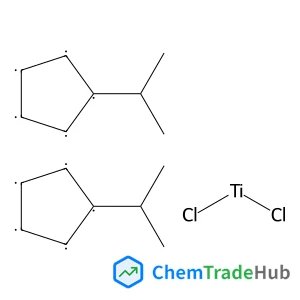
BIS(I-PROPYLCYCLOPENTADIENYL)TITANIUM DICHLORIDE
CAS Number:
12130-65-3
Molecular Formula:
C16H22Cl2Ti
Recommended Suppliers





Disclaimer
This page provides academic journal information for reference and research purposes only. We are not affiliated with any journal publishers and do not handle publication submissions. For publication-related inquiries, please contact the respective journal publishers directly.
If you notice any inaccuracies in the information displayed, please contact us at support@chemtradehub.com. We will promptly review and address your concerns.