












Interaction of CO2 with oxygen adatoms on rutile TiO2(110)
Literature Information
Publication Date
2013-01-10
DOI
10.1039/C3CP44040K
Impact Factor
3.676
Authors
Xiao Lin, Zhi-Tao Wang, Igor Lyubinetsky, Bruce D. Kay, Zdenek Dohnálek
View Original
Abstract
The interactions of CO2 with oxygen adatoms (Oa's) on rutile TiO2(110) surfaces have been studied using scanning tunneling microscopy. At 50 K CO2 is found to adsorb preferentially on five-coordinated Ti sites (Ti5c's) next to Oa's rather than on oxygen vacancies (VO's) (the most stable adsorption sites on reduced TiO2(110)). Temperature dependent studies show that after annealing to 100–160 K, VO's become preferentially populated indicating the presence of a kinetic barrier for CO2 adsorption onto the VO's. The difference between the CO2 binding energy on VO's and Ti5c sites next to the Oa's is found to be only 0.009–0.025 eV. The barrier for CO2 diffusion away from Oa's is estimated to be ∼0.17 eV. Crescent-like features of the images of CO2 adsorbed on Ti5c's next to Oa's are interpreted as a time average of terminally bound CO2 molecules switching between the configurations that are tilted towards Oa and/or towards one of the two neighbouring bridging oxygen (Ob) rows. In the presence of VO defects, the Ti5c bound CO2 is found to tilt preferentially away from the VO containing Ob row. If another CO2 is present on the neighbouring Ti5c row, both CO2 molecules tilt towards the common Ob row that separates them.
Related Literature
A fast and efficient way of obtaining the average molecular weight of block copolymers via DOSY
Manfred Wagner, Christine Rosenauer, Jinhuo Dai, Priya Subramanian, Alasdair McKay, Jasper J. Michels, Tanja Junkers
2023-10-23
Paper
DOI: 10.1039/D3PY01075A
Hofmeister effect-driven superlattice construction via hydrophilic/hydrophobic transition of poly(ethylene glycol) ligands
Yanqiu Du, Haidong Li, Yang Jiang, Yunchao Xiao, Jipeng Guan, Xuejie Liu, Nan Yan
2023-12-13
Paper
DOI: 10.1039/D3PY01159C
Boosting the catalytic performance of a marine yeast in a SpinChem® reactor for the synthesis of perillyl alcohol
Concetta Compagno, Francesco Molinari, Francesca Paradisi, Martina Letizia Contente
2023-11-01
Communication
DOI: 10.1039/D3RE00474K
Monomer-controlled self-switchable polymerization: a metal-free strategy for synthesizing multiblock copolymers from epoxides, O-phthalaldehyde, and CO2
Haotian Zhang, Chenyang Hu
2023-10-12
Paper
DOI: 10.1039/D3PY01035J
Transport phenomena in solid phase synthesis supported by cross-linked polymer beads
Mathias Kraume, José Danglad-Flores
2023-09-23
Review Article
DOI: 10.1039/D3RE00359K
You might also like
Compound Q&A
What is the market or research trend for N-(4-Methoxybenzyl)-2-pyridinamine (CAS: 52818-63-0)?
N-(4-Methoxybenzyl)-2-pyridinamine (CAS: 52818-63-0) is increasingly being used ...
52818-63-0N-(4-Methoxybenzyl)-...
Compound Q&A
What precautions should be taken when handling Ethyl 4-(2-chlorophenyl)-1,3-thiazole-2-carboxylate (CAS: 1050507-06-6)?
When handling Ethyl 4-(2-chlorophenyl)-1,3-thiazole-2-carboxylate, appropriate p...
1050507-06-6Ethyl 4-(2-chlorophe...
Compound Q&A
What regulatory guidelines apply to diethyldiselane (CAS: 628-39-7)?
Diethyldiselane (CAS: 628-39-7) is classified under the Globally Harmonized Syst...
628-39-7Diethyldiselane
Compound Q&A
What is the market or research trend for oxocopper (CAS: 12053-18-8)?
The market for oxocopper (CAS: 12053-18-8) is primarily driven by its use in cat...
12053-18-8oxocopper; oxo-(oxoc...
Compound Q&A
What is the market or research trend for 5-{[(2-Methyl-2-propanyl)oxy]carbonyl}-5-azaspiro[2.4]heptane-7-carboxylic acid?
The market for 5-{[(2-Methyl-2-propanyl)oxy]carbonyl}-5-azaspiro[2.4]heptane-7-c...
1268519-54-55-{[(2-Methyl-2-prop...
Compound Q&A
What is 2-(1-Pyrrolidinyl)-4-pyridinamine (CAS: 35981-63-6)?
2-(1-Pyrrolidinyl)-4-pyridinamine is a chemical compound with the CAS number 359...
35981-63-62-(1-Pyrrolidinyl)-4...
Compound Q&A
What are the physical and chemical properties of 2-(3-Pyridinyl)-1-azabicyclo[2.2.2]octane (CAS: 91556-75-1)?
2-(3-Pyridinyl)-1-azabicyclo[2.2.2]octane (CAS: 91556-75-1) is a crystalline sol...
91556-75-12-(3-Pyridinyl)-1-az...
Compound Q&A
How is (S)-Alpha-allyl-proline hydrochloride (CAS: 129704-91-2) typically synthesized?
(S)-Alpha-allyl-proline hydrochloride is usually synthesized via a Wittig reacti...
129704-91-2(S)-Alpha-allyl-prol...
Compound Q&A
What is 3-Methyl-1,2-oxazole-5-carboxylic acid (CAS: 4857-42-5)?
3-Methyl-1,2-oxazole-5-carboxylic acid (CAS: 4857-42-5) is an organic compound w...
4857-42-53-Methyl-1,2-oxazole...
Compound Q&A
How is Lys-SMCC-DM1 (CAS: 1281816-04-3) typically synthesized?
Lys-SMCC-DM1 is synthesized via a multi-step process involving the coupling of S...
1281816-04-3Lys-SMCC-DM1
Source Journal
Physical Chemistry Chemical Physics

CiteScore:
5.5
Self-citation Rate:
10.3%
Articles per Year:
3036
Physical Chemistry Chemical Physics (PCCP) is an international journal co-owned by 19 physical chemistry and physics societies from around the world. This journal publishes original, cutting-edge research in physical chemistry, chemical physics and biophysical chemistry. To be suitable for publication in PCCP, articles must include significant innovation and/or insight into physical chemistry; this is the most important criterion that reviewers and Editors will judge against when evaluating submissions. The journal has a broad scope and welcomes contributions spanning experiment, theory, computation and data science. Topical coverage includes spectroscopy, dynamics, kinetics, statistical mechanics, thermodynamics, electrochemistry, catalysis, surface science, quantum mechanics, quantum computing and machine learning. Interdisciplinary research areas such as polymers and soft matter, materials, nanoscience, energy, surfaces/interfaces, and biophysical chemistry are welcomed if they demonstrate significant innovation and/or insight into physical chemistry. Joined experimental/theoretical studies are particularly appreciated when complementary and based on up-to-date approaches.
Recommended Compounds
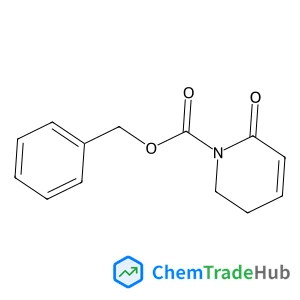
Benzyl 6-oxo-3,6-dihydro-1(2H)-pyridinecarboxylate
CAS Number:
725746-35-0
Molecular Formula:
C13H13NO3

N-Methyl-3-(1-naphthyloxy)-3-(2-thienyl)-1-propanamine hydrochloride (1:1)
CAS Number:
1188266-11-6
Molecular Formula:
C18H20ClNOS
Recommended Suppliers





Disclaimer
This page provides academic journal information for reference and research purposes only. We are not affiliated with any journal publishers and do not handle publication submissions. For publication-related inquiries, please contact the respective journal publishers directly.
If you notice any inaccuracies in the information displayed, please contact us at support@chemtradehub.com. We will promptly review and address your concerns.