












High permeability and salt rejection reverse osmosis by a zeolite nano-membrane
Literature Information
Publication Date
2013-02-12
DOI
10.1039/C3CP43854F
Impact Factor
3.676
Authors
Yilun Liu
View Original
Abstract
The possibility of employing a zeolite nano-membrane for seawater desalination is studied using comprehensive molecular dynamics simulations. Two types of zeolite with different wetting properties, the hydrophilic FAU and hydrophobic MFI, are used as the reverse osmosis (RO) membrane. Both can reach nearly 100% rejection of salt ions, and when the membrane thickness is smaller than 3.5 nm, the permeability is about 2 × 10⁻⁹ m Pa−1 s−1, which is two orders of magnitude higher than that of the commercial state-of-the-art RO membrane. The relation between the permeability and thickness of the zeolite membrane is studied through the pressure drop-flux dependence. The pressure drop is linearly dependent on the thickness of the zeolite membrane. As the thickness approaches nanoscale, the end effect of water molecules entering the zeolite membrane has apparent influence on the pressure drop. For the FAU membrane the hydrophilicity can assist the water molecules entering the nanopore with reduced pressure drop, while for the hydrophobic MFI zeolite additional pressure drop arises from the capillary resistance. In order to sustain the pressure drop during desalination, the nanoscale zeolite membrane should be placed on a porous substrate and the ratio of the thickness of the nano-membrane to the radius of the supporting pore in the substrate should be properly optimized.
Related Literature
Glycerol selective oxidation to lactic acid over platinum–vanadium bimetallic catalysts supported on activated carbon
Hanumanth Reddy Pemmana, Ramu Reddi, Ramagopal V. S. Uppaluri, Nageswara Rao Peela
2023-09-27
Paper
DOI: 10.1039/D3RE00425B
A self-optimised approach to synthesising DEHiBA for advanced nuclear reprocessing, exploiting the power of machine-learning
Thomas Shaw, Adam D. Clayton, Ricardo Labes, Thomas M. Dixon, Sarah Boyall, Oliver J. Kershaw, Richard A. Bourne, Bruce C. Hanson
2023-11-03
Paper
DOI: 10.1039/D3RE00357D
Systematic metabolic engineering of Klebsiella oxytoca for production of 1,3-propanediol from glucose
Zhifei Chen, Hongyu Liu, Xiao Han, Ping Xu, Fei Tao
2023-10-27
Paper
DOI: 10.1039/D3RE00501A
Development of an open-source flow-through cyclic voltammetry cell for real-time inline reaction analytics
Hans-Michael Eggenweiler, Thomas Fuchss, Alena Sommer
2023-11-18
Communication
DOI: 10.1039/D3RE00535F
Levoglucosan and levoglucosenone as bio-based platforms for polymer synthesis
Melissa K. Stanfield, Rhiannon S. Terry, Jason A. Smith, Stuart C. Thickett
2023-10-23
Minireview
DOI: 10.1039/D3PY01019H
Energetics of acid catalyzed biomass reactions: how and why does the solvent model matter?
José Carlos Velasco Calderón, Samir H. Mushrif
2023-10-03
Paper
DOI: 10.1039/D3RE00340J
New polymers based on thieno[3,2-b]pyrrole derivatives and their electrochemical properties
Mansur S. Miftakhov, Seda A. Torosyan, Fanuza A. Gimalova, Sergey L. Khursan, Zoya F. Nuriakhmetova, Elena V. Shchurik, Olga. A. Kraevaya
2023-10-11
Paper
DOI: 10.1039/D3PY00893B
Tracking sodium cobaltate formation pathways and its CO2 capture dynamics in real time with synchrotron X-ray diffraction
Federico Hector Cova, Maria Valeria Blanco
2023-11-02
Paper
DOI: 10.1039/D3RE00459G
Oxygen-doped Sn17Sb6S29 bimetal oxysulfide catalysts for efficient reduction of organic pollutants and hexavalent chromium in the dark
Ting Huang, Ping Li, Qinhan Wu, Adugna Boke Abdeta, Dong-Hau Kuo, Hanya Zhang, Binghong Wu, Mengistu Tadesse Mosisa, Jinguo Lin, Xiaoyun Chen, Xueshen Liu
2023-11-03
Paper
DOI: 10.1039/D3RE00339F
You might also like
Compound Q&A
What is the market or research trend for N-(4-Methoxybenzyl)-2-pyridinamine (CAS: 52818-63-0)?
N-(4-Methoxybenzyl)-2-pyridinamine (CAS: 52818-63-0) is increasingly being used ...
52818-63-0N-(4-Methoxybenzyl)-...
Compound Q&A
What precautions should be taken when handling Ethyl 4-(2-chlorophenyl)-1,3-thiazole-2-carboxylate (CAS: 1050507-06-6)?
When handling Ethyl 4-(2-chlorophenyl)-1,3-thiazole-2-carboxylate, appropriate p...
1050507-06-6Ethyl 4-(2-chlorophe...
Compound Q&A
What regulatory guidelines apply to diethyldiselane (CAS: 628-39-7)?
Diethyldiselane (CAS: 628-39-7) is classified under the Globally Harmonized Syst...
628-39-7Diethyldiselane
Compound Q&A
What is the market or research trend for oxocopper (CAS: 12053-18-8)?
The market for oxocopper (CAS: 12053-18-8) is primarily driven by its use in cat...
12053-18-8oxocopper; oxo-(oxoc...
Compound Q&A
What is the market or research trend for 5-{[(2-Methyl-2-propanyl)oxy]carbonyl}-5-azaspiro[2.4]heptane-7-carboxylic acid?
The market for 5-{[(2-Methyl-2-propanyl)oxy]carbonyl}-5-azaspiro[2.4]heptane-7-c...
1268519-54-55-{[(2-Methyl-2-prop...
Compound Q&A
What is 2-(1-Pyrrolidinyl)-4-pyridinamine (CAS: 35981-63-6)?
2-(1-Pyrrolidinyl)-4-pyridinamine is a chemical compound with the CAS number 359...
35981-63-62-(1-Pyrrolidinyl)-4...
Compound Q&A
What are the physical and chemical properties of 2-(3-Pyridinyl)-1-azabicyclo[2.2.2]octane (CAS: 91556-75-1)?
2-(3-Pyridinyl)-1-azabicyclo[2.2.2]octane (CAS: 91556-75-1) is a crystalline sol...
91556-75-12-(3-Pyridinyl)-1-az...
Compound Q&A
How is (S)-Alpha-allyl-proline hydrochloride (CAS: 129704-91-2) typically synthesized?
(S)-Alpha-allyl-proline hydrochloride is usually synthesized via a Wittig reacti...
129704-91-2(S)-Alpha-allyl-prol...
Compound Q&A
What is 3-Methyl-1,2-oxazole-5-carboxylic acid (CAS: 4857-42-5)?
3-Methyl-1,2-oxazole-5-carboxylic acid (CAS: 4857-42-5) is an organic compound w...
4857-42-53-Methyl-1,2-oxazole...
Compound Q&A
How is Lys-SMCC-DM1 (CAS: 1281816-04-3) typically synthesized?
Lys-SMCC-DM1 is synthesized via a multi-step process involving the coupling of S...
1281816-04-3Lys-SMCC-DM1
Source Journal
Physical Chemistry Chemical Physics

CiteScore:
5.5
Self-citation Rate:
10.3%
Articles per Year:
3036
Physical Chemistry Chemical Physics (PCCP) is an international journal co-owned by 19 physical chemistry and physics societies from around the world. This journal publishes original, cutting-edge research in physical chemistry, chemical physics and biophysical chemistry. To be suitable for publication in PCCP, articles must include significant innovation and/or insight into physical chemistry; this is the most important criterion that reviewers and Editors will judge against when evaluating submissions. The journal has a broad scope and welcomes contributions spanning experiment, theory, computation and data science. Topical coverage includes spectroscopy, dynamics, kinetics, statistical mechanics, thermodynamics, electrochemistry, catalysis, surface science, quantum mechanics, quantum computing and machine learning. Interdisciplinary research areas such as polymers and soft matter, materials, nanoscience, energy, surfaces/interfaces, and biophysical chemistry are welcomed if they demonstrate significant innovation and/or insight into physical chemistry. Joined experimental/theoretical studies are particularly appreciated when complementary and based on up-to-date approaches.
Recommended Compounds
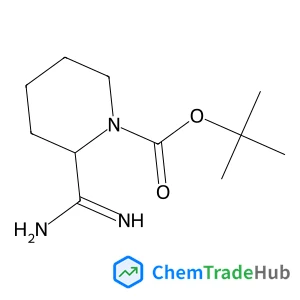
2-Methyl-2-propanyl 2-carbamimidoyl-1-piperidinecarboxylate
CAS Number:
1258640-98-0
Molecular Formula:
C11H21N3O2
![(2R,6S)-6-[(Benzyloxy)methyl]-4-{[(2-methyl-2-propanyl)oxy]carbonyl}-2-morpholinecarboxylic acid structure](https://static.chemtradehub.com/structs/109/1093085-91-6-3382.webp "(2R,6S)-6-[(Benzyloxy)methyl]-4-{[(2-methyl-2-propanyl)oxy]carbonyl}-2-morpholinecarboxylic acid structure")
(2R,6S)-6-[(Benzyloxy)methyl]-4-{[(2-methyl-2-propanyl)oxy]carbonyl}-2-morpholinecarboxylic acid
CAS Number:
1093085-91-6
Molecular Formula:
C18H25NO6

Recommended Suppliers






Disclaimer
This page provides academic journal information for reference and research purposes only. We are not affiliated with any journal publishers and do not handle publication submissions. For publication-related inquiries, please contact the respective journal publishers directly.
If you notice any inaccuracies in the information displayed, please contact us at support@chemtradehub.com. We will promptly review and address your concerns.