












Pressure and temperature dependent photolysis of glyoxal in the 355–414 nm region: evidence for dissociation from multiple states
Literature Information
Publication Date
2013-03-18
DOI
10.1039/C3CP43596B
Impact Factor
3.676
Authors
Robert J. Salter, Mark A. Blitz, Dwayne E. Heard, Michael J. Pilling, Paul W. Seakins
View Original
Abstract
The photolysis of glyoxal has been investigated in the 355–414 nm region by dye laser photolysis coupled with cavity ring-down spectroscopy. Absolute quantum yields of HCO, ΦHCO, were determined using the reaction of chlorine atoms with formaldehyde as an actinometer. The dependence of the quantum yield on pressure was investigated in 3–400 Torr of nitrogen buffer gas and at four temperatures: 233 K, 268 K, 298 K and 323 K. For 355 nm ≤ λ < 395 nm the HCO quantum yield is pressure dependent with linear Stern–Volmer (SV) plots (1/ΦHCOvs. pressure). The zero pressure quantum yield, obtained by extrapolation of the SV plots, rises from 1.6 to 2 between 355 and 382 nm and remains at 2 up to 395 nm. For λ ≥ 395 nm ΦHCO shows a stronger pressure dependence and non-linear SV plots, compatible with formation of HCO by dissociation from two electronic states of glyoxal with significantly different lifetimes. These observations are used to develop a mechanism for the photolysis of glyoxal over the wavelength range studied.
Related Literature
Chronocoulometric signalling of BNP using a novel quantum dot aptasensor
Samantha F. Douman, Onyinyechi V. Uhuo, Kefilwe V. Mokwebo, Nelia Sanga, Emmanuel I. Iwuoha
2022-09-15
Paper
DOI: 10.1039/D2AN01357F
Nanoparticle-induced potentiometric biosensing of NADH at copper ion-selective electrodes
Karin Y. Chumbimuni-Torres, Joseph Wang
2009-05-15
Paper
DOI: 10.1039/B902171J
Characterization of glycerophospholipids at multiple isomer levels via Mn(ii)-catalyzed epoxidation
Xi Chen, Shuli Tang, Dallas Freitas, Erin Hirtzel, Heyong Cheng, Xin Yan
2022-09-13
Paper
DOI: 10.1039/D2AN01174C
Ultra-thin silica shell-guarded nanoflares for high-fidelity live cell miRNA-21 imaging by fully avoiding the interference of biothiols
Yuze Luo, Zefeng Wang, Junqin Li, Wenhua Yi, Ke Yang, Chunlei Ou, Le Deng, Dinggeng He
2022-11-07
Communication
DOI: 10.1039/D2AN01441F
Stereospecific recognition of a chiral centre over multiple flexible covalent bonds by 19F-NMR
Ya-Ting Chen, Bin Li, Jia-Liang Chen, Xun-Cheng Su
2022-12-09
Communication
DOI: 10.1039/D2AN01632J
A bioluminescent probe for NQO1 overexpressing cancer cell imaging in vitro and in vivo
Yuhong Luo, Wentao Wang, Yi Zeng, Shuangqing Wang, Xudong Guo, Rui Hu, Guoqiang Yang
2022-10-28
Communication
DOI: 10.1039/D2AN01435A
Au nanoflower film-based stretchable biosensors for in situ monitoring of superoxide anion release in cell mechanotransduction
Xu Zhao, Meihong Peng, Jialu Wang, Shutong Chen, Yuqing Lin
2022-07-28
Paper
DOI: 10.1039/D2AN01095J
A highly specific and flexible detection assay using collaborated actions of DNA-processing enzymes for identifying multiple gene expression signatures in breast cancer
Dain Kim, Jiyoung Lee, Jueun Han, Jaewoo Lim
2022-12-05
Paper
DOI: 10.1039/D2AN01672A
Electrochemical genosensor for the rapid detection of GMO using loop-mediated isothermal amplification
Masato Saito, M. Mosharraf Hossain, S. Ramachandara Rao, Satoshi Furui, Akihiro Hino, Yuzuru Takamura, Masahiro Takagi, Eiichi Tamiya
2009-02-26
Paper
DOI: 10.1039/B812569D
Continuous size-based DEP separation of particles using a bi-gap electrode pair
Reza Derakhshan, Abas Ramiar, Amirhosein Ghasemi
2022-10-13
Paper
DOI: 10.1039/D2AN01308H
You might also like
Compound Q&A
What precautions should be taken when handling 4-(2-Furylmethyl)thiomorpholine 1,1-dioxide (CAS: 79206-94-3)?
When handling 4-(2-Furylmethyl)thiomorpholine 1,1-dioxide (CAS: 79206-94-3), it ...
79206-94-34-(2-Furylmethyl)thi...
Compound Q&A
What precautions should be taken when handling 4-Chloro-N-[2-(4-morpholinyl)ethyl]benzamide (CAS: 71320-77-9)?
When handling 4-Chloro-N-[2-(4-morpholinyl)ethyl]benzamide (CAS: 71320-77-9), it...
71320-77-94-Chloro-N-[2-(4-mor...
Compound Q&A
How should waste containing 2-[2-(2-Methoxyethoxy)ethoxy]ethyl 4-methylbenzenesulfonate (CAS: 62921-74-8) be handled?
Waste containing this compound (CAS: 62921-74-8) should be handled according to ...
62921-74-82-[2-(2-Methoxyethox...
Compound Q&A
How should waste containing (S)-Methyl 2-amino-3-cyclohexylpropanoate be handled?
Waste containing (S)-Methyl 2-amino-3-cyclohexylpropanoate should be collected i...
40056-18-6(S)-Methyl 2-amino-3...
Compound Q&A
How is 5-({4-[(2S,4R)-4-Hydroxy-2-methyltetrahydro-2H-pyran-4-yl]-2-thienyl}sulfanyl)-1-methyl-1,3-dihydro-2H-indol-2-one (CAS: 166882-70-8) typically synthesized?
This compound can be synthesized using a multi-step process involving the conjug...
166882-70-85-({4-[(2S,4R)-4-Hyd...
Compound Q&A
Are there alternatives to (2E)-3-(3,4-Dichlorophenyl)acrylic acid (CAS: 7312-27-8) in synthesis?
There are several alternatives to (2E)-3-(3,4-Dichlorophenyl)acrylic acid in syn...
7312-27-8(2E)-3-(3,4-Dichloro...
Compound Q&A
How should Ethyl 6-(2-nitrophenyl)imidazo[2,1-b][1,3]thiazole-3-carboxylate (CAS: 925437-84-9) be stored?
Ethyl 6-(2-nitrophenyl)imidazo[2,1-b][1,3]thiazole-3-carboxylate (CAS: 925437-84...
925437-84-9Ethyl 6-(2-nitrophen...
Compound Q&A
How should waste containing 2-(1,3-Thiazol-2-yl)ethanamine (CAS: 18453-07-1) be handled?
Waste containing 2-(1,3-Thiazol-2-yl)ethanamine (CAS: 18453-07-1) should be coll...
18453-07-12-(1,3-Thiazol-2-yl)...
Compound Q&A
How is Methyl 5-iodo-2-methylbenzoate (CAS: 103440-54-6) typically synthesized?
Methyl 5-iodo-2-methylbenzoate can be synthesized through the iodination of meth...
103440-54-6Methyl 5-iodo-2-meth...
Compound Q&A
How is 5-Chloro[1,2,4]triazolo[1,5-a]pyridine (CAS: 1427399-34-5) typically synthesized?
5-Chloro[1,2,4]triazolo[1,5-a]pyridine is commonly synthesized via the condensat...
1427399-34-55-Chloro[1,2,4]triaz...
Source Journal
Physical Chemistry Chemical Physics

CiteScore:
5.5
Self-citation Rate:
10.3%
Articles per Year:
3036
Physical Chemistry Chemical Physics (PCCP) is an international journal co-owned by 19 physical chemistry and physics societies from around the world. This journal publishes original, cutting-edge research in physical chemistry, chemical physics and biophysical chemistry. To be suitable for publication in PCCP, articles must include significant innovation and/or insight into physical chemistry; this is the most important criterion that reviewers and Editors will judge against when evaluating submissions. The journal has a broad scope and welcomes contributions spanning experiment, theory, computation and data science. Topical coverage includes spectroscopy, dynamics, kinetics, statistical mechanics, thermodynamics, electrochemistry, catalysis, surface science, quantum mechanics, quantum computing and machine learning. Interdisciplinary research areas such as polymers and soft matter, materials, nanoscience, energy, surfaces/interfaces, and biophysical chemistry are welcomed if they demonstrate significant innovation and/or insight into physical chemistry. Joined experimental/theoretical studies are particularly appreciated when complementary and based on up-to-date approaches.
Recommended Compounds
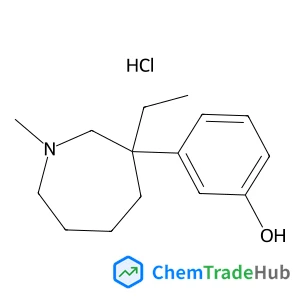
3-(3-Ethyl-1-methyl-3-azepanyl)phenol hydrochloride (1:1)
CAS Number:
59263-76-2
Molecular Formula:
C15H24ClNO

![1-Naphthalenesulfonic acid, 2-[(2-hydroxy-1-naphthalenyl)azo]-, bariumsalt (2:1) structure](https://static.chemtradehub.com/structs/110/1103-38-4-0b33.webp "1-Naphthalenesulfonic acid, 2-[(2-hydroxy-1-naphthalenyl)azo]-, bariumsalt (2:1) structure")
1-Naphthalenesulfonic acid, 2-[(2-hydroxy-1-naphthalenyl)azo]-, bariumsalt (2:1)
CAS Number:
1103-38-4
Molecular Formula:
C20H14BaN2O4S
Recommended Suppliers





Disclaimer
This page provides academic journal information for reference and research purposes only. We are not affiliated with any journal publishers and do not handle publication submissions. For publication-related inquiries, please contact the respective journal publishers directly.
If you notice any inaccuracies in the information displayed, please contact us at support@chemtradehub.com. We will promptly review and address your concerns.