











The conformational landscape of tartrate-based inhibitors of the TACE enzyme as revealed by Hamiltonian Replica Exchange simulation
Literature Information
Publication Date
2013-04-15
DOI
10.1039/C3CP00108C
Impact Factor
3.676
Authors
Carlo Guardiani, Piero Procacci
View Original
Abstract
The inhibitors of the Tumor Necrosis Factor-α Converting Enzyme represent promising tools for the treatment of Rheumatoid Arthritis, Multiple Sclerosis and other autoimmune diseases. In this work, using Hamiltonian Replica Exchange Molecular Dynamics simulations and atomistic force field we perform an accurate structural characterization of a group of tartrate-based inhibitors. The simulations highlight a correlation between the conformational landscape in bulk solvent and inhibition potency. Since the structures in bulk solvent are much more compact than the crystallographic bound state, we formulate the hypothesis of a two-step docking mechanism: (i) formation of an intermediate between the compact, hydroxyl exposing conformations in solution and the catalytic zinc ion; (ii) structural rearrangement in the active site of TACE of the zinc-tethered drug in the final binding conformation.
Recommended Journals
Related Literature
Adsorption of collagen onto single walled carbon nanotubes: a molecular dynamics investigation
Ravimohan Gopalakrishnan, Kanagasabai Balamurugan, Ettayapuram Ramaprasad Azhagiya Singam, Subramanian Sundaraman, Venkatesan Subramanian
2011-06-21
Paper
DOI: 10.1039/C1CP20107G
Nature of anion-templated π+–π+ interactions
Inacrist Geronimo, N. Jiten Singh, Kwang S. Kim
2011-05-31
Communication
DOI: 10.1039/C1CP20348G
Surface chemistry: a non-negligible parameter in determining optical properties of small colloidal metal nanoparticles
Yugang Sun, Stephen K. Gray, Sheng Peng
2011-05-25
Perspective
DOI: 10.1039/C1CP20265K
Molecular dynamics simulation studies of absorption in piperazine activated MDEA solution
Amir Hajiahmadi Farmahini, Bjørn Kvamme, Tatiana Kuznetsova
2011-06-20
Paper
DOI: 10.1039/C0CP02238A
Role of water in atomic resolution AFM in solutions
Matthew Watkins, Max L. Berkowitz
2011-06-13
Paper
DOI: 10.1039/C1CP21021A
Distorted fused porphyrin–phthalocyanine conjugates: synthesis and photophysics of supramolecular assembled systems with a pyridylfullerene
Ana M. V. M. Pereira, Anita Hausmann, Maria G. P. M. S. Neves, Augusto C. Tomé, Artur M. S. Silva, José A. S. Cavaleiro, Dirk M. Guldi
2011-05-26
Paper
DOI: 10.1039/C1CP00016K
Large ferroelectric polarization in the new double perovskite NaLaMnWO6 induced by non-polar instabilities
T. Fukushima, A. Stroppa, S. Picozzi, J. M. Perez-Mato
2011-06-06
Paper
DOI: 10.1039/C1CP20626E
Photoselective excited state dynamics in ZnO–Au nanocomposites and their implications in photocatalysis and dye-sensitized solar cells
Soumik Sarkar, Abhinandan Makhal, Tanujjal Bora, Sunandan Baruah, Joydeep Dutta, Samir Kumar Pal
2011-06-09
Paper
DOI: 10.1039/C1CP20892F
Reaction of SO4˙− with an oligomer of poly(sodium styrenesulfonate). Probing the mechanism of damage to fuelcell membranes
Lorenz Gubler, Alexander Wokaun, Willem H. Koppenol
2011-06-08
Paper
DOI: 10.1039/C1CP20499H
You might also like
Compound Q&A
What are the main uses of 1H-Indazole-6-carbonitrile (CAS: 141290-59-7)?
1H-Indazole-6-carbonitrile finds applications in pharmaceuticals, where it serve...
141290-59-71H-Indazole-6-carbon...
Compound Q&A
How should waste containing Dioctyl (2E)-2-butenedioate (CAS: 2997-85-5) be handled?
Waste containing Dioctyl (2E)-2-butenedioate (CAS: 2997-85-5) should be collecte...
2997-85-5Dioctyl (2E)-2-buten...
Compound Q&A
What industries use Sodium [(1,2-benzoxazol-3-ylmethyl)sulfonyl]azanide (CAS: 68291-98-5)?
Sodium [(1,2-benzoxazol-3-ylmethyl)sulfonyl]azanide is primarily used in pharmac...
68291-98-5Sodium [(1,2-benzoxa...
Compound Q&A
Are there alternatives to Dimethyl 4-(4,4,5,5-tetramethyl-1,3,2-dioxaborolan-2-yl)-2,6-pyridinedicarboxylate (CAS: 741709-66-0) in synthesis?
Dimethyl 4-(4,4,5,5-tetramethyl-1,3,2-dioxaborolan-2-yl)-2,6-pyridinedicarboxyla...
741709-66-0Dimethyl 4-(4,4,5,5-...
Compound Q&A
How should waste containing 2-Fluoro-6-hydrazinopyridine (CAS: 80714-39-2) be handled?
Waste containing 2-Fluoro-6-hydrazinopyridine (CAS: 80714-39-2) should be manage...
80714-39-22-Fluoro-6-hydrazino...
Compound Q&A
What is 6-Formyl-2-pyridinecarboxylic acid (CAS: 499214-11-8)?
6-Formyl-2-pyridinecarboxylic acid is an organic compound with the molecular for...
499214-11-86-Formyl-2-pyridinec...
Compound Q&A
What is the market or research trend for 3-(3,4-dimethoxyphenyl)-2,5-dimethyl-N-(2-morpholin-4-ylethyl)pyrazolo[1,5-a]pyrimidin-7-amine (CAS: 900874-91-1)?
Research trends for this compound indicate a focus on its potential applications...
900874-91-13-(3,4-dimethoxyphen...
Compound Q&A
How is 9H-Tribenzo[b,d,f]azepine (CAS: 29875-73-8) typically synthesized?
9H-Tribenzo[b,d,f]azepine is typically synthesized via a multi-step process invo...
29875-73-89H-Tribenzo[b,d,f]az...
Compound Q&A
How is 1-Cyclopropyl-7-ethoxy-6-fluoro-8-methoxy-4-oxo-1,4-dihydro-3-quinolinecarboxylic acid (CAS: 1797982-51-4) typically synthesized?
1-Cyclopropyl-7-ethoxy-6-fluoro-8-methoxy-4-oxo-1,4-dihydro-3-quinolinecarboxyli...
1797982-51-41-Cyclopropyl-7-etho...
Compound Q&A
How should waste containing Methyl 3-oxo-1,2,3,4-tetrahydro-6-quinoxalinecarboxylate (CAS: 671820-52-3) be handled?
Waste containing Methyl 3-oxo-1,2,3,4-tetrahydro-6-quinoxalinecarboxylate (CAS: ...
671820-52-3Methyl 3-oxo-1,2,3,4...
Source Journal
Physical Chemistry Chemical Physics

CiteScore:
5.5
Self-citation Rate:
10.3%
Articles per Year:
3036
Physical Chemistry Chemical Physics (PCCP) is an international journal co-owned by 19 physical chemistry and physics societies from around the world. This journal publishes original, cutting-edge research in physical chemistry, chemical physics and biophysical chemistry. To be suitable for publication in PCCP, articles must include significant innovation and/or insight into physical chemistry; this is the most important criterion that reviewers and Editors will judge against when evaluating submissions. The journal has a broad scope and welcomes contributions spanning experiment, theory, computation and data science. Topical coverage includes spectroscopy, dynamics, kinetics, statistical mechanics, thermodynamics, electrochemistry, catalysis, surface science, quantum mechanics, quantum computing and machine learning. Interdisciplinary research areas such as polymers and soft matter, materials, nanoscience, energy, surfaces/interfaces, and biophysical chemistry are welcomed if they demonstrate significant innovation and/or insight into physical chemistry. Joined experimental/theoretical studies are particularly appreciated when complementary and based on up-to-date approaches.
Recommended Compounds


Trichloro(3,3,4,4,5,5,6,6,7,7,8,8,8-tridecafluorooctyl)silane
CAS Number:
78560-45-9
Molecular Formula:
C8H4Cl3F13Si
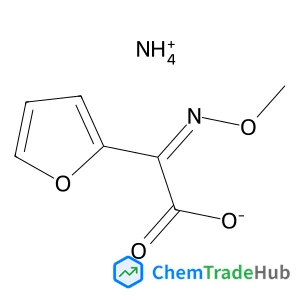
Ammonium (Z)-2-(furan-2-yl)-2-(methoxyimino)acetate
CAS Number:
97148-39-5
Molecular Formula:
C7H10N2O4
![Sodium (2Z)-7-{[(2R)-2-amino-2-carboxyethyl]sulfanyl}-2-({[(1S)-2,2-dimethylcyclopropyl]carbonyl}amino)-2-heptenoate structure](https://static.chemtradehub.com/structs/811/81129-83-1-441c.webp "Sodium (2Z)-7-{[(2R)-2-amino-2-carboxyethyl]sulfanyl}-2-({[(1S)-2,2-dimethylcyclopropyl]carbonyl}amino)-2-heptenoate structure")
Sodium (2Z)-7-{[(2R)-2-amino-2-carboxyethyl]sulfanyl}-2-({[(1S)-2,2-dimethylcyclopropyl]carbonyl}amino)-2-heptenoate
CAS Number:
81129-83-1
Molecular Formula:
C16H25N2NaO5S
Recommended Suppliers





Disclaimer
This page provides academic journal information for reference and research purposes only. We are not affiliated with any journal publishers and do not handle publication submissions. For publication-related inquiries, please contact the respective journal publishers directly.
If you notice any inaccuracies in the information displayed, please contact us at support@chemtradehub.com. We will promptly review and address your concerns.