













Surface chemistry: a non-negligible parameter in determining optical properties of small colloidal metal nanoparticles
Literature Information
Publication Date
2011-05-25
DOI
10.1039/C1CP20265K
Impact Factor
3.676
Authors
Yugang Sun, Stephen K. Gray, Sheng Peng
View Original
Abstract
Surface chemistry can become pronounced in determining the optical properties of colloidal metal nanoparticles as the nanoparticles become so small (diameters <20 nm) that the surface atoms, which can undergo chemical interactions with the environment, represent a significant fraction of the total number of atoms although this effect is often ignored. For instance, formation of chemical bonds between surface atoms of small metal nanoparticles and capping molecules that help stabilize the nanoparticles can reduce the density of conduction band electrons in the surface layer of metal atoms. This reduced electron density consequently influences the frequency-dependent dielectric constant of the metal atoms in the surface layer and, for sufficiently high surface to volume ratios, the overall surface plasmon resonance (SPR) absorption spectrum. The important role of surface chemistry is highlighted here by carefully analyzing the classical Mie theory and a multi-layer model is presented to produce more accurate predictions by considering the chemically reduced density of conduction band electrons in the outer shell of metal atoms in nanoparticles. Calculated absorption spectra of small Ag nanoparticles quantitatively agree with the experimental results for our monodispersed Ag nanoparticles synthesized via a well-defined chemical reduction process, revealing an exceptional size-dependence of absorption peak positions: the peaks first blue-shift followed by a turnover and a dramatic red-shift as the particle size decreases. A comprehensive understanding of the relationship between surface chemistry and optical properties is beneficial to exploit new applications of small colloidal metal nanoparticles, such as colorimetric sensing, electrochromic devices, and surface enhanced spectroscopies.
Related Literature
Viscosity scaling of the self-diffusion and velocity cross-correlation coefficients of two functionalised ionic liquids and of their non-functionalized analogues
Kenneth R. Harris, Takashi Makino, Mitsuhiro Kanakubo
2014-03-31
Paper
DOI: 10.1039/C4CP00435C
TiO2 nanotubes sensitized with CdSe via RF magnetron sputtering for photoelectrochemical applications under visible light irradiation
Jesum A. Fernandes, Pedro Migowski, Zacarias Fabrim, Adriano F. Feil, Guilherme Rosa, Sherdil Khan, Guilherme J. Machado, Paulo F. P. Fichtner, Sérgio R. Teixeira, Marcos J. L. Santos, Jairton Dupont
2014-03-27
Paper
DOI: 10.1039/C4CP00361F
Excited states of multiply-charged anions probed by photoelectron imaging: riding the repulsive Coulomb barrier
Jan R. R. Verlet, Daniel A. Horke, Adam S. Chatterley
2014-06-18
Perspective
DOI: 10.1039/C4CP01667J
Solvent dependence of excited-state proton transfer from pyranine-derived photoacids
Christian Spies, Shay Shomer, Björn Finkler, Dina Pines, Ehud Pines, Gregor Jung, Dan Huppert
2014-03-26
Paper
DOI: 10.1039/C3CP55292F
Uniaxial deformation of nanorod filled polymer nanocomposites: a coarse-grained molecular dynamics simulation
Jianxiang Shen, Zhanhu Guo, Dapeng Cao
2014-06-09
Paper
DOI: 10.1039/C4CP01555J
Absorption and fluorescence signatures of 1,2,3-triazole based regioisomers: challenging compounds for TD-DFT
Claudine Katan, Paul Savel, Bryan M. Wong, Thierry Roisnel, Vincent Dorcet, Jean-Luc Fillaut
2014-03-25
Paper
DOI: 10.1039/C4CP00478G
Developing an aqueous approach for synthesizing Au and M@Au (M = Pd, CuPt) hybrid nanostars with plasmonic properties
Jingshan Du, Junjie Yu, Yalin Xiong, Zhuoqing Lin, Hui Zhang, Deren Yang
2014-11-05
Paper
DOI: 10.1039/C4CP04757E
In-depth exploration of the photophysics of a trinuclear palladium complex
Y. Schmitt, K. Chevalier, F. Rupp, M. Becherer, A. Grün, A. M. Rijs, F. Walz, F. Breher, R. Diller, M. Gerhards, W. Klopper
2014-03-04
Paper
DOI: 10.1039/C4CP00175C
Electrochemical studies of decamethylferrocene in supercritical carbon dioxide mixtures
Jack A. Branch, David A. Cook, Philip N. Bartlett
2014-11-12
Paper
DOI: 10.1039/C4CP04545A
Nanoscale spinel LiFeTiO4 for intercalation pseudocapacitive Li+ storage
Shuhua Ren, Ralf Heinzmann
2014-11-21
Paper
DOI: 10.1039/C4CP04655B
You might also like
Compound Q&A
What are the main uses of 1H-Indazole-6-carbonitrile (CAS: 141290-59-7)?
1H-Indazole-6-carbonitrile finds applications in pharmaceuticals, where it serve...
141290-59-71H-Indazole-6-carbon...
Compound Q&A
How should waste containing Dioctyl (2E)-2-butenedioate (CAS: 2997-85-5) be handled?
Waste containing Dioctyl (2E)-2-butenedioate (CAS: 2997-85-5) should be collecte...
2997-85-5Dioctyl (2E)-2-buten...
Compound Q&A
What industries use Sodium [(1,2-benzoxazol-3-ylmethyl)sulfonyl]azanide (CAS: 68291-98-5)?
Sodium [(1,2-benzoxazol-3-ylmethyl)sulfonyl]azanide is primarily used in pharmac...
68291-98-5Sodium [(1,2-benzoxa...
Compound Q&A
Are there alternatives to Dimethyl 4-(4,4,5,5-tetramethyl-1,3,2-dioxaborolan-2-yl)-2,6-pyridinedicarboxylate (CAS: 741709-66-0) in synthesis?
Dimethyl 4-(4,4,5,5-tetramethyl-1,3,2-dioxaborolan-2-yl)-2,6-pyridinedicarboxyla...
741709-66-0Dimethyl 4-(4,4,5,5-...
Compound Q&A
How should waste containing 2-Fluoro-6-hydrazinopyridine (CAS: 80714-39-2) be handled?
Waste containing 2-Fluoro-6-hydrazinopyridine (CAS: 80714-39-2) should be manage...
80714-39-22-Fluoro-6-hydrazino...
Compound Q&A
What is 6-Formyl-2-pyridinecarboxylic acid (CAS: 499214-11-8)?
6-Formyl-2-pyridinecarboxylic acid is an organic compound with the molecular for...
499214-11-86-Formyl-2-pyridinec...
Compound Q&A
What is the market or research trend for 3-(3,4-dimethoxyphenyl)-2,5-dimethyl-N-(2-morpholin-4-ylethyl)pyrazolo[1,5-a]pyrimidin-7-amine (CAS: 900874-91-1)?
Research trends for this compound indicate a focus on its potential applications...
900874-91-13-(3,4-dimethoxyphen...
Compound Q&A
How is 9H-Tribenzo[b,d,f]azepine (CAS: 29875-73-8) typically synthesized?
9H-Tribenzo[b,d,f]azepine is typically synthesized via a multi-step process invo...
29875-73-89H-Tribenzo[b,d,f]az...
Compound Q&A
How is 1-Cyclopropyl-7-ethoxy-6-fluoro-8-methoxy-4-oxo-1,4-dihydro-3-quinolinecarboxylic acid (CAS: 1797982-51-4) typically synthesized?
1-Cyclopropyl-7-ethoxy-6-fluoro-8-methoxy-4-oxo-1,4-dihydro-3-quinolinecarboxyli...
1797982-51-41-Cyclopropyl-7-etho...
Compound Q&A
How should waste containing Methyl 3-oxo-1,2,3,4-tetrahydro-6-quinoxalinecarboxylate (CAS: 671820-52-3) be handled?
Waste containing Methyl 3-oxo-1,2,3,4-tetrahydro-6-quinoxalinecarboxylate (CAS: ...
671820-52-3Methyl 3-oxo-1,2,3,4...
Source Journal
Physical Chemistry Chemical Physics

CiteScore:
5.5
Self-citation Rate:
10.3%
Articles per Year:
3036
Physical Chemistry Chemical Physics (PCCP) is an international journal co-owned by 19 physical chemistry and physics societies from around the world. This journal publishes original, cutting-edge research in physical chemistry, chemical physics and biophysical chemistry. To be suitable for publication in PCCP, articles must include significant innovation and/or insight into physical chemistry; this is the most important criterion that reviewers and Editors will judge against when evaluating submissions. The journal has a broad scope and welcomes contributions spanning experiment, theory, computation and data science. Topical coverage includes spectroscopy, dynamics, kinetics, statistical mechanics, thermodynamics, electrochemistry, catalysis, surface science, quantum mechanics, quantum computing and machine learning. Interdisciplinary research areas such as polymers and soft matter, materials, nanoscience, energy, surfaces/interfaces, and biophysical chemistry are welcomed if they demonstrate significant innovation and/or insight into physical chemistry. Joined experimental/theoretical studies are particularly appreciated when complementary and based on up-to-date approaches.
Recommended Compounds
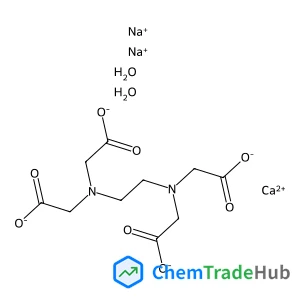
EthylenediaminetetraaceticacidcalciumDisodiumsalthydrate
CAS Number:
23411-34-9
Molecular Formula:
C10H16CaN2Na2O10

Recommended Suppliers






Disclaimer
This page provides academic journal information for reference and research purposes only. We are not affiliated with any journal publishers and do not handle publication submissions. For publication-related inquiries, please contact the respective journal publishers directly.
If you notice any inaccuracies in the information displayed, please contact us at support@chemtradehub.com. We will promptly review and address your concerns.