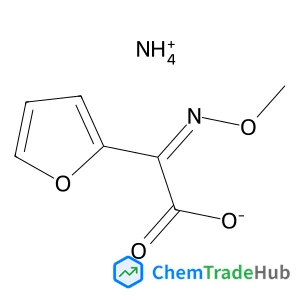
Ammonium (Z)-2-(furan-2-yl)-2-(methoxyimino)acetate
CAS Number:
97148-39-5
Molecular Formula:
C7H10N2O4
Soumik Sarkar, Abhinandan Makhal, Tanujjal Bora, Sunandan Baruah, Joydeep Dutta, Samir Kumar Pal
Improving the performance of photoactive solid-state devices begins with systematic studies of the metal–semiconductor nanocomposites (NCs) upon which such devices are based. Here, we report the photo-dependent excitonic mechanism and the charge migration kinetics in a colloidal ZnO–Au NC system. By using a picosecond-resolved Förster resonance energy transfer (FRET) technique, we have demonstrated that excited ZnO nanoparticles (NPs) resonantly transfer visible optical radiation to the Au NPs, and the quenching of defect-mediated visible emission depends solely on the excitation level of the semiconductor. The role of the gold layer in promoting photolytic charge transfer, the activity of which is dependent upon the degree of excitation, was probed using methylene blue (MB) reduction at the semiconductor interface. Incident photon-to-current efficiency measurements show improved charge injection from a sensitizing dye to a semiconductor electrode in the presence of gold in the visible region. Furthermore, the short-circuit current density and the energy conversion efficiency of the ZnO–Au NP based dye-sensitized solar cell (DSSC) are much higher than those of a DSSC comprised of only ZnO NP. Our results represent a new paradigm for understanding the mechanism of defect-state passivation and photolytic activity of the metal component in metal–semiconductor nanocomposite systems.
Christian Spies, Shay Shomer, Björn Finkler, Dina Pines, Ehud Pines, Gregor Jung, Dan Huppert
DOI: 10.1039/C3CP55292F
Katsuya Mutoh, Yuki Nakagawa, Sayaka Hatano, Yoichi Kobayashi
DOI: 10.1039/C4CP04606D
DOI: 10.1039/C4CP00488D
Xi Liu, Yulia Ryabenkova, Marco Conte
DOI: 10.1039/C4CP03568B
Junsheng Chen, Yanling Cui, Jing Wang, Lixin Xia, Yumei Dai
DOI: 10.1039/C4CP04135F
G. Fedoseev, M. Minissale, E. Congiu, F. Dulieu, H. Linnartz
DOI: 10.1039/C3CP54918F
Shuhua Ren, Ralf Heinzmann
DOI: 10.1039/C4CP04655B
Yibo Zhao, Huige Wei, Xingru Yan, Wei Wu, Yiran Wang, Zhanhu Guo
DOI: 10.1039/C4CP03144J
Kevin C. Kirshenbaum, David C. Bock, Zhong Zhong
DOI: 10.1039/C4CP01220H
1H-Indazole-6-carbonitrile finds applications in pharmaceuticals, where it serve...
Waste containing Dioctyl (2E)-2-butenedioate (CAS: 2997-85-5) should be collecte...
Sodium [(1,2-benzoxazol-3-ylmethyl)sulfonyl]azanide is primarily used in pharmac...
Dimethyl 4-(4,4,5,5-tetramethyl-1,3,2-dioxaborolan-2-yl)-2,6-pyridinedicarboxyla...
Waste containing 2-Fluoro-6-hydrazinopyridine (CAS: 80714-39-2) should be manage...
6-Formyl-2-pyridinecarboxylic acid is an organic compound with the molecular for...
Research trends for this compound indicate a focus on its potential applications...
9H-Tribenzo[b,d,f]azepine is typically synthesized via a multi-step process invo...
1-Cyclopropyl-7-ethoxy-6-fluoro-8-methoxy-4-oxo-1,4-dihydro-3-quinolinecarboxyli...
Waste containing Methyl 3-oxo-1,2,3,4-tetrahydro-6-quinoxalinecarboxylate (CAS: ...

Physical Chemistry Chemical Physics (PCCP) is an international journal co-owned by 19 physical chemistry and physics societies from around the world. This journal publishes original, cutting-edge research in physical chemistry, chemical physics and biophysical chemistry. To be suitable for publication in PCCP, articles must include significant innovation and/or insight into physical chemistry; this is the most important criterion that reviewers and Editors will judge against when evaluating submissions. The journal has a broad scope and welcomes contributions spanning experiment, theory, computation and data science. Topical coverage includes spectroscopy, dynamics, kinetics, statistical mechanics, thermodynamics, electrochemistry, catalysis, surface science, quantum mechanics, quantum computing and machine learning. Interdisciplinary research areas such as polymers and soft matter, materials, nanoscience, energy, surfaces/interfaces, and biophysical chemistry are welcomed if they demonstrate significant innovation and/or insight into physical chemistry. Joined experimental/theoretical studies are particularly appreciated when complementary and based on up-to-date approaches.
![N-[(9H-Fluoren-9-ylmethoxy)carbonyl]serine structure](https://static.chemtradehub.com/structs/737/73724-45-5-b0dc.webp "N-[(9H-Fluoren-9-ylmethoxy)carbonyl]serine structure")