












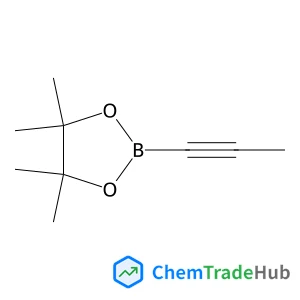
4,4,5,5-Tetramethyl-2-(1-propyn-1-YL)-1,3,2-dioxaborolane
CAS Number:
347389-75-7
Molecular Formula:
C9H15BO2
Jonathan E. Halls, Jay D. Wadhawan
A mathematical model for a photosynthesis-inspired regenerative photogalvanic device, for transient rather than exclusively steady-state conditions, based on molecular electrochemistry rather than electron transfer processes involving semiconductors, is considered within this work and which is adapted from an experimental system previously developed (J. E. Halls and J. D. Wadhawan, Energy Environ. Sci., 2012, 5, 6541). Computational simulations suggest that pragmatically achievable systems behave as middle-of-the-range photo-rechargeable electrochemical capacitors for light-to-electrical energy storage; in contrast the system performance as a light-to-electrical energy convertor (viz., solar cell), for cells constructed from electrochemically reversible redox couples with fast photo-induced electron transfer reactions is critically dependent on the concentration of the supersensitiser; maximum power conversion efficiency of ca. 6.5% under 500 nm light, 2.4 mW cm−2 intensity for typical experimental parameters, neglecting Ohmic losses, and employing galvanostatic discharge, with a power conversion efficiency that is capable of being increased by a factor of five (to ca. 34%) when the supersensitizer concentration increases by an order of magnitude (from 5.0 to 50.0 mM). Under an AM 2.0 solar spectrum, numerical simulations suggest that one potentially pragmatically achievable embodiment of this regenerative system is able to perform with a solar-to-electrical power conversion efficiency of 4.5% – an attractive realistic single cell value.
Fan Jin, Min Wei, Chengbu Liu, Yuchen Ma
DOI: 10.1039/C7CP01798G
Mathias Bourg, Martin Urbanski
DOI: 10.1039/C7CP02943H
F. Philippi, J. Zapp
DOI: 10.1039/C7CP04552B
K. Wilma, T. Unger, M. Hollfelder, C. Hunger, A. Lang, A. G. Gürek, S. Gekle, R. Hildner
DOI: 10.1039/C7CP04026A
Bin-Bin Wang, Yong-Chang Han, Wei Gao, Shu-Lin Cong
DOI: 10.1039/C7CP04310D
Emilia Piosik, Michał Kotkowiak, Izabela Korbecka, Zbigniew Galewski, Tomasz Martyński
DOI: 10.1039/C7CP03514D
Pablo de Castro, Peter Sollich
DOI: 10.1039/C7CP04062H
Miguel A. Salvadó, R. Franco, Pilar Pertierra, T. Ouahrani, J. M. Recio
DOI: 10.1039/C7CP03732E
DOI: 10.1039/C7CP03812G
6-(3-Fluorophenyl)picolinic acid is generally considered safe for laboratory use...
(3R)-3-Pyrrolidinol is used in the pharmaceutical industry as a precursor for dr...
When handling (4R,5R)-4,5-Diethoxycarbonyl-2,2-dimethyldioxolane (CAS: 59779-75-...
1-(6-Chloroimidazo[1,2-b]pyridazin-3-yl)ethanone is often synthesized via a mult...
The market for N-Ethyl-3,4-dimethylbenzylamine (CAS: 39180-83-1) remains steady,...
Tert-butyl 3-(pyrrolidin-1-yl)azetidine-1-carboxylate is a chemical compound wit...
1-Bromo-3-chloro-2,4-dimethoxybenzene (CAS: 1228956-93-1) falls under the classi...
The safety of 8-Bromo-2-methyl-3,4-dihydroisoquinolin-1(2H)-one (CAS: 1368622-07...
Benzyl [(3S)-2,6-dioxo-3-piperidinyl]carbamate is generally safe when handled wi...
1-{[4-(4,4,5,5-Tetramethyl-1,3,2-dioxaborolan-2-yl)phenyl]sulfonyl}pyrrolidine s...

Physical Chemistry Chemical Physics (PCCP) is an international journal co-owned by 19 physical chemistry and physics societies from around the world. This journal publishes original, cutting-edge research in physical chemistry, chemical physics and biophysical chemistry. To be suitable for publication in PCCP, articles must include significant innovation and/or insight into physical chemistry; this is the most important criterion that reviewers and Editors will judge against when evaluating submissions. The journal has a broad scope and welcomes contributions spanning experiment, theory, computation and data science. Topical coverage includes spectroscopy, dynamics, kinetics, statistical mechanics, thermodynamics, electrochemistry, catalysis, surface science, quantum mechanics, quantum computing and machine learning. Interdisciplinary research areas such as polymers and soft matter, materials, nanoscience, energy, surfaces/interfaces, and biophysical chemistry are welcomed if they demonstrate significant innovation and/or insight into physical chemistry. Joined experimental/theoretical studies are particularly appreciated when complementary and based on up-to-date approaches.
![1-Benzyl-1,7-diazaspiro[4.4]nonane dihydrochloride structure](https://static.chemtradehub.com/structs/115/1159822-71-5-0320.webp "1-Benzyl-1,7-diazaspiro[4.4]nonane dihydrochloride structure")
![3-[(3R,4R)-3-[(6-aminopyrimidin-4-yl)-methyl-amino]-4-methyl-1-piperidyl]-3-oxo-propanenitrile structure](https://static.chemtradehub.com/structs/164/1640971-60-3-83a4.webp "3-[(3R,4R)-3-[(6-aminopyrimidin-4-yl)-methyl-amino]-4-methyl-1-piperidyl]-3-oxo-propanenitrile structure")





