



Peripherally diketopyrrolopyrrole-functionalized dendritic oligothiophenes – synthesis, molecular structure, properties and applications
Literature Information
Publication Date
2017-01-10
DOI
10.1039/C6PY02161A
Impact Factor
5.582
Authors
Qun Luo, Junkai Wang, Yi Lin, Changquan Tang, Junyan Dou, Hongwei Tan, Qingdong Zheng, Chang-Qi Ma, Zheng Cui
View Original
Abstract
Three-dimensional π-conjugated dendrimers are a class of structure defined macromolecules for use in organic electronics. Herein, a new family of dendritic oligothiophenes (DOT-p-DPPs) that are functionalized with the diketopyrrolopyrrole group at the periphery were synthesized by a precise stepwise approach. The chemical structure and the monodisperse nature of these DOT-p-DPPs were confirmed by NMR, MALDI-TOF MS, HR MS, and GPC measurements. UV-vis absorption and fluorescence spectra and cyclic voltammetry data of these compounds were also measured. Small band gaps (∼1.8 eV) and almost identical HOMO/LUMO energy levels (−5.2/−3.5 eV) were measured for these DOT-p-DPPs independent of the molecular size. However, the molecular molar extinction coefficient (ε) of DOT-p-DPPs was found to be linearly correlated with the number of terminal DPP units, and a high ε of 3.6 × 105 cm−1 L mol−1 was measured for the bigger molecules. These results in combination with theoretical calculation results confirm that the frontier molecular orbitals are mostly localized over the peripheral DPP units. The applications of DOT-p-DPPs in organic solar cells as the electron donor are presented. However, unfavorable nanophase separation and lower DOT-p-DPP content in the blended films led to poor device performance. The two photon absorption cross section of these DPP decorated dendrimers was measured, and high cross section values of over 2000 GM were measured for these dendritic molecules, among which the G1 dendrimer 6T-p-DPP with a high TPA cross section value close to 7000 GM was achieved.
Recommended Journals

Russian Journal of Applied Chemistry

Russian Journal of General Chemistry

Organic Process Research & Development

Russian Chemical Bulletin

Current Opinion in Solid State & Materials Science

Journal of Natural Medicines

Drug Discovery Today

Russian Journal of Bioorganic Chemistry

Crystallography Reports

Russian Journal of Organic Chemistry
Related Literature
Structural, thermodynamic, electronic and elastic properties of Th1−xUxO2 and Th1−xPuxO2 mixed oxides
P. S. Ghosh, A. Arya
2020-02-19
Paper
DOI: 10.1039/D0CP00220H
Achieving long carrier lifetime and high optical gain in all-inorganic CsPbBr3 perovskite films via top and bottom surface modification
Li Jiang, Zhishan Fang, Haoran Lou, Chen Lin, Zhanhang Chen, Jing Li, Haiping He, Zhizhen Ye
2019-09-07
Paper
DOI: 10.1039/C9CP04033A
Caffeine destabilizes preformed Aβ protofilaments: insights from all atom molecular dynamics simulations
Shivani Gupta
2019-09-16
Paper
DOI: 10.1039/C9CP04162A
On the wetting translucency of hexagonal boron nitride
Enrique Wagemann, Yanbin Wang, Siddhartha Das, Sushanta K. Mitra
2020-02-27
Paper
DOI: 10.1039/D0CP00200C
The influence of a type III antifreeze protein and its mutants on methane hydrate adsorption–inhibition: a molecular dynamics simulation study
Mitra Maddah, Mina Maddah, Kiana Peyvandi
2019-08-31
Paper
DOI: 10.1039/C9CP03833G
Probing self-associated intermolecular H-bonding using low-frequency SERS coupled with mid-IR SERS and DFT study: a case study of 2-MBA adsorbed on ZnO nanoparticles
Om Prakash, Ranjan K. Singh
2019-09-09
Paper
DOI: 10.1039/C9CP03124C
A detailed description of the CO molecule adsorbed in InOF-1
Bruno Landeros-Rivera, Ilich A. Ibarra, Mariana L. Díaz-Ramírez, Rubicelia Vargas, Hugo A. Lara-García, Jorge Garza, Ana Martínez
2020-03-16
Paper
DOI: 10.1039/D0CP00579G
Understanding the properties of dithienylethenes functionalized for supramolecular self-assembly: a molecular modeling study
Laura Le Bras, Roxanne Berthin, Ismaïl Hamdi, Maroua Louati, Stéphane Aloïse, Michinori Takeshita
2020-03-09
Paper
DOI: 10.1039/C9CP06590C
Formation of resonances and anionic fragments upon electron attachment to benzaldehyde
E. Arthur-Baidoo, J. Pereira-da-Silva, M. Ryszka, I. Carmichael, L. M. Cornetta, M. T. do N. Varella, F. Ferreira da Silva, S. Denifl
2020-03-16
Paper
DOI: 10.1039/D0CP00029A
Quantitative structure–property relationship of the photoelectrochemical oxidation of phenolic pollutants at modified nanoporous titanium oxide using supervised machine learning
Jesse S. Dondapati, Aicheng Chen
2020-04-06
Paper
DOI: 10.1039/D0CP01518K
You might also like
Compound Q&A
What are the main uses of 4-Nitrophenyl phosphate disodium salt hexahydrate (CAS: 333338-18-4)?
4-Nitrophenyl phosphate disodium salt hexahydrate is primarily used as a substra...
333338-18-44-Nitrophenyl phosph...
Compound Q&A
What are the main uses of 2-(Trifluoromethyl)-1,3-oxazole-4-carboxylic Acid (CAS: 1060816-01-4)?
2-(Trifluoromethyl)-1,3-oxazole-4-carboxylic Acid (CAS: 1060816-01-4) is widely ...
1060816-01-42-(Trifluoromethyl)-...
Compound Q&A
How should 2-Fluoro-4-biphenylcarboxylic acid (CAS: 137045-30-8) be stored?
2-Fluoro-4-biphenylcarboxylic acid should be stored in a cool, dry place at room...
137045-30-82-Fluoro-4-biphenylc...
Compound Q&A
What industries use Prednisolone-21-Carboxylic Acid (CAS: 61549-70-0)?
Prednisolone-21-Carboxylic Acid is primarily used in the pharmaceutical industry...
61549-70-0Prednisolone-21-Carb...
Compound Q&A
How should 4-(Hydrazinomethyl)-1,2,3-benzenetriol (CAS: 3614-72-0) be stored?
4-(Hydrazinomethyl)-1,2,3-benzenetriol (CAS: 3614-72-0) should be stored in a co...
3614-72-04-(Hydrazinomethyl)-...
Compound Q&A
What industries use 4-Amino-1-methyl-1H-pyrazole-5-carboxylic acid hydrochloride (CAS: 92534-70-8)?
4-Amino-1-methyl-1H-pyrazole-5-carboxylic acid hydrochloride (CAS: 92534-70-8) i...
92534-70-84-Amino-1-methyl-1H-...
Compound Q&A
What regulatory guidelines apply to dehydropachymic acid (CAS: 77012-31-8)?
Dehydropachymic acid (CAS: 77012-31-8) is regulated by various agencies. It fall...
77012-31-8Dehydropachymic acid
Compound Q&A
What is the market or research trend for 6-[(2,2-Dimethylpropanoyl)amino]nicotinic acid (CAS: 898561-66-5)?
The market and research trends for 6-[(2,2-Dimethylpropanoyl)amino]nicotinic aci...
898561-66-56-[(2,2-Dimethylprop...
Compound Q&A
How should 1,10-Phenanthroline-2,9-dicarbaldehyde (CAS: 57709-62-3) be stored?
1,10-Phenanthroline-2,9-dicarbaldehyde should be stored in a cool, dry place awa...
57709-62-31,10-Phenanthroline-...
Compound Q&A
How is 5-Carbamoyl-11-oxo-10,11-dihydro-5H-dibenzo[b,f]azepin-10-yl acetate (CAS: 113952-21-9) typically synthesized?
5-Carbamoyl-11-oxo-10,11-dihydro-5H-dibenzo[b,f]azepin-10-yl acetate can be synt...
113952-21-95-Carbamoyl-11-oxo-1...
Source Journal
Polymer Chemistry

CiteScore:
8.6
Self-citation Rate:
7.3%
Articles per Year:
457
Polymer Chemistry welcomes submissions in all areas of polymer science that have a strong focus on macromolecular chemistry. Manuscripts may cover a broad range of fields, yet no direct application focus is required.
Recommended Compounds
phosphoryl}methyl 4-methylbenzenesulfonate structure](https://static.chemtradehub.com/structs/864/864068-45-1-ba7c.webp "{[3-(Hexadecyloxy)propoxy](hydroxy)phosphoryl}methyl 4-methylbenzenesulfonate structure")
{[3-(Hexadecyloxy)propoxy](hydroxy)phosphoryl}methyl 4-methylbenzenesulfonate
CAS Number:
864068-45-1
Molecular Formula:
C27H49O7PS
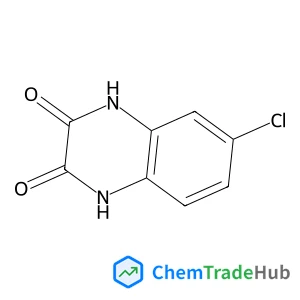
6-CHLORO-2,3-DIOXO-1,2,3,4-TETRAHYDROQUINOXALINE, 97
CAS Number:
169-14-2
Molecular Formula:
C8H5ClN2O2
![1-[(4-Methylphenyl)sulfonyl]-3-(4,4,5,5-tetramethyl-1,3,2-dioxaborolan-2-yl)-1H-pyrrolo[2,3-b]pyridine-5-carbonitrile structure](https://static.chemtradehub.com/structs/143/1434747-57-5-fc0d.webp "1-[(4-Methylphenyl)sulfonyl]-3-(4,4,5,5-tetramethyl-1,3,2-dioxaborolan-2-yl)-1H-pyrrolo[2,3-b]pyridine-5-carbonitrile structure")
1-[(4-Methylphenyl)sulfonyl]-3-(4,4,5,5-tetramethyl-1,3,2-dioxaborolan-2-yl)-1H-pyrrolo[2,3-b]pyridine-5-carbonitrile
CAS Number:
1434747-57-5
Molecular Formula:
C21H22BN3O4S
Recommended Suppliers







Disclaimer
This page provides academic journal information for reference and research purposes only. We are not affiliated with any journal publishers and do not handle publication submissions. For publication-related inquiries, please contact the respective journal publishers directly.
If you notice any inaccuracies in the information displayed, please contact us at support@chemtradehub.com. We will promptly review and address your concerns.