


Control over the assembly and rheology of supramolecular networks via multi-responsive double hydrophilic copolymers
Literature Information
Publication Date
2017-01-30
DOI
10.1039/C6PY02143C
Impact Factor
5.582
Authors
Jérémy Brassinne, Charles-André Fustin, Jean-François Gohy
View Original
Abstract
Stimuli-responsive double hydrophilic diblock copolymers have been prepared that consist of poly(N-isopropylacrylamide)-block-poly(2-(dimethylamino)ethyl methacrylate) sequences terminated by a terpyridine ligand. These building blocks are assembled in aqueous media in a stepwise manner, by first forming metallo-supramolecular ABA triblock copolymers and then gels by thermo-induced micellar aggregation. This study sheds light on the subtle interplay that exists between the responsive behaviour of the core and corona forming blocks. Due to the intrinsic sensitivity of the constituting polymer chains and the non-covalent interactions between them, supramolecular gels respond to specific external triggers. These stimuli allow the manipulation of numerous rheological aspects of the assembled materials, including network formation and dynamics. Interestingly, an independent control over the network formation and dynamics is notably achieved via an appropriate choice of the metal ions and of the length of the associating block. By playing with the architecture of the associating copolymers and the nature of the metal ions, this work further demonstrates the possibility to build materials possessing either a mono or dual relaxation mechanism via a unique approach.
Recommended Journals

Russian Journal of Organic Chemistry

Current Opinion in Colloid & Interface Science

Russian Journal of Coordination Chemistry

Acta Materialia

Russian Journal of Bioorganic Chemistry

Crystallography Reports

Chemical Communications

Saudi Pharmaceutical Journal

New Journal of Chemistry

Chemistry Education Research and Practice
Related Literature
Molecular mechanisms for thermal degradation of CO2-loaded aqueous monoethanolamine solution: a first-principles study
Bohak Yoon, Haley M. Stowe
2019-09-25
Paper
DOI: 10.1039/C9CP04518J
Systematic modification of the indium tin oxide work function via side-chain modulation of an amino-acid functionalization layer
Naomi Kramer, Soumyajit Sarkar, Leeor Kronik, Nurit Ashkenasy
2019-09-23
Paper
DOI: 10.1039/C9CP04079J
The physical stage of radiolysis of solvated DNA by high-energy-transfer particles: insights from new first principles simulations
Aurelio Alvarez-Ibarra, Aurélien de la Lande
2020-03-12
Paper
DOI: 10.1039/D0CP00165A
Embedding of atoms into the nanopore sites of the C6N6 and C6N8 porous carbon nitride monolayers with tunable electronic properties
Catherine Stampfl, Berna Akgenc, Mitra Ghergherehchi, Ch. V. Nguyen
2020-02-20
Paper
DOI: 10.1039/D0CP00093K
Ferroelectricity and multiferroicity in two-dimensional Sc2P2Se6 and ScCrP2Se6 monolayers
Xukun Feng, Jian Liu, Xikui Ma, Mingwen Zhao
2020-03-06
Paper
DOI: 10.1039/C9CP06966F
Linking structure to performance of Li1.2Mn0.54Ni0.13Co0.13O2 (Li and Mn rich NMC) cathode materials synthesized by different methods
N. Leifer, T. Penki, R. Nanda, J. Grinblat, S. Luski, D. Aurbach, G. Goobes
2020-04-02
Paper
DOI: 10.1039/D0CP00400F
Achieving long carrier lifetime and high optical gain in all-inorganic CsPbBr3 perovskite films via top and bottom surface modification
Li Jiang, Zhishan Fang, Haoran Lou, Chen Lin, Zhanhang Chen, Jing Li, Haiping He, Zhizhen Ye
2019-09-07
Paper
DOI: 10.1039/C9CP04033A
First-principles simulation of monolayer hydrogen passivated Bi2O2S2–metal interfaces
Linqiang Xu, Shiqi Liu, Han Zhang, Xiuying Zhang, Jingzhen Li, Jiahuan Yan, Bowen Shi, Jie Yang, Lianqiang Xu, Xiaotian Sun
2020-03-12
Paper
DOI: 10.1039/D0CP00058B
You might also like
Compound Q&A
What are the main uses of 4-Nitrophenyl phosphate disodium salt hexahydrate (CAS: 333338-18-4)?
4-Nitrophenyl phosphate disodium salt hexahydrate is primarily used as a substra...
333338-18-44-Nitrophenyl phosph...
Compound Q&A
What are the main uses of 2-(Trifluoromethyl)-1,3-oxazole-4-carboxylic Acid (CAS: 1060816-01-4)?
2-(Trifluoromethyl)-1,3-oxazole-4-carboxylic Acid (CAS: 1060816-01-4) is widely ...
1060816-01-42-(Trifluoromethyl)-...
Compound Q&A
How should 2-Fluoro-4-biphenylcarboxylic acid (CAS: 137045-30-8) be stored?
2-Fluoro-4-biphenylcarboxylic acid should be stored in a cool, dry place at room...
137045-30-82-Fluoro-4-biphenylc...
Compound Q&A
What industries use Prednisolone-21-Carboxylic Acid (CAS: 61549-70-0)?
Prednisolone-21-Carboxylic Acid is primarily used in the pharmaceutical industry...
61549-70-0Prednisolone-21-Carb...
Compound Q&A
How should 4-(Hydrazinomethyl)-1,2,3-benzenetriol (CAS: 3614-72-0) be stored?
4-(Hydrazinomethyl)-1,2,3-benzenetriol (CAS: 3614-72-0) should be stored in a co...
3614-72-04-(Hydrazinomethyl)-...
Compound Q&A
What industries use 4-Amino-1-methyl-1H-pyrazole-5-carboxylic acid hydrochloride (CAS: 92534-70-8)?
4-Amino-1-methyl-1H-pyrazole-5-carboxylic acid hydrochloride (CAS: 92534-70-8) i...
92534-70-84-Amino-1-methyl-1H-...
Compound Q&A
What regulatory guidelines apply to dehydropachymic acid (CAS: 77012-31-8)?
Dehydropachymic acid (CAS: 77012-31-8) is regulated by various agencies. It fall...
77012-31-8Dehydropachymic acid
Compound Q&A
What is the market or research trend for 6-[(2,2-Dimethylpropanoyl)amino]nicotinic acid (CAS: 898561-66-5)?
The market and research trends for 6-[(2,2-Dimethylpropanoyl)amino]nicotinic aci...
898561-66-56-[(2,2-Dimethylprop...
Compound Q&A
How should 1,10-Phenanthroline-2,9-dicarbaldehyde (CAS: 57709-62-3) be stored?
1,10-Phenanthroline-2,9-dicarbaldehyde should be stored in a cool, dry place awa...
57709-62-31,10-Phenanthroline-...
Compound Q&A
How is 5-Carbamoyl-11-oxo-10,11-dihydro-5H-dibenzo[b,f]azepin-10-yl acetate (CAS: 113952-21-9) typically synthesized?
5-Carbamoyl-11-oxo-10,11-dihydro-5H-dibenzo[b,f]azepin-10-yl acetate can be synt...
113952-21-95-Carbamoyl-11-oxo-1...
Source Journal
Polymer Chemistry

CiteScore:
8.6
Self-citation Rate:
7.3%
Articles per Year:
457
Polymer Chemistry welcomes submissions in all areas of polymer science that have a strong focus on macromolecular chemistry. Manuscripts may cover a broad range of fields, yet no direct application focus is required.
Recommended Compounds
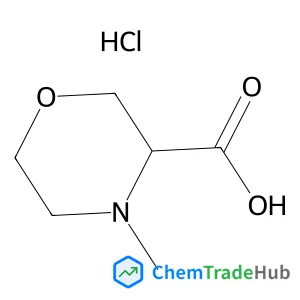
4-Methyl-3-morpholinecarboxylic acid hydrochloride (1:1)
CAS Number:
1240518-90-4
Molecular Formula:
C6H12ClNO3
phosphoryl}methyl 4-methylbenzenesulfonate structure](https://static.chemtradehub.com/structs/864/864068-45-1-ba7c.webp "{[3-(Hexadecyloxy)propoxy](hydroxy)phosphoryl}methyl 4-methylbenzenesulfonate structure")
{[3-(Hexadecyloxy)propoxy](hydroxy)phosphoryl}methyl 4-methylbenzenesulfonate
CAS Number:
864068-45-1
Molecular Formula:
C27H49O7PS
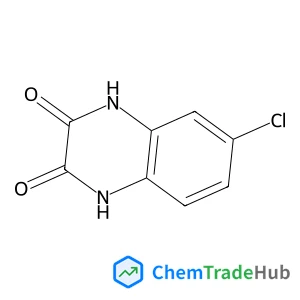
6-CHLORO-2,3-DIOXO-1,2,3,4-TETRAHYDROQUINOXALINE, 97
CAS Number:
169-14-2
Molecular Formula:
C8H5ClN2O2
Recommended Suppliers







Disclaimer
This page provides academic journal information for reference and research purposes only. We are not affiliated with any journal publishers and do not handle publication submissions. For publication-related inquiries, please contact the respective journal publishers directly.
If you notice any inaccuracies in the information displayed, please contact us at support@chemtradehub.com. We will promptly review and address your concerns.