












Separation and quantification of dead species in styreneRAFT polymerization by gradient polymerelution chromatography
Literature Information
Publication Date
2012-03-23
DOI
10.1039/C2PY20102J
Impact Factor
5.582
Authors
Ruiwei Guo, Zhipeng Shi, Xingxing Wang, Anjie Dong
View Original
Abstract
In living polymerization, the inevitable dead chain impurities, due to bimolecular termination and side reactions, are not only an obstacle for the synthesis of pure block copolymers but also an impairment in the application performance of the resulting polymer materials. In this paper, a simple separation and quantification method based on gradient polymer elution chromatography (GPEC) was developed to experimentally investigate the dead species in RAFT polymerization of styrene. The RAFT-prepared polystyrene (PSt) was extended with methyl acrylate in a specially-designed chain extension reaction, in which the living PSt chains were extended and transformed into block copolymer, but the remaining dead PSt chains (D-PSt) will remain constant and can be separated and quantified by GPEC. The systematic experimental investigation of the effect of various polymerization parameters on the mass fraction of dead species (fD-PSt) in RAFT-prepared polystyrene (PSt) was implemented. The results clearly demonstrated the initiator concentration and RAFT agent concentration can exhibit a linear and inversely proportional dependence on fD-PSt, respectively. In addition, the dead chains were found to be formed throughout the entire RAFT process. These unambiguous experimental data confirmed the previous theoretical calculation and model prediction, which may be beneficial to understand RAFT processes, optimize polymerization conditions and to minimize dead polymer contaminations. Moreover, the method based on GPEC proposed here was able to fractionate and quantify the dead and living species, which can serve as a powerful tool in the mechanistic study of the living radical polymerizations.
Related Literature
Nanocomposite latexes containing layered double hydroxides via RAFT-assisted encapsulating emulsion polymerization
Ana Cenacchi Perreira, Samuel Pearson, Franck D'Agosto, Muriel Lansalot, Elodie Bourgeat-Lami
2017-01-05
Paper
DOI: 10.1039/C6PY01742H
Visible-light-induced living radical polymerization using in situ bromine-iodine transformation as an internal boost
Xiaodong Liu, Qinghua Xu, Lifen Zhang, Zhenping Cheng, Xiulin Zhu
2017-03-24
Paper
DOI: 10.1039/C7PY00366H
Synthesis of highly branched polymers by reversible complexation-mediated copolymerization of vinyl and divinyl monomers
Hongjun Yang, Zhongrui Wang, Yulei Zheng, Wenyan Huang, Xiaoqiang Xue, Bibiao Jiang
2017-02-21
Paper
DOI: 10.1039/C7PY00174F
Copolymers of carbazole and phenazine derivatives: minor structural modification, but totally different photodetector performance
Shuang Li, Xianyu Deng, Lei Feng, Xincheng Miao, Kuangyi Tang, Qianqian Li, Zhen Li
2016-12-21
Paper
DOI: 10.1039/C6PY01733A
Dynamic supramolecular self-assembly: hydrogen bonding-induced contraction and extension of functional polymers
Chih-Chia Cheng, Jui-Hsu Wang, Wei-Tsung Chuang, Zhi-Sheng Liao, Jyun-Jie Huang, Shan-You Huang, Wen-Lu Fan
2017-04-26
Paper
DOI: 10.1039/C7PY00684E
Unusual thermal phase transition behavior of an ionic liquid and poly(ionic liquid) in water with significantly different LCST and dynamic mechanism
Wenlong Li, Peiyi Wu
2014-05-16
Paper
DOI: 10.1039/C4PY00593G
Naphthobisthiazole diimide-based n-type polymer semiconductors: synthesis, π-stacking, field-effect charge transport, and all-polymer solar cells
Selvam Subramaniyan, Taeshik Earmme, Nishit M. Murari, Samson A. Jenekhe
2014-07-02
Paper
DOI: 10.1039/C4PY00566J
Synthesis of amphiphilic diblock copolymers derived from renewable dextran by nitroxide mediated polymerization: towards hierarchically structured honeycomb porous films
Senbin Chen, Marie-Hélène Alves, Maud Save, Laurent Billon
2014-05-12
Paper
DOI: 10.1039/C4PY00390J
Correction: Amphiphilic and double hydrophilic block copolymers containing a polydehydroalanine block
Peter Bellstedt
2017-01-17
Correction
DOI: 10.1039/C7PY90013A
You might also like
Compound Q&A
Are there alternatives to 1-(4-Chlorophenyl)-N-hydroxymethanimine (CAS: 3848-36-0) in synthesis?
When considering alternatives to 1-(4-Chlorophenyl)-N-hydroxymethanimine (CAS: 3...
3848-36-01-(4-Chlorophenyl)-N...
Compound Q&A
How should (1R,9S,10S,12S,14E,16S,19R,20R,21S,22R)-3,9,21-Trihydroxy-5,10,12,14,16,20,22-heptamethyl-23,24-dioxatetracyclo[17.3.1.1~6,9~.0~2,7~]tetracosa-2,5,7,14-tetraen-4-one (CAS: 183202-73-5) be stored?
This compound should be stored in a cool, dry place away from direct sunlight. I...
183202-73-5(1R,9S,10S,12S,14E,1...
Compound Q&A
How is 3-(4-Bromophenyl)-5-(2-fluorophenyl)-1,2,4-oxadiazole (CAS: 419553-16-5) typically synthesized?
3-(4-Bromophenyl)-5-(2-fluorophenyl)-1,2,4-oxadiazole is synthesized through a m...
419553-16-53-(4-Bromophenyl)-5-...
Compound Q&A
How is 5-Chloro-2-(4-chlorophenyl)-4-methyl-6-[3-(1-piperidinyl)propoxy]pyrimidine (CAS: 1639220-19-1) typically synthesized?
5-Chloro-2-(4-chlorophenyl)-4-methyl-6-[3-(1-piperidinyl)propoxy]pyrimidine (CAS...
1639220-19-15-Chloro-2-(4-chloro...
Compound Q&A
What industries use 2-Chloro-4-(difluoromethoxy)pyridine (CAS: 1206978-15-5)?
2-Chloro-4-(difluoromethoxy)pyridine is used in the pharmaceutical industry for ...
1206978-15-52-Chloro-4-(difluoro...
Compound Q&A
What regulatory guidelines apply to 3-Chloro-6-methylpyridazine (CAS: 1121-79-5)?
3-Chloro-6-methylpyridazine (CAS: 1121-79-5) is classified under the Globally Ha...
1121-79-53-Chloro-6-methylpyr...
Compound Q&A
Are there alternatives to Methyl 4,5-dimethyl-2-nitrobenzoate in synthesis?
Several alternatives can be used in the synthesis of Methyl 4,5-dimethyl-2-nitro...
90922-74-0Methyl 4,5-dimethyl-...
Compound Q&A
Are there alternatives to (2E,2'E)-3,3'-(1,4-Phenylene)bisacrylaldehyde in synthesis?
Alternatives to (2E,2'E)-3,3'-(1,4-Phenylene)bisacrylaldehyde include other acry...
63405-68-5(2E,2'E)-3,3'-(1,4-P...
Compound Q&A
What is 3-Amino-5-chloropyridin-2-ol hydrochloride (CAS: 1261906-29-9)?
3-Amino-5-chloropyridin-2-ol hydrochloride is an organic compound with the CAS n...
1261906-29-93-Amino-5-chloropyri...
Compound Q&A
What precautions should be taken when handling 6,7-Difluoro-2,3-dihydro-4H-chromen-4-one (CAS: 1092349-93-3)?
When handling 6,7-Difluoro-2,3-dihydro-4H-chromen-4-one, it is essential to wear...
1092349-93-36,7-Difluoro-2,3-dih...
Source Journal
Polymer Chemistry

CiteScore:
8.6
Self-citation Rate:
7.3%
Articles per Year:
457
Polymer Chemistry welcomes submissions in all areas of polymer science that have a strong focus on macromolecular chemistry. Manuscripts may cover a broad range of fields, yet no direct application focus is required.
Recommended Compounds
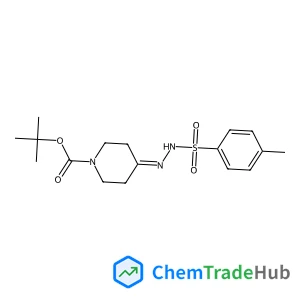
tert-Butyl 4-(2-(p-Tolylsulfonyl)hydrazono)piperidine-1-carboxylate
CAS Number:
1046478-89-0
Molecular Formula:
C17H25N3O4S
![2-{[(1R,2S)-2-Aminocyclohexyl]amino}-4-{[3-(2H-1,2,3-triazol-2-yl)phenyl]amino}-5-pyrimidinecarboxamide structure](https://static.chemtradehub.com/structs/137/1370261-96-3-40df.webp "2-{[(1R,2S)-2-Aminocyclohexyl]amino}-4-{[3-(2H-1,2,3-triazol-2-yl)phenyl]amino}-5-pyrimidinecarboxamide structure")
2-{[(1R,2S)-2-Aminocyclohexyl]amino}-4-{[3-(2H-1,2,3-triazol-2-yl)phenyl]amino}-5-pyrimidinecarboxamide
CAS Number:
1370261-96-3
Molecular Formula:
C19H23N9O
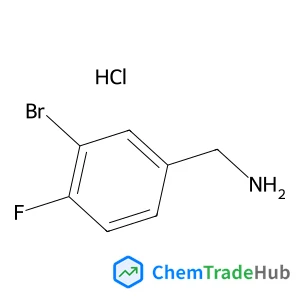
1-(3-Bromo-4-fluorophenyl)methanamine hydrochloride (1:1)
CAS Number:
202865-68-7
Molecular Formula:
C7H8BrClFN
Recommended Suppliers







Disclaimer
This page provides academic journal information for reference and research purposes only. We are not affiliated with any journal publishers and do not handle publication submissions. For publication-related inquiries, please contact the respective journal publishers directly.
If you notice any inaccuracies in the information displayed, please contact us at support@chemtradehub.com. We will promptly review and address your concerns.