


Nanocomposite latexes containing layered double hydroxides via RAFT-assisted encapsulating emulsion polymerization
Literature Information
Publication Date
2017-01-05
DOI
10.1039/C6PY01742H
Impact Factor
5.582
Authors
Ana Cenacchi Perreira, Samuel Pearson, Franck D'Agosto, Muriel Lansalot, Elodie Bourgeat-Lami
View Original
Abstract
Nanocomposite latex particles containing layered double hydroxide (LDH) platelets were synthesized using reversible addition–fragmentation chain transfer (RAFT) seeded emulsion polymerization. A random copolymer of acrylic acid (AA) and n-butyl acrylate (BA) was first synthesized by RAFT polymerization, and then electrostatically adsorbed on both nitrate- and carbonate-intercalated Mg2Al LDH particles to provide both colloidal stability and reactivatable groups from which the subsequent emulsion polymerization could proceed. The nitrate-intercalated LDH showed higher adsorption capacity than its carbonate counterpart because interlayer nitrate ions (in addition to those on the outer surface) were also displaced by the macroRAFT agent. The two macroRAFT agent-modified LDHs were then engaged in the emulsion polymerization of a hydrophobic monomer mixture (methyl acrylate (MA) and BA, 80/20 wt/wt) to form an encapsulating polymer shell. Cryogenic-transmission electron microscopy (cryo-TEM) showed successful encapsulation of the LDH nanoplatelets in the core of the latex particles, with the use of a hydrolytically-stable cationic initiator proving key to achieving high monomer conversions.
Recommended Journals

New Journal of Chemistry

Current Opinion in Solid State & Materials Science

Russian Journal of Bioorganic Chemistry

Russian Journal of Applied Chemistry

Current Opinion in Colloid & Interface Science

Journal of Saudi Chemical Society

Saudi Pharmaceutical Journal

Acta Materialia

Russian Journal of General Chemistry

Chemical Communications
Related Literature
Lanthanide-induced conformational change of methanol dehydrogenase involving coordination change of cofactor pyrroloquinoline quinone
2019-09-04
Paper
DOI: 10.1039/C9CP03953H
Cu/SAPO-34 prepared by a facile ball milling method for enhanced catalytic performance in the selective catalytic reduction of NOx with NH3
Huazhen Chang, Xuan Qin, Lei Ma, Tao Zhang, Junhua Li
2019-09-24
Paper
DOI: 10.1039/C9CP04519H
Water does not catalyze the reaction of OH radicals with ethanol
Isabelle Weber, Hichem Bouzidi, Bianca Krumm, Coralie Schoemaecker, Alexandre Tomas, Christa Fittschen
2020-03-05
Communication
DOI: 10.1039/D0CP00467G
The ground state of KO revisited: the millimeter and submillimeter spectrum of potassium oxide
Mark A. Burton, Benjamin T. Russ, Matthew P. Bucchino, Phillip M. Sheridan, Lucy M. Ziurys
2019-09-19
Paper
DOI: 10.1039/C9CP03465J
A unique pentagonal network structure of the NiS2 monolayer with high stability and a tunable bandgap
2020-03-07
Paper
DOI: 10.1039/D0CP00434K
Effect of graphene between photoanode and sensitizer on the intramolecular and intermolecular electron transfer process
Xiaofei Wang, Yuanzuo Li, Peng Song, Fengcai Ma, Yanhui Yang
2020-02-28
Paper
DOI: 10.1039/C9CP06543A
Optimizing the orbital occupation in the multiple minima problem of magnetic materials from the metaheuristic firefly algorithm
Adam Payne, Guillermo Avedaño-Franco, Xu He, Eric Bousquet, Aldo H. Romero
2019-09-17
Paper
DOI: 10.1039/C9CP03618K
Tailoring the structural and electronic properties of an SnSe2/MoS2 van der Waals heterostructure with an electric field and the insertion of a graphene sheet
Nguyen V. Hieu, Le T. P. Thao, Nguyen N. Hieu, Huynh V. Phuc, H. D. Bui, M. Idrees, B. Amin, Le M. Duc, Chuong V. Nguyen
2019-09-24
Paper
DOI: 10.1039/C9CP04689E
HERFD-XANES probes of electronic structures of ironII/III carbene complexes
Om Prakash, Hao Fan, Lisa H. M. de Groot, Valtýr Freyr Hlynsson, Simon Kaufhold, Olga Gordivska, Nicolás Velásquez, Pavel Chabera, Pieter Glatzel, Kenneth Wärnmark, Petter Persson, Jens Uhlig
2020-04-16
Paper
DOI: 10.1039/C9CP06309A
Extensive tests and evaluation of the CHARMM36IDPSFF force field for intrinsically disordered proteins and folded proteins
Hao Liu, Dong Song, Yangpeng Zhang, Sheng Yang, Ray Luo
2019-09-10
Paper
DOI: 10.1039/C9CP03434J
You might also like
Compound Q&A
What are the main uses of 4-Nitrophenyl phosphate disodium salt hexahydrate (CAS: 333338-18-4)?
4-Nitrophenyl phosphate disodium salt hexahydrate is primarily used as a substra...
333338-18-44-Nitrophenyl phosph...
Compound Q&A
What are the main uses of 2-(Trifluoromethyl)-1,3-oxazole-4-carboxylic Acid (CAS: 1060816-01-4)?
2-(Trifluoromethyl)-1,3-oxazole-4-carboxylic Acid (CAS: 1060816-01-4) is widely ...
1060816-01-42-(Trifluoromethyl)-...
Compound Q&A
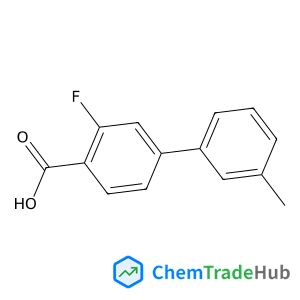
How should 2-Fluoro-4-biphenylcarboxylic acid (CAS: 137045-30-8) be stored?
2-Fluoro-4-biphenylcarboxylic acid should be stored in a cool, dry place at room...
137045-30-82-Fluoro-4-biphenylc...
Compound Q&A
What industries use Prednisolone-21-Carboxylic Acid (CAS: 61549-70-0)?
Prednisolone-21-Carboxylic Acid is primarily used in the pharmaceutical industry...
61549-70-0Prednisolone-21-Carb...
Compound Q&A
How should 4-(Hydrazinomethyl)-1,2,3-benzenetriol (CAS: 3614-72-0) be stored?
4-(Hydrazinomethyl)-1,2,3-benzenetriol (CAS: 3614-72-0) should be stored in a co...
3614-72-04-(Hydrazinomethyl)-...
Compound Q&A
What industries use 4-Amino-1-methyl-1H-pyrazole-5-carboxylic acid hydrochloride (CAS: 92534-70-8)?
4-Amino-1-methyl-1H-pyrazole-5-carboxylic acid hydrochloride (CAS: 92534-70-8) i...
92534-70-84-Amino-1-methyl-1H-...
Compound Q&A
What regulatory guidelines apply to dehydropachymic acid (CAS: 77012-31-8)?
Dehydropachymic acid (CAS: 77012-31-8) is regulated by various agencies. It fall...
77012-31-8Dehydropachymic acid
Compound Q&A
What is the market or research trend for 6-[(2,2-Dimethylpropanoyl)amino]nicotinic acid (CAS: 898561-66-5)?
The market and research trends for 6-[(2,2-Dimethylpropanoyl)amino]nicotinic aci...
898561-66-56-[(2,2-Dimethylprop...
Compound Q&A
How should 1,10-Phenanthroline-2,9-dicarbaldehyde (CAS: 57709-62-3) be stored?
1,10-Phenanthroline-2,9-dicarbaldehyde should be stored in a cool, dry place awa...
57709-62-31,10-Phenanthroline-...
Compound Q&A
How is 5-Carbamoyl-11-oxo-10,11-dihydro-5H-dibenzo[b,f]azepin-10-yl acetate (CAS: 113952-21-9) typically synthesized?
5-Carbamoyl-11-oxo-10,11-dihydro-5H-dibenzo[b,f]azepin-10-yl acetate can be synt...
113952-21-95-Carbamoyl-11-oxo-1...
Source Journal
Polymer Chemistry

CiteScore:
8.6
Self-citation Rate:
7.3%
Articles per Year:
457
Polymer Chemistry welcomes submissions in all areas of polymer science that have a strong focus on macromolecular chemistry. Manuscripts may cover a broad range of fields, yet no direct application focus is required.
Recommended Compounds
![(2E)-3-(3-Chlorophenyl)-N-{2-[4-(methylsulfonyl)-1-piperazinyl]-2-oxoethyl}acrylamide structure](https://static.chemtradehub.com/structs/250/2505001-54-5-c1e9.webp "(2E)-3-(3-Chlorophenyl)-N-{2-[4-(methylsulfonyl)-1-piperazinyl]-2-oxoethyl}acrylamide structure")
(2E)-3-(3-Chlorophenyl)-N-{2-[4-(methylsulfonyl)-1-piperazinyl]-2-oxoethyl}acrylamide
CAS Number:
2505001-54-5
Molecular Formula:
C16H20ClN3O4S

1,3(2H,4H)-Isoquinolinedione, 7-amino-4,4-dimethyl-
CAS Number:
14576-22-8
Molecular Formula:
C11H12N2O2
Recommended Suppliers





Disclaimer
This page provides academic journal information for reference and research purposes only. We are not affiliated with any journal publishers and do not handle publication submissions. For publication-related inquiries, please contact the respective journal publishers directly.
If you notice any inaccuracies in the information displayed, please contact us at support@chemtradehub.com. We will promptly review and address your concerns.