


Synthesis of highly branched polymers by reversible complexation-mediated copolymerization of vinyl and divinyl monomers
Literature Information
Publication Date
2017-02-21
DOI
10.1039/C7PY00174F
Impact Factor
5.582
Authors
Hongjun Yang, Zhongrui Wang, Yulei Zheng, Wenyan Huang, Xiaoqiang Xue, Bibiao Jiang
View Original
Abstract
Here, we report the reversible complexation-mediated copolymerization (RCMcP) of vinyl and divinyl monomers for the synthesis of highly branched polymers. A conventional azo radical initiator, 2,2′-azobisisoheptonitrile (V65), a free-radical polymerization inhibitor (I2), and a highly reactive but inexpensive salt (NaI) were used to initiate and control the polymerization. The highly branched structures and process of branching were confirmed and thoroughly investigated. The reactivity of the vinyl groups incorporated into the copolymer was found to be similar to that of the monomers used in the RCMcP reaction. Large numbers of branched structures occurred when the conversion of MMA (conv.MMA) reached 56.6%, at which point the amount of pendant vinyl groups in the polymer reached a maximum value. The most significant branching occurred when the conv.MMA approached 90% because of intermolecular reactions between macromolecules. The polymerization reaction can also be performed without deoxygenation, with no obvious prolongation of induction. This work provides a simple, easy, and versatile method for the synthesis of highly branched polymers from commercially available compounds.
Recommended Journals

Nature Medicine

Journal of Saudi Chemical Society

Chemistry Education Research and Practice

Organic Process Research & Development

Drug Discovery Today

Crystallography Reports

Russian Journal of Coordination Chemistry

Russian Journal of Bioorganic Chemistry

Current Opinion in Colloid & Interface Science

Saudi Pharmaceutical Journal
Related Literature
Pseudo-equilibrium equation of calcium phosphate precipitation from aqueous solution
Bao-Di Gou, Yu-Xi Gao, Gang Wu, Tian-Lan Zhang
2019-09-16
Paper
DOI: 10.1039/C9CP04250D
Four resonance structures elucidate double-bond isomerisation of a biological chromophore
Evgeniy V. Gromov, Tatiana Domratcheva
2020-04-09
Paper
DOI: 10.1039/D0CP00814A
Effect of graphene between photoanode and sensitizer on the intramolecular and intermolecular electron transfer process
Xiaofei Wang, Yuanzuo Li, Peng Song, Fengcai Ma, Yanhui Yang
2020-02-28
Paper
DOI: 10.1039/C9CP06543A
Water does not catalyze the reaction of OH radicals with ethanol
Isabelle Weber, Hichem Bouzidi, Bianca Krumm, Coralie Schoemaecker, Alexandre Tomas, Christa Fittschen
2020-03-05
Communication
DOI: 10.1039/D0CP00467G
The tetracapped truncated tetrahedron in 16-vertex tetrametallaborane structures: spherical aromaticity with an isocloso rather than a closo skeletal electron count
Amr A. A. Attia, Alexandru Lupan, R. Bruce King, Sundargopal Ghosh
2019-09-20
Paper
DOI: 10.1039/C9CP04263F
Extensive tests and evaluation of the CHARMM36IDPSFF force field for intrinsically disordered proteins and folded proteins
Hao Liu, Dong Song, Yangpeng Zhang, Sheng Yang, Ray Luo
2019-09-10
Paper
DOI: 10.1039/C9CP03434J
Embedding of atoms into the nanopore sites of the C6N6 and C6N8 porous carbon nitride monolayers with tunable electronic properties
Catherine Stampfl, Berna Akgenc, Mitra Ghergherehchi, Ch. V. Nguyen
2020-02-20
Paper
DOI: 10.1039/D0CP00093K
Thermal decomposition of mixed calcium oxalate hydrates – kinetic deconvolution of complex heterogeneous processes
Roman Svoboda, Zuzana Olmrová Zmrhalová, Dušan Galusek, Daniela Brandová, Jozef Chovanec
2020-03-23
Paper
DOI: 10.1039/C9CP06867H
Achieving long carrier lifetime and high optical gain in all-inorganic CsPbBr3 perovskite films via top and bottom surface modification
Li Jiang, Zhishan Fang, Haoran Lou, Chen Lin, Zhanhang Chen, Jing Li, Haiping He, Zhizhen Ye
2019-09-07
Paper
DOI: 10.1039/C9CP04033A
You might also like
Compound Q&A
What are the main uses of 4-Nitrophenyl phosphate disodium salt hexahydrate (CAS: 333338-18-4)?
4-Nitrophenyl phosphate disodium salt hexahydrate is primarily used as a substra...
333338-18-44-Nitrophenyl phosph...
Compound Q&A
What are the main uses of 2-(Trifluoromethyl)-1,3-oxazole-4-carboxylic Acid (CAS: 1060816-01-4)?
2-(Trifluoromethyl)-1,3-oxazole-4-carboxylic Acid (CAS: 1060816-01-4) is widely ...
1060816-01-42-(Trifluoromethyl)-...
Compound Q&A
How should 2-Fluoro-4-biphenylcarboxylic acid (CAS: 137045-30-8) be stored?
2-Fluoro-4-biphenylcarboxylic acid should be stored in a cool, dry place at room...
137045-30-82-Fluoro-4-biphenylc...
Compound Q&A
What industries use Prednisolone-21-Carboxylic Acid (CAS: 61549-70-0)?
Prednisolone-21-Carboxylic Acid is primarily used in the pharmaceutical industry...
61549-70-0Prednisolone-21-Carb...
Compound Q&A
How should 4-(Hydrazinomethyl)-1,2,3-benzenetriol (CAS: 3614-72-0) be stored?
4-(Hydrazinomethyl)-1,2,3-benzenetriol (CAS: 3614-72-0) should be stored in a co...
3614-72-04-(Hydrazinomethyl)-...
Compound Q&A
What industries use 4-Amino-1-methyl-1H-pyrazole-5-carboxylic acid hydrochloride (CAS: 92534-70-8)?
4-Amino-1-methyl-1H-pyrazole-5-carboxylic acid hydrochloride (CAS: 92534-70-8) i...
92534-70-84-Amino-1-methyl-1H-...
Compound Q&A
What regulatory guidelines apply to dehydropachymic acid (CAS: 77012-31-8)?
Dehydropachymic acid (CAS: 77012-31-8) is regulated by various agencies. It fall...
77012-31-8Dehydropachymic acid
Compound Q&A
What is the market or research trend for 6-[(2,2-Dimethylpropanoyl)amino]nicotinic acid (CAS: 898561-66-5)?
The market and research trends for 6-[(2,2-Dimethylpropanoyl)amino]nicotinic aci...
898561-66-56-[(2,2-Dimethylprop...
Compound Q&A
How should 1,10-Phenanthroline-2,9-dicarbaldehyde (CAS: 57709-62-3) be stored?
1,10-Phenanthroline-2,9-dicarbaldehyde should be stored in a cool, dry place awa...
57709-62-31,10-Phenanthroline-...
Compound Q&A
How is 5-Carbamoyl-11-oxo-10,11-dihydro-5H-dibenzo[b,f]azepin-10-yl acetate (CAS: 113952-21-9) typically synthesized?
5-Carbamoyl-11-oxo-10,11-dihydro-5H-dibenzo[b,f]azepin-10-yl acetate can be synt...
113952-21-95-Carbamoyl-11-oxo-1...
Source Journal
Polymer Chemistry

CiteScore:
8.6
Self-citation Rate:
7.3%
Articles per Year:
457
Polymer Chemistry welcomes submissions in all areas of polymer science that have a strong focus on macromolecular chemistry. Manuscripts may cover a broad range of fields, yet no direct application focus is required.
Recommended Compounds
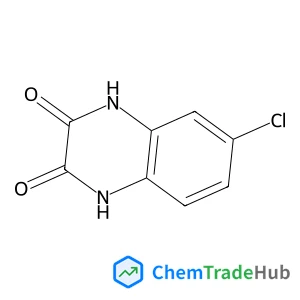
6-CHLORO-2,3-DIOXO-1,2,3,4-TETRAHYDROQUINOXALINE, 97
CAS Number:
169-14-2
Molecular Formula:
C8H5ClN2O2
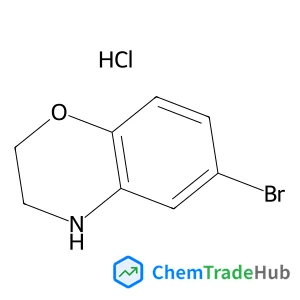
6-Bromo-3,4-dihydro-2H-1,4-benzoxazine hydrochloride (1:1)
CAS Number:
1260803-10-8
Molecular Formula:
C8H9BrClNO
Recommended Suppliers





Disclaimer
This page provides academic journal information for reference and research purposes only. We are not affiliated with any journal publishers and do not handle publication submissions. For publication-related inquiries, please contact the respective journal publishers directly.
If you notice any inaccuracies in the information displayed, please contact us at support@chemtradehub.com. We will promptly review and address your concerns.