












Formation of spherical nanoparticles in poly(amic acid) films
Literature Information
Publication Date
2012-05-25
DOI
10.1039/C2PY20093G
Impact Factor
5.582
Authors
Tomohito Ogura, Yuta Saito, Tomoya Higashihara, Mitsuru Ueda
View Original
Abstract
We found for the first time the formation of spherical nanoparticles in poly(amic acid) (PAA) derived from 3,3′,4,4′-biphenyltetracarboxylic dianhydride and 4,4′-oxydianiline films after pre-baking. Several factors influencing the formation of spherical nanoparticles have been investigated. The molecular weights of PAA and the pre-bake temperature are important and effective parameters influencing the particle morphology. On the other hand, spherical nanoparticle formation does not depend on the film casting method. The particle size distribution after pre-baking at 100–150 °C for 5 min is rather narrow in the range of 25–45 nm and the mean particle diameter is 33 nm, which means that the resulting film is transparent and can be used as a photoresist. This observation is very important for developing photosensitive polyimides providing a deeper insight into a development process using organic solvents or aqueous base solutions.
Related Literature
Heterogeneous organocatalysts composed of microporous polymer networks assembled by Tröger's base formation
Mariolino Carta, Matthew Croad, Keith Bugler, Kadhum J. Msayib, Neil B. McKeown
2014-06-20
Paper
DOI: 10.1039/C4PY00608A
tBCPMA: a new trifunctional acrylic monomer for convenient synthesis of a well-defined amphiphilic graft copolymer by successive RDRP
Chun Feng, Guolin Lu, Gang Sun, Xunwei Liu, Xiaoyu Huang
2014-06-30
Paper
DOI: 10.1039/C4PY00772G
Vesicles of double hydrophilic pullulan and poly(acrylamide) block copolymers: a combination of synthetic- and bio-derived blocks
Jochen Willersinn, Anna Bogomolova, Marc Brunet Cabré, Bernhard V. K. J. Schmidt
2017-01-09
Paper
DOI: 10.1039/C6PY02212J
Controlled polymerization of isoprene promoted by a type of hemilabile XPN3 (X = O, S) ligand supported cobalt(ii) complexes: the role of a hemilabile donor on the level of control
Huafeng Chen, Weijing Pan, Kuo-Wei Huang, Xuequan Zhang, Dirong Gong
2017-02-20
Paper
DOI: 10.1039/C7PY00252A
Rational design on D–A conjugated P(BDT–DTBT) polymers for polymer solar cells
Chen Gao, Liwei Wang, Xiaoyu Li
2014-04-22
Review Article
DOI: 10.1039/C4PY00389F
Synthesis of cardo-polymers using Tröger's base formation
Mariolino Carta, Matthew Croad, Johannes C. Jansen, Paola Bernardo, Gabriele Clarizia, Neil B. McKeown
2014-06-20
Paper
DOI: 10.1039/C4PY00607K
Oxygen and carbon dioxide dual gas-responsive homopolymers and diblock copolymers synthesized via RAFT polymerization
Xue Jiang, Guolin Lu, Huang Xiaoyu
2016-12-26
Paper
DOI: 10.1039/C6PY02004F
Microwave-assisted solution polycondensation of l-lactic acid using a Dean–Stark apparatus for a non-thermal microwave polymerization effect induced by the electric field
Shinji Yamada, Akinori Takasu, Sadatsugu Takayama, Kazuhiko Kawamura
2014-05-16
Paper
DOI: 10.1039/C4PY00639A
Tumor-targeted aggregation of pH-sensitive nanocarriers for enhanced retention and rapid intracellular drug release
Wei Wu, Qiujing Zhang, Jiantao Wang, Miao Chen, Shuai Li, Zaifu Lin, Jianshu Li
2014-05-30
Paper
DOI: 10.1039/C4PY00575A
Block, random and palm-tree amphiphilic fluorinated copolymers: controlled synthesis, surface activity and use as dispersion polymerization stabilizers
David Alaimo, Alexandre Beigbeder, Philippe Dubois, Guy Broze, Christine Jérôme, Bruno Grignard
2014-05-09
Paper
DOI: 10.1039/C4PY00366G
You might also like
Compound Q&A
Are there alternatives to 1-(4-Chlorophenyl)-N-hydroxymethanimine (CAS: 3848-36-0) in synthesis?
When considering alternatives to 1-(4-Chlorophenyl)-N-hydroxymethanimine (CAS: 3...
3848-36-01-(4-Chlorophenyl)-N...
Compound Q&A
How should (1R,9S,10S,12S,14E,16S,19R,20R,21S,22R)-3,9,21-Trihydroxy-5,10,12,14,16,20,22-heptamethyl-23,24-dioxatetracyclo[17.3.1.1~6,9~.0~2,7~]tetracosa-2,5,7,14-tetraen-4-one (CAS: 183202-73-5) be stored?
This compound should be stored in a cool, dry place away from direct sunlight. I...
183202-73-5(1R,9S,10S,12S,14E,1...
Compound Q&A
How is 3-(4-Bromophenyl)-5-(2-fluorophenyl)-1,2,4-oxadiazole (CAS: 419553-16-5) typically synthesized?
3-(4-Bromophenyl)-5-(2-fluorophenyl)-1,2,4-oxadiazole is synthesized through a m...
419553-16-53-(4-Bromophenyl)-5-...
Compound Q&A
How is 5-Chloro-2-(4-chlorophenyl)-4-methyl-6-[3-(1-piperidinyl)propoxy]pyrimidine (CAS: 1639220-19-1) typically synthesized?
5-Chloro-2-(4-chlorophenyl)-4-methyl-6-[3-(1-piperidinyl)propoxy]pyrimidine (CAS...
1639220-19-15-Chloro-2-(4-chloro...
Compound Q&A
What industries use 2-Chloro-4-(difluoromethoxy)pyridine (CAS: 1206978-15-5)?
2-Chloro-4-(difluoromethoxy)pyridine is used in the pharmaceutical industry for ...
1206978-15-52-Chloro-4-(difluoro...
Compound Q&A
What regulatory guidelines apply to 3-Chloro-6-methylpyridazine (CAS: 1121-79-5)?
3-Chloro-6-methylpyridazine (CAS: 1121-79-5) is classified under the Globally Ha...
1121-79-53-Chloro-6-methylpyr...
Compound Q&A
Are there alternatives to Methyl 4,5-dimethyl-2-nitrobenzoate in synthesis?
Several alternatives can be used in the synthesis of Methyl 4,5-dimethyl-2-nitro...
90922-74-0Methyl 4,5-dimethyl-...
Compound Q&A
Are there alternatives to (2E,2'E)-3,3'-(1,4-Phenylene)bisacrylaldehyde in synthesis?
Alternatives to (2E,2'E)-3,3'-(1,4-Phenylene)bisacrylaldehyde include other acry...
63405-68-5(2E,2'E)-3,3'-(1,4-P...
Compound Q&A
What is 3-Amino-5-chloropyridin-2-ol hydrochloride (CAS: 1261906-29-9)?
3-Amino-5-chloropyridin-2-ol hydrochloride is an organic compound with the CAS n...
1261906-29-93-Amino-5-chloropyri...
Compound Q&A
What precautions should be taken when handling 6,7-Difluoro-2,3-dihydro-4H-chromen-4-one (CAS: 1092349-93-3)?
When handling 6,7-Difluoro-2,3-dihydro-4H-chromen-4-one, it is essential to wear...
1092349-93-36,7-Difluoro-2,3-dih...
Source Journal
Polymer Chemistry

CiteScore:
8.6
Self-citation Rate:
7.3%
Articles per Year:
457
Polymer Chemistry welcomes submissions in all areas of polymer science that have a strong focus on macromolecular chemistry. Manuscripts may cover a broad range of fields, yet no direct application focus is required.
Recommended Compounds
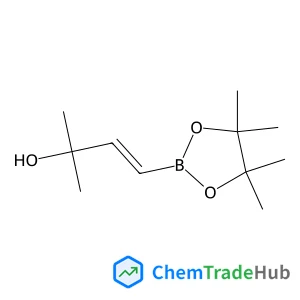
(E)-2-methyl-4-(4,4,5,5-tetramethyl-1,3,2-dioxaborolan-2-yl)but-3-en-2-ol
CAS Number:
581802-26-8
Molecular Formula:
C11H21BO3
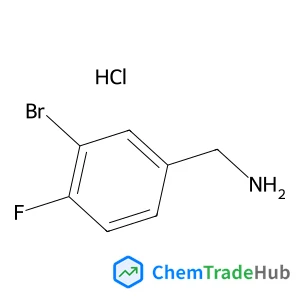
1-(3-Bromo-4-fluorophenyl)methanamine hydrochloride (1:1)
CAS Number:
202865-68-7
Molecular Formula:
C7H8BrClFN
Recommended Suppliers




Disclaimer
This page provides academic journal information for reference and research purposes only. We are not affiliated with any journal publishers and do not handle publication submissions. For publication-related inquiries, please contact the respective journal publishers directly.
If you notice any inaccuracies in the information displayed, please contact us at support@chemtradehub.com. We will promptly review and address your concerns.