












Random introduction of degradable linkages into functional vinyl polymers by radical ring-opening polymerization, tailored for soft tissue engineering
Literature Information
Publication Date
2012-03-19
DOI
10.1039/C2PY20034A
Impact Factor
5.582
Authors
Jenny Undin, Teresa Illanes, Anna Finne-Wistrand, Ann-Christine Albertsson
View Original
Abstract
Vinyl polymers, e.g. polyvinyl acetate and polyvinyl alcohol, have properties which suit tissue engineering in many perspectives. A copolymer of 2-methylene-1,3-dioxepane (MDO) with vinyl acetate (VAc) should combine the desirable properties of vinyl polymers with the degradability of aliphatic polyesters. Our results and detailed kinetics information show that it is possible to vary the amount of MDO widely in the copolymer. Between 1 and 70% MDO was incorporated into the polymer when copolymerized with VAc at 60 °C using 2,2-azobisisobutyronitrile (AIBN) as an initiator. The amount of MDO in the copolymer was strictly controlled by the feed ratio, the copolymerization resulted in a high conversion, and the copolymers had high number average molar masses. The polymerization kinetics indicated that the ester units were added in a randomized manner to the vinyl backbone. This was a crucial point since the distribution of degradable bonds provides the opportunity to design the degradation profile of the polymer. The reactivity ratios for MDO and VAc were determined to be rMDO = 0.93 and rVAc = 1.71. The glass transition temperature and the number average molar masses increased with increasing amount of VAc in the feed. We confirmed that the copolymer degraded rapidly in alkali hydrolysis and less in enzymatic hydrolysis and it was apparent that it is possible to synthesize various degradable materials based on VAc and MDO with predetermined polymer compositions and high number average molar masses.
Related Literature
Improve the photovoltaic performance of new quinoxaline-based conjugated polymers from the view of conjugated length and steric hindrance
Manjun Xiao, Weiguo Zhu, Ning Wang, Xichang Bao, Renqiang Yang
2014-08-29
Paper
DOI: 10.1039/C4PY01061B
BODIPY-based macromolecular photosensitizer with cation-enhanced antibacterial activity
Zhentan Lu, Xinge Zhang, Yu Zhao, Yinan Xue, Tingting Zhai, Zhongming Wu, Chaoxing Li
2014-10-06
Paper
DOI: 10.1039/C4PY00715H
A core–shell structure of polyaniline coated protonic titanate nanobelt composites for both Cr(vi) and humic acid removal
Tao Wen, Qiaohui Fan, Xiaoli Tan, Yuantao Chen, Changlun Chen, Anwu Xu
2015-11-30
Paper
DOI: 10.1039/C5PY01721A
Thiolactone chemistry and copper-mediated CRP for the development of well-defined amphiphilic dispersing agents
Frank Driessen, Roald Herckens, Pieter Espeel, Filip E. Du Prez
2016-01-22
Paper
DOI: 10.1039/C5PY02053K
Synthesis, morphology, and electrical memory application of oligosaccharide-based block copolymers with π-conjugated pyrene moieties and their supramolecules
Han-Sheng Sun, Yougen Chen, Wen-Ya Lee, Yu-Cheng Chiu, Takuya Isono, Toshifumi Satoh, Toyoji Kakuchi, Wen-Chang Chen
2015-12-09
Paper
DOI: 10.1039/C5PY01697E
Oxa-Michael addition polymerization of acrylates catalyzed by N-heterocyclic carbenes
Shin-ichi Matsuoka, Shoko Namera, Masato Suzuki
2014-09-11
Paper
DOI: 10.1039/C4PY01184H
Doubly-dynamic-covalent polymers composed of oxime and oxanorbornene links
Soma Mukherjee, William. L. A. Brooks, Yuqiong Dai, Brent S. Sumerlin
2016-02-17
Paper
DOI: 10.1039/C5PY02046H
Metal-free photoinduced electron transfer–atom transfer radical polymerization (PET–ATRP) via a visible light organic photocatalyst
Xiaodong Liu, Lifen Zhang, Zhenping Cheng, Xiulin Zhu
2015-11-26
Paper
DOI: 10.1039/C5PY01765C
Poly(N-isopropylacrylamide) coated gold nanoparticles as colourimetric temperature and salt sensors
Samarendra Maji, Belgin Cesur, Zhiyue Zhang, Bruno G. De Geest, Richard Hoogenboom
2016-01-28
Communication
DOI: 10.1039/C5PY01959A
You might also like
Compound Q&A
How should waste containing (6-Bromo-2-naphthyl)oxy](dimethyl)(2-methyl-2-propanyl)silane be handled?
Waste containing (6-Bromo-2-naphthyl)oxy](dimethyl)(2-methyl-2-propanyl)silane (...
100751-65-3[(6-Bromo-2-naphthyl...
Compound Q&A
How is 7-Fluoro-4-isoquinolinecarboxylic acid (CAS: 1841081-40-0) typically synthesized?
7-Fluoro-4-isoquinolinecarboxylic acid can be synthesized via a multi-step proce...
1841081-40-07-Fluoro-4-isoquinol...
Compound Q&A
What are the physical and chemical properties of 2,3,5,6-Tetrabromothieno[3,2-b]thiophene (CAS: 124638-53-5)?
2,3,5,6-Tetrabromothieno[3,2-b]thiophene is a crystalline compound with a high m...
124638-53-52,3,5,6-Tetrabromoth...
Compound Q&A
Is 1-[4-(Benzylamino)-7,8-dihydro-5H-pyrano[4,3-d]pyrimidin-2-yl]-2-methyl-1H-indole-4-carboxamide (CAS: 1542705-92-9) safe?
1-[4-(Benzylamino)-7,8-dihydro-5H-pyrano[4,3-d]pyrimidin-2-yl]-2-methyl-1H-indol...
1542705-92-91-[4-(Benzylamino)-7...
Compound Q&A
What is the market or research trend for imidazo[5,1-d]-1,2,3,5-tetrazine-8-carboxylic acid, 3,4-dihydro-3-methyl-4-oxo- (CAS: 113942-30-6)?
The market for imidazo[5,1-d]-1,2,3,5-tetrazine-8-carboxylic acid, 3,4-dihydro-3...
113942-30-6Imidazo[5,1-d]-1,2,3...
Compound Q&A
What is 3-(Triisopropylsilyl)propiolaldehyde (CAS: 163271-80-5)?
3-(Triisopropylsilyl)propiolaldehyde is a synthetic organic compound with the CA...
163271-80-53-(Triisopropylsilyl...
Compound Q&A
What regulatory guidelines apply to 6-Nitro-2H-1,4-benzoxazin-3(4H)-one (CAS: 81721-87-1)?
6-Nitro-2H-1,4-benzoxazin-3(4H)-one (CAS: 81721-87-1) is subject to various regu...
81721-87-16-Nitro-2H-1,4-benzo...
Compound Q&A
How should waste containing (3-Fluorophenyl)(4-{[(2-methyl-2-propanyl)oxy]carbonyl}-1-piperazinyl)acetic acid (CAS: 885272-91-3) be handled?
Waste containing (3-Fluorophenyl)(4-{[(2-methyl-2-propanyl)oxy]carbonyl}-1-piper...
885272-91-3(3-Fluorophenyl)(4-{...
Compound Q&A
What are the physical and chemical properties of N,N'-4,4'-Biphenyldiyldiisonicotinamide (CAS: 55119-40-9)?
N,N'-4,4'-Biphenyldiyldiisonicotinamide is a white crystalline solid with a mole...
55119-40-9N,N'-4,4'-Biphenyldi...
Compound Q&A
What industries use 6-Bromo-8-fluoro-2-quinazolinol (CAS: 1036756-15-6)?
6-Bromo-8-fluoro-2-quinazolinol is primarily used in the pharmaceutical industry...
1036756-15-66-Bromo-8-fluoro-2-q...
Source Journal
Polymer Chemistry

CiteScore:
8.6
Self-citation Rate:
7.3%
Articles per Year:
457
Polymer Chemistry welcomes submissions in all areas of polymer science that have a strong focus on macromolecular chemistry. Manuscripts may cover a broad range of fields, yet no direct application focus is required.
Recommended Compounds
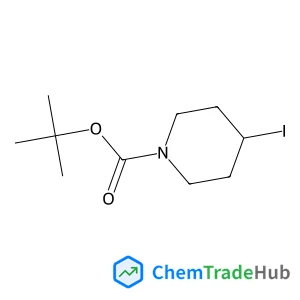
2-Methyl-2-propanyl 4-iodo-1-piperidinecarboxylate
CAS Number:
301673-14-3
Molecular Formula:
C10H18INO2
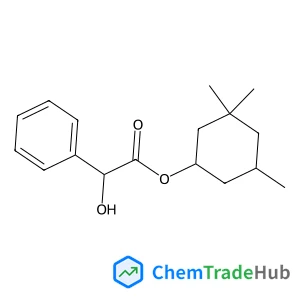

![N-[(E)-Phenylmethylene]benzenesulfonamide structure](https://static.chemtradehub.com/structs/139/13909-34-7-8167.webp "N-[(E)-Phenylmethylene]benzenesulfonamide structure")
Recommended Suppliers







Disclaimer
This page provides academic journal information for reference and research purposes only. We are not affiliated with any journal publishers and do not handle publication submissions. For publication-related inquiries, please contact the respective journal publishers directly.
If you notice any inaccuracies in the information displayed, please contact us at support@chemtradehub.com. We will promptly review and address your concerns.