












Novel polymer nanocomposites from bioinspired green aqueous functionalization of BNNTs
Literature Information
Publication Date
2012-01-31
DOI
10.1039/C2PY00612J
Impact Factor
5.582
Authors
Vijay Kumar Thakur, Jian Yan, Meng-Fang Lin, Chunyi Zhi, Dmitri Golberg, Yoshio Bando, Raymond Sim
View Original
Abstract
Boron nitride nanotubes (BNNTs) are excellent nanofillers to enhance the mechanical and thermal properties of polymer nanocomposites. Despite the rapid progress in the effective syntheses of BNNTs, the ease of processability and solubility are major roadblocks for their widespread applications. The present work reports for the first time: a facile and environment-friendly green approach for aqueous bioinspired functionalization of boron nitride nanotubes through the use of dopamine, a synthetic mimic of mussel adhesive proteins. This approach is based on the affinity of the amino group of dopamine molecules for the boron atoms in BNNTs and π–π interactions as well as van der Waals interactions between the BNNTs network and dopamine molecules. Functionalization of the boron nitride nanotubes was evidently found to be associated with the existing π–π bonding and van der Waals interactions at the BNNT surfaces, involving the aromatic core structures of the dopamine molecules based on various characterizations. The resultant functionalized BNNTs are highly dispersible in water and a number of solvents. Polymer nanocomposites were prepared using pristine and dopamine functionalized BNNTs as reinforcement in a poly(vinyl difluoroethylene) matrix and tested for the thermal and mechanical properties. The functionalized BNNT reinforced polymer nanocomposites exhibit superior properties as compared to nanocomposites based on pristine BNNTs. This comprehensive study indicates that dopamine functionalized BNNTs are promising materials for various applications and are expected to form the basis of a new class of chemically reactive nanostructures.
Related Literature
Microwave-assisted solution polycondensation of l-lactic acid using a Dean–Stark apparatus for a non-thermal microwave polymerization effect induced by the electric field
Shinji Yamada, Akinori Takasu, Sadatsugu Takayama, Kazuhiko Kawamura
2014-05-16
Paper
DOI: 10.1039/C4PY00639A
A highly active chiral (S,S)-bis(oxazoline) Pd(ii) alkyl complex/activator catalytic system for vinyl polymerization of norbornene in air and water
Yingda Huang, Jianyun He, Zhanxiong Liu, Guilong Cai, Shaowen Zhang, Xiaofang Li
2016-12-26
Paper
DOI: 10.1039/C6PY01859A
Preparation of sulfonic acid functional proton conducting phosphazenes by covalent protection
Ferda Hacıvelioğlu
2017-04-17
Paper
DOI: 10.1039/C7PY00189D
New violet to yellow light sensitive diketo pyrrolo–pyrrole photoinitiators: high performance systems with unusual bleaching properties and solubility in water
Mariem Bouzrati-Zerelli, Nicolas Zivic, Frédéric Dumur, Didier Gigmes, Bernadette Graff, Jean Pierre Fouassier, Jacques Lalevée
2017-02-28
Paper
DOI: 10.1039/C7PY00202E
A supramolecular polymer gel with dual-responsiveness constructed by crown ether based molecular recognition
Danyu Xia, Min Xue
2014-06-03
Paper
DOI: 10.1039/C4PY00590B
Non-conventional fluorescent biogenic and synthetic polymers without aromatic rings
Yilin Zhang, Liguo Xu, Rongrong Hu, Kam Sing Wong, William A. Goddard, III
2017-02-08
Paper
DOI: 10.1039/C7PY00154A
Oligo(p-phenyleneethynylene) embedded amphiphiles: synthesis, photophysical properties and self-assembled nanoparticles with high structural stability and photostability for cell imaging
Chao Yin, Wenli Song, Rongcui Jiang, Wenbo Hu, Qingming Shen, Xiang Li, Jie Li, Quli Fan
2014-05-29
Paper
DOI: 10.1039/C4PY00376D
The in situ formation of nanoparticles via RAFT polymerization-induced self-assembly in a continuous tubular reactor
Jinying Peng, Chun Tian, Lifen Zhang, Zhenping Cheng, Xiulin Zhu
2017-01-26
Paper
DOI: 10.1039/C6PY02133F
Facile one-pot access to π-conjugated polymers via sequential bromination/direct arylation polycondensation
Hitoshi Saito, Jieran Chen, Junpei Kuwabara, Takeshi Yasuda, Takaki Kanbara
2017-04-25
Paper
DOI: 10.1039/C7PY00332C
In situ synthesis of thermo-responsive ABC triblock terpolymer nano-objects by seeded RAFT polymerization
Yaqing Qu, Fei Huo, Quanlong Li, Xin He, Shentong Li, Wangqing Zhang
2014-05-30
Paper
DOI: 10.1039/C4PY00510D
You might also like
Compound Q&A
Are there alternatives to 1-(4-Chlorophenyl)-N-hydroxymethanimine (CAS: 3848-36-0) in synthesis?
When considering alternatives to 1-(4-Chlorophenyl)-N-hydroxymethanimine (CAS: 3...
3848-36-01-(4-Chlorophenyl)-N...
Compound Q&A
How should (1R,9S,10S,12S,14E,16S,19R,20R,21S,22R)-3,9,21-Trihydroxy-5,10,12,14,16,20,22-heptamethyl-23,24-dioxatetracyclo[17.3.1.1~6,9~.0~2,7~]tetracosa-2,5,7,14-tetraen-4-one (CAS: 183202-73-5) be stored?
This compound should be stored in a cool, dry place away from direct sunlight. I...
183202-73-5(1R,9S,10S,12S,14E,1...
Compound Q&A
How is 3-(4-Bromophenyl)-5-(2-fluorophenyl)-1,2,4-oxadiazole (CAS: 419553-16-5) typically synthesized?
3-(4-Bromophenyl)-5-(2-fluorophenyl)-1,2,4-oxadiazole is synthesized through a m...
419553-16-53-(4-Bromophenyl)-5-...
Compound Q&A
How is 5-Chloro-2-(4-chlorophenyl)-4-methyl-6-[3-(1-piperidinyl)propoxy]pyrimidine (CAS: 1639220-19-1) typically synthesized?
5-Chloro-2-(4-chlorophenyl)-4-methyl-6-[3-(1-piperidinyl)propoxy]pyrimidine (CAS...
1639220-19-15-Chloro-2-(4-chloro...
Compound Q&A
What industries use 2-Chloro-4-(difluoromethoxy)pyridine (CAS: 1206978-15-5)?
2-Chloro-4-(difluoromethoxy)pyridine is used in the pharmaceutical industry for ...
1206978-15-52-Chloro-4-(difluoro...
Compound Q&A
What regulatory guidelines apply to 3-Chloro-6-methylpyridazine (CAS: 1121-79-5)?
3-Chloro-6-methylpyridazine (CAS: 1121-79-5) is classified under the Globally Ha...
1121-79-53-Chloro-6-methylpyr...
Compound Q&A
Are there alternatives to Methyl 4,5-dimethyl-2-nitrobenzoate in synthesis?
Several alternatives can be used in the synthesis of Methyl 4,5-dimethyl-2-nitro...
90922-74-0Methyl 4,5-dimethyl-...
Compound Q&A
Are there alternatives to (2E,2'E)-3,3'-(1,4-Phenylene)bisacrylaldehyde in synthesis?
Alternatives to (2E,2'E)-3,3'-(1,4-Phenylene)bisacrylaldehyde include other acry...
63405-68-5(2E,2'E)-3,3'-(1,4-P...
Compound Q&A
What is 3-Amino-5-chloropyridin-2-ol hydrochloride (CAS: 1261906-29-9)?
3-Amino-5-chloropyridin-2-ol hydrochloride is an organic compound with the CAS n...
1261906-29-93-Amino-5-chloropyri...
Compound Q&A
What precautions should be taken when handling 6,7-Difluoro-2,3-dihydro-4H-chromen-4-one (CAS: 1092349-93-3)?
When handling 6,7-Difluoro-2,3-dihydro-4H-chromen-4-one, it is essential to wear...
1092349-93-36,7-Difluoro-2,3-dih...
Source Journal
Polymer Chemistry

CiteScore:
8.6
Self-citation Rate:
7.3%
Articles per Year:
457
Polymer Chemistry welcomes submissions in all areas of polymer science that have a strong focus on macromolecular chemistry. Manuscripts may cover a broad range of fields, yet no direct application focus is required.
Recommended Compounds
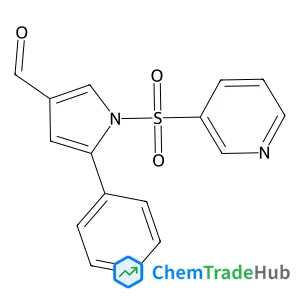
5-Phenyl-1-(pyridin-3-ylsulfonyl)-1H-pyrrole-3-carbaldehyde
CAS Number:
881676-90-0
Molecular Formula:
C16H12N2O3S
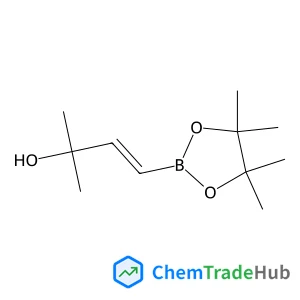
(E)-2-methyl-4-(4,4,5,5-tetramethyl-1,3,2-dioxaborolan-2-yl)but-3-en-2-ol
CAS Number:
581802-26-8
Molecular Formula:
C11H21BO3
Recommended Suppliers




Disclaimer
This page provides academic journal information for reference and research purposes only. We are not affiliated with any journal publishers and do not handle publication submissions. For publication-related inquiries, please contact the respective journal publishers directly.
If you notice any inaccuracies in the information displayed, please contact us at support@chemtradehub.com. We will promptly review and address your concerns.