












Direct synthesis and aqueous solution behavior of pH-responsive, zwitterionic and three-layered branched copolymer nanoparticles
Literature Information
Publication Date
2012-01-30
DOI
10.1039/C2PY00564F
Impact Factor
5.582
Authors
Erol Hasan, Steve Furzeland, Derek Atkins, Dave J. Adams, Jonathan V. M. Weaver
View Original
Abstract
We describe the one-pot synthesis of zwitterionic, pH-responsive, layered branched copolymer nanoparticles. In aqueous solution, the charged layers can be switched on and off in response to solution pH changes. The colloidal stability of these complex nanoparticles is superior to corresponding linear triblock copolymers yet their synthesis is no more demanding.
Related Literature
Blood compatibility of heparin-inspired, lactose containing, polyureas depends on the chemistry of the polymer backbone
Y. Huang, M. A. Shaw, M. R. Warmin, E. S. Mullins, N. Ayres
2016-05-13
Paper
DOI: 10.1039/C6PY00616G
Free-standing thermo-responsive nanoporous membranes from high molecular weight PS-PNIPAM block copolymers synthesized via RAFT polymerization
Merve Mocan, Joris de Grooth, Anton H. Hofman, Hanne M. van der Kooij, Katja Loos, Wiebe M. de Vos, Marleen Kamperman
2017-03-17
Paper
DOI: 10.1039/C7PY00023E
The impact of the molecular weight on the electrochemical properties of poly(TEMPO methacrylate)
Kai Zhang, Jiyu Fan, Michael J. Monteiro, Zhongfan Jia
2017-02-22
Paper
DOI: 10.1039/C7PY00151G
Synthesis of nanoscaled poly(styrene-co-n-butyl acrylate)/silica particles with dumbbell- and snowman-like morphologies by emulsion polymerization
Lucie Malosse, Etienne Duguet, Muriel Lansalot, Elodie Bourgeat-Lami, Serge Ravaine
2014-06-05
Paper
DOI: 10.1039/C4PY00370E
Facile conversion of plant oil (anethole) to a high-performance material
Yangqing Tao, Fengkai He, Kaikai Jin, Jiajia Wang, Yuanqiang Wang, Junfeng Zhou, Jing Sun, Qiang Fang
2017-02-20
Paper
DOI: 10.1039/C7PY00047B
CO2-Responsive graft copolymers: synthesis and characterization
Shaojian Lin, Anindita Das, Patrick Theato
2017-01-03
Paper
DOI: 10.1039/C6PY01996J
New violet to yellow light sensitive diketo pyrrolo–pyrrole photoinitiators: high performance systems with unusual bleaching properties and solubility in water
Mariem Bouzrati-Zerelli, Nicolas Zivic, Frédéric Dumur, Didier Gigmes, Bernadette Graff, Jean Pierre Fouassier, Jacques Lalevée
2017-02-28
Paper
DOI: 10.1039/C7PY00202E
Innovative well-defined primary amine-based polyacrylates for plasmid DNA complexation
Hien The Ho, Sagrario Pascual, Véronique Montembault, Nathalie Casse, Laurent Fontaine
2014-06-16
Communication
DOI: 10.1039/C4PY00585F
Zirconocene-catalyzed stereoselective cyclocopolymerization of 2-methyl-1,5-hexadiene with propylene
Manuela Bader, Gabriel Theurkauff, Katty Den Dauw, Christian Lamotte, Olivier Lhost, Evgueni Kirillov, Jean-François Carpentier
2014-06-27
Paper
DOI: 10.1039/C4PY00612G
Diels–Alder cycloaddition and RAFT chain end functionality: an elegant route to fullerene end-capped polymers with control over molecular mass and architecture
Anna Isakova, Christian Burton, Daniel J. Nowakowski, Paul D. Topham
2017-04-11
Paper
DOI: 10.1039/C7PY00394C
You might also like
Compound Q&A
Are there alternatives to 1-(4-Chlorophenyl)-N-hydroxymethanimine (CAS: 3848-36-0) in synthesis?
When considering alternatives to 1-(4-Chlorophenyl)-N-hydroxymethanimine (CAS: 3...
3848-36-01-(4-Chlorophenyl)-N...
Compound Q&A
How should (1R,9S,10S,12S,14E,16S,19R,20R,21S,22R)-3,9,21-Trihydroxy-5,10,12,14,16,20,22-heptamethyl-23,24-dioxatetracyclo[17.3.1.1~6,9~.0~2,7~]tetracosa-2,5,7,14-tetraen-4-one (CAS: 183202-73-5) be stored?
This compound should be stored in a cool, dry place away from direct sunlight. I...
183202-73-5(1R,9S,10S,12S,14E,1...
Compound Q&A
How is 3-(4-Bromophenyl)-5-(2-fluorophenyl)-1,2,4-oxadiazole (CAS: 419553-16-5) typically synthesized?
3-(4-Bromophenyl)-5-(2-fluorophenyl)-1,2,4-oxadiazole is synthesized through a m...
419553-16-53-(4-Bromophenyl)-5-...
Compound Q&A
How is 5-Chloro-2-(4-chlorophenyl)-4-methyl-6-[3-(1-piperidinyl)propoxy]pyrimidine (CAS: 1639220-19-1) typically synthesized?
5-Chloro-2-(4-chlorophenyl)-4-methyl-6-[3-(1-piperidinyl)propoxy]pyrimidine (CAS...
1639220-19-15-Chloro-2-(4-chloro...
Compound Q&A
What industries use 2-Chloro-4-(difluoromethoxy)pyridine (CAS: 1206978-15-5)?
2-Chloro-4-(difluoromethoxy)pyridine is used in the pharmaceutical industry for ...
1206978-15-52-Chloro-4-(difluoro...
Compound Q&A
What regulatory guidelines apply to 3-Chloro-6-methylpyridazine (CAS: 1121-79-5)?
3-Chloro-6-methylpyridazine (CAS: 1121-79-5) is classified under the Globally Ha...
1121-79-53-Chloro-6-methylpyr...
Compound Q&A
Are there alternatives to Methyl 4,5-dimethyl-2-nitrobenzoate in synthesis?
Several alternatives can be used in the synthesis of Methyl 4,5-dimethyl-2-nitro...
90922-74-0Methyl 4,5-dimethyl-...
Compound Q&A
Are there alternatives to (2E,2'E)-3,3'-(1,4-Phenylene)bisacrylaldehyde in synthesis?
Alternatives to (2E,2'E)-3,3'-(1,4-Phenylene)bisacrylaldehyde include other acry...
63405-68-5(2E,2'E)-3,3'-(1,4-P...
Compound Q&A
What is 3-Amino-5-chloropyridin-2-ol hydrochloride (CAS: 1261906-29-9)?
3-Amino-5-chloropyridin-2-ol hydrochloride is an organic compound with the CAS n...
1261906-29-93-Amino-5-chloropyri...
Compound Q&A
What precautions should be taken when handling 6,7-Difluoro-2,3-dihydro-4H-chromen-4-one (CAS: 1092349-93-3)?
When handling 6,7-Difluoro-2,3-dihydro-4H-chromen-4-one, it is essential to wear...
1092349-93-36,7-Difluoro-2,3-dih...
Source Journal
Polymer Chemistry

CiteScore:
8.6
Self-citation Rate:
7.3%
Articles per Year:
457
Polymer Chemistry welcomes submissions in all areas of polymer science that have a strong focus on macromolecular chemistry. Manuscripts may cover a broad range of fields, yet no direct application focus is required.
Recommended Compounds
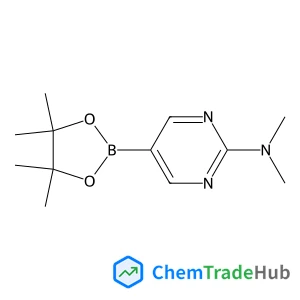
N,N-Dimethyl-5-(4,4,5,5-tetramethyl-1,3,2-dioxaborolan-2-yl)-2-pyrimidinamine
CAS Number:
1032759-30-0
Molecular Formula:
C12H20BN3O2
Recommended Suppliers




Disclaimer
This page provides academic journal information for reference and research purposes only. We are not affiliated with any journal publishers and do not handle publication submissions. For publication-related inquiries, please contact the respective journal publishers directly.
If you notice any inaccuracies in the information displayed, please contact us at support@chemtradehub.com. We will promptly review and address your concerns.