cis-3-Amino-1-(trifluoromethyl)cyclobutanol hydrochloride (1:1)
CAS Number:
1408075-16-0
Molecular Formula:
C5H9ClF3NO
Kai Zhang, Jiyu Fan, Michael J. Monteiro, Zhongfan Jia
Synthesis of TEMPO-containing polymers by ‘living’ radical polymerization provides opportunities to investigate the impact of the molecular weight on their electrochemical properties. In this work, we utilized single electron transfer-living radical polymerization (SET-LRP) to synthesize poly(2,2,6,6-tetramethylpiperidine methacrylate) (PTMPM) with degrees of polymerization ranging from 66 to 703, and after oxidation producing poly(TEMPO methacrylate) (PTMA) with the highest molecular weight of 169 kDa and dispersity of 1.35. Three different techniques were used to quantify the radical density and calculate the theoretical capacity of PTMA polymers. These PTMA polymers, as active materials with 25 wt% in the electrode composite, showed strong molecular weight dependence on the electrochemical properties. The higher molecular weight PTMA polymers showed higher specific discharging capacities and better cycling stability due to their lower solubility in the electrolyte.

Current Opinion in Colloid & Interface Science

Russian Journal of Applied Chemistry

Russian Journal of Coordination Chemistry

Nature Medicine

Crystallography Reports

Journal of Natural Medicines

Russian Journal of Bioorganic Chemistry

Journal of Saudi Chemical Society

Russian Journal of General Chemistry

New Journal of Chemistry
Jianhui Chen, Xiaolin Tan, Peng Lin, Baisheng Sa, Jian Zhou, Yinggan Zhang, Cuilian Wen, Zhimei Sun
DOI: 10.1039/C9CP04407H
Alexandra Parmentier, Marco Maccarini, Alessio De Francesco, Luisa Scaccia, Giovanna Rogati, Orsolya Czakkel, Francesco De Luca
DOI: 10.1039/C9CP04248B
Bruno Landeros-Rivera, Ilich A. Ibarra, Mariana L. Díaz-Ramírez, Rubicelia Vargas, Hugo A. Lara-García, Jorge Garza, Ana Martínez
DOI: 10.1039/D0CP00579G
Andrea Amadei, Isabella Daidone
DOI: 10.1039/C9CP06214A
Falk Niefind, Andreas Neff, Stefan C. B. Mannsfeld, Axel Kahnt, Bernd Abel
DOI: 10.1039/C9CP02944C
Bikash Patra, Subrata Jana, Prasanjit Samal
DOI: 10.1039/C9CP90239B
Roman Svoboda, Zuzana Olmrová Zmrhalová, Dušan Galusek, Daniela Brandová, Jozef Chovanec
DOI: 10.1039/C9CP06867H
Chen-An Chung, Jou Wei Su
DOI: 10.1039/C9CP04168K
Chuangchuang Wang, Yongpeng Yang, Xiaojing Liu, Yuanjie Li, Dandan Song, Yun Tian, Zhaojun Zhang
DOI: 10.1039/D0CP01005G
4-Nitrophenyl phosphate disodium salt hexahydrate is primarily used as a substra...
2-(Trifluoromethyl)-1,3-oxazole-4-carboxylic Acid (CAS: 1060816-01-4) is widely ...
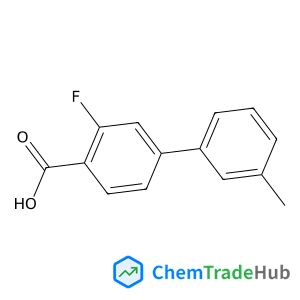
2-Fluoro-4-biphenylcarboxylic acid should be stored in a cool, dry place at room...
Prednisolone-21-Carboxylic Acid is primarily used in the pharmaceutical industry...
4-(Hydrazinomethyl)-1,2,3-benzenetriol (CAS: 3614-72-0) should be stored in a co...
4-Amino-1-methyl-1H-pyrazole-5-carboxylic acid hydrochloride (CAS: 92534-70-8) i...
Dehydropachymic acid (CAS: 77012-31-8) is regulated by various agencies. It fall...
The market and research trends for 6-[(2,2-Dimethylpropanoyl)amino]nicotinic aci...
1,10-Phenanthroline-2,9-dicarbaldehyde should be stored in a cool, dry place awa...
5-Carbamoyl-11-oxo-10,11-dihydro-5H-dibenzo[b,f]azepin-10-yl acetate can be synt...

Polymer Chemistry welcomes submissions in all areas of polymer science that have a strong focus on macromolecular chemistry. Manuscripts may cover a broad range of fields, yet no direct application focus is required.
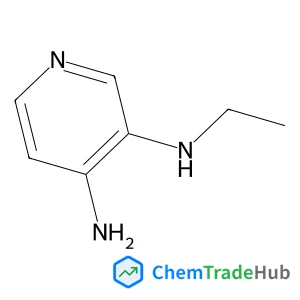
![(3R,5R)-1-[(Benzyloxy)carbonyl]-5-methyl-3-piperidinecarboxylic acid structure](https://static.chemtradehub.com/structs/126/1269757-29-0-c552.webp "(3R,5R)-1-[(Benzyloxy)carbonyl]-5-methyl-3-piperidinecarboxylic acid structure")