


Remarkable Lewis acid catalytic performance of the scandium trimesate metal organic framework MIL-100(Sc) for C–C and CN bond-forming reactions
Literature Information
Publication Date
2012-10-11
DOI
10.1039/C2CY20577G
Impact Factor
6.119
Authors
Laura Mitchell, Berenice Gonzalez-Santiago, John P. S. Mowat, Mary E. Gunn, Patrick Williamson, Nadia Acerbi, Matthew L. Clarke, Paul A. Wright
View Original
Abstract
The porous metal organic frameworks scandium trimesate MIL-100(Sc), scandium terephthalates MIL-101(Sc), MIL-88B(Sc) and MIL-68(Sc), scandium 4,4′-biphenyl-dicarboxylate MIL-88D(Sc) and the scandium 3,3′,5,5-azobenzene-tetracarboxylate socMOF(Sc) have been compared as Lewis acid catalysts against Sc3+-exchanged zeolite Beta, MIL-100(Cr), MIL-101(Cr), MIL-100(Fe) and the divalent MOFs HKUST-1(Cu), CPO-27(Ni) and STA-12(Ni), each of which can be prepared with coordinatively unsaturated metal sites. The performance of these MOFs has been investigated in several Lewis acid-catalysed reactions that are of importance in organic synthesis but have rarely been studied using MOF catalysts. These reactions were (i) the intermolecular carbonyl ene reaction of nucleophilic alkenes and electron-poor aldehydes, (ii) a Friedel–Crafts type Michael addition between electron-rich heterocycles and electron-deficient alkenes and (iii) ketimine and aldimine formation. In each of these, MIL-100(Sc) is both active and selective and significantly outperforms the other catalysts. Filtration and recycle tests indicate that catalysis over MIL-100(Sc) is heterogeneous. The study of Michael addition reactions carried out over scandium-bearing MOFs with different window sizes on indole-based substrates of varying molecular dimensions indicates that most of the catalysis that involves molecules small enough to enter the pores occurs within the internal pore space. These results indicate MIL-100(Sc) is an exceptional Lewis acidic MOF catalyst, and suggest that MIL-100(Sc) and new derivatives of it could find application as recyclable solid catalysts in synthetic chemistry.
Recommended Journals

Contact Lens & Anterior Eye

Coloration Technology

Foundations of Chemistry

Current Pharmaceutical Biotechnology

Angewandte Chemie International Edition

Physical Chemistry Chemical Physics

European Journal of Organic Chemistry

Photochemical & Photobiological Sciences

Nature Reviews Drug Discovery

Environmental Toxicology and Pharmacology
Related Literature
Hollow hybrid spheres with silica inner shell for non-deformable, core exchangeable properties
Soon-Ryoung Hur, Yong Seok Kim, Jong Chan Won, Jae Heung Lee, Hyun Min Jung
2008-09-12
Communication
DOI: 10.1039/B811724A
Protein crystals make it big at electrode surfaces
Barry R. Silver, Patrick R. Unwin
2008-09-10
Communication
DOI: 10.1039/B810226K
Electron transfer through a stable phenanthrenyl pair in DNA
Nikolay A. Grigorenko, Christian J. Leumann
2008-09-12
Communication
DOI: 10.1039/B810751C
Three-dimensional AlN microroses and their enhanced photoluminescence properties
Weiwei Lei, Jian Zhang, Dan Liu, Pinwen Zhu, Qiliang Cui, Guangtian Zou
2008-09-12
Communication
DOI: 10.1039/B809380F
Copper-catalyzed three-component coupling of arynes, terminal alkynes and activated alkenes
Sivakolundu Bhuvaneswari, Masilamani Jeganmohan, Chien-Hong Cheng
2008-09-01
Communication
DOI: 10.1039/B809409H
Facile synthesis and high d33 of single-crystalline KNbO3 nanocubes
Haiyan Ge, Yudong Hou, Mankang Zhu, Hao Wang, Hui Yan
2008-09-08
Communication
DOI: 10.1039/B810342A
Photopolymerization of metal nanoparticles on multiwall carbon nanotubes
Xichen Cai, Kelechi C. Anyaogu, Douglas C. Neckers
2008-09-01
Communication
DOI: 10.1039/B807407K
Paramagnetic gold nanostructures for dual modal bioimaging and phototherapy of cancer cells
Yong Taik Lim, Mi Young Cho, Bang Sil Choi, Jung Min Lee, Bong Hyun Chung
2008-08-26
Communication
DOI: 10.1039/B810240F
LCST-type liquid–liquid phase separation behaviour of poly(ethylene oxide) derivatives in an ionic liquid
Ryohei Tsuda, Koichi Kodama, Takeshi Ueki, Hisashi Kokubo, Shin-ichiro Imabayashi, Masayoshi Watanabe
2008-08-28
Communication
DOI: 10.1039/B810127B
You might also like
Compound Q&A
What are the main uses of 1-(3-Aminophenyl)-3-[(3R)-1-(3,3-dimethyl-2-oxobutyl)-2-oxo-5-(2-pyridinyl)-2,3-dihydro-1H-1,4-benzodiazepin-3-yl]urea (CAS: 155412-88-7)?
This compound is mainly used as an intermediate in the synthesis of antipsychoti...
155412-88-71-(3-Aminophenyl)-3-...
Compound Q&A
How should waste containing 1-(D-Ribofuranosyl)-1,4-dihydro-3-pyridinecarboxamide (CAS: 19132-12-8) be handled?
Waste containing 1-(D-Ribofuranosyl)-1,4-dihydro-3-pyridinecarboxamide (CAS: 191...
19132-12-81-(D-Ribofuranosyl)-...
Compound Q&A
What regulatory guidelines apply to 2-Methyl-2-propanyl 3-bromo-3-(hydroxymethyl)-1-azetidinecarboxylate (CAS: 2007919-81-3)?
2-Methyl-2-propanyl 3-bromo-3-(hydroxymethyl)-1-azetidinecarboxylate (CAS: 20079...
2007919-81-32-Methyl-2-propanyl ...
Compound Q&A
What is N-(4-Chloro-2-pyridinyl)acetamide (CAS: 245056-66-0)?
N-(4-Chloro-2-pyridinyl)acetamide (CAS: 245056-66-0) is a chemical compound with...
245056-66-0N-(4-Chloro-2-pyridi...
Compound Q&A
What is 5-Chloro-2-hydroxybenzoic acid (CAS: 321-14-2)?
5-Chloro-2-hydroxybenzoic acid, also known as 5-chlorosalicylic acid, is an arom...
321-14-25-Chloro-2-hydroxybe...
Compound Q&A
What precautions should be taken when handling 1,1-Dichloro-1-fluoroethane (CAS: 1717-00-6)?
When handling 1,1-Dichloro-1-fluoroethane (CAS: 1717-00-6), it is important to u...
1717-00-61,1-Dichloro-1-fluor...
Compound Q&A
What are the physical and chemical properties of Fmoc-(2S,3R)-3-phenylpyrrolidine-2-carboxylic acid (CAS: 281655-32-1)?
Fmoc-(2S,3R)-3-phenylpyrrolidine-2-carboxylic acid is a white crystalline solid ...
281655-32-1Fmoc-(2S,3R)-3-pheny...
Compound Q&A
What are the main uses of 4-Amino-5-bromo-2-pyridinecarboxylic acid (CAS: 1363381-01-4)?
4-Amino-5-bromo-2-pyridinecarboxylic acid is primarily used as a precursor in th...
1363381-01-44-Amino-5-bromo-2-py...
Compound Q&A
What precautions should be taken when handling (S)-tert-butyl 2-((2-(4-bromophenyl)-2-oxoethyl)carbamoyl)pyrrolidine-1-carboxylate (CAS: 1007881-98-2)?
Handling this compound should be done with personal protective equipment (PPE) i...
1007881-98-2(S)-tert-butyl 2-((2...
Compound Q&A
What precautions should be taken when handling 8-bromo-2,2-dimethyl-3,4-dihydro-2H-1,4-benzoxazin-3-one (CAS: 688363-73-7)?
When handling 8-bromo-2,2-dimethyl-3,4-dihydro-2H-1,4-benzoxazin-3-one, use prop...
688363-73-78-bromo-2,2-dimethyl...
Source Journal
Catalysis Science & Technology
CiteScore:
5.91
Self-citation Rate:
4.5%
Articles per Year:
600
Catalysis Science & Technology is committed to publishing research reporting high-quality, cutting-edge developments across the catalysis community at large. The journal places equal focus on publications from the heterogeneous, homogeneous, thermo-, electro-, photo-, organo- and biocatalysis communities. Works published in the journal feature a balanced mix of fundamental, technology-oriented, experimental, computational, digital and data-driven original research, thus appealing to catalysis practitioners in both academic and industrial environments. Original research articles published in the journal must demonstrate new catalytic discoveries and/or methodological advances that represent a significant advance on previously published work, from the molecular to the process scales. We welcome rigorous research in a wide range of timely or emerging applications related to the environment, health, energy and materials. Catalysis Science & Technology publishes Communications, Articles, Reviews and Perspectives. More details regarding manuscript types may be found in the Information for Authors section.
Recommended Compounds
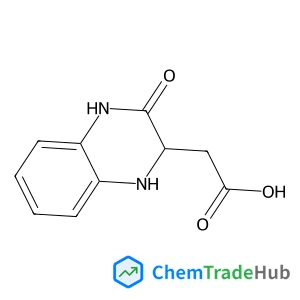
(3-Oxo-1,2,3,4-tetrahydro-2-quinoxalinyl)acetic acid
CAS Number:
136584-14-0
Molecular Formula:
C10H10N2O3
![tert-Butyl N-[(2-chloropyridin-4-yl)methyl]carbamate structure](https://static.chemtradehub.com/structs/916/916210-27-0-9f95.webp "tert-Butyl N-[(2-chloropyridin-4-yl)methyl]carbamate structure")
tert-Butyl N-[(2-chloropyridin-4-yl)methyl]carbamate
CAS Number:
916210-27-0
Molecular Formula:
C11H15ClN2O2
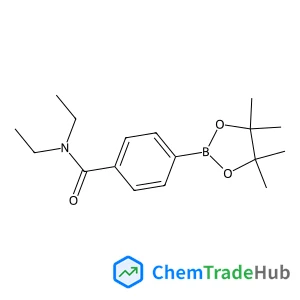
N,N-Diethyl-4-(4,4,5,5-tetramethyl-1,3,2-dioxaborolan-2-yl)benzamide
CAS Number:
325142-99-2
Molecular Formula:
C17H26BNO3
Recommended Suppliers




Disclaimer
This page provides academic journal information for reference and research purposes only. We are not affiliated with any journal publishers and do not handle publication submissions. For publication-related inquiries, please contact the respective journal publishers directly.
If you notice any inaccuracies in the information displayed, please contact us at support@chemtradehub.com. We will promptly review and address your concerns.