












Back matter
Literature Information
Publication Date
DOI
10.1039/C2CP90170F
Impact Factor
3.676
Authors
View Original
Abstract
The first page of this article is displayed as the abstract.
Related Literature
Fast and ultrafast spectroscopic investigation of tetracycline derivatives in organic and aqueous media
Benedetta Carlotti, Domenico Fuoco, Fausto Elisei
2010-07-26
Paper
DOI: 10.1039/C0CP00044B
Deformation of liquid-filled calciumalginatecapsules in a spinning drop apparatus
Sabine Leick, Stefan Henning, Patrick Degen, Dieter Suter, Heinz Rehage
2010-02-03
Paper
DOI: 10.1039/B921116K
Complex kinetics, high frequency oscillations and temperature compensation in the electro-oxidation of ethylene glycol on platinum
Elton Sitta, Melke A. Nascimento
2010-07-27
Paper
DOI: 10.1039/C002574G
Autonomous folding in the membrane proximal HIV peptide gp41659–671: pH tuneability at micelle interfaces
Craig R. Gregor, Eleonora Cerasoli, Paul R. Tulip, Maxim G. Ryadnov, Glenn J. Martyna
2010-11-08
Paper
DOI: 10.1039/C0CP01502D
Incorporation of Pd into Au(111): enhanced electrocatalytic activity for the hydrogen evolution reaction
Peter J. Schäfer, Ludwig A. Kibler
2010-09-28
Paper
DOI: 10.1039/C0CP00780C
A sublattice-model isotherm for the competitive coadsorption of hydrogen and bromide on a Pt(100)electrode
M. T. M Koper
2009-11-07
Paper
DOI: 10.1039/B912091B
The photodissociation of NO2 by visible and ultraviolet light
Iain Wilkinson, Ivan Anton Garcia, Benjamin J. Whitaker, Jean-Benoît Hamard, Valérie Blanchet
2010-11-16
Paper
DOI: 10.1039/C0CP01551B
First-principles investigations of Ti-substituted hydroxyapatite electronic structure
2009-11-10
Paper
DOI: 10.1039/B915171K
You might also like
Compound Q&A
What are the main uses of 4-Nitrophenyl phosphate disodium salt hexahydrate (CAS: 333338-18-4)?
4-Nitrophenyl phosphate disodium salt hexahydrate is primarily used as a substra...
333338-18-44-Nitrophenyl phosph...
Compound Q&A
What are the main uses of 2-(Trifluoromethyl)-1,3-oxazole-4-carboxylic Acid (CAS: 1060816-01-4)?
2-(Trifluoromethyl)-1,3-oxazole-4-carboxylic Acid (CAS: 1060816-01-4) is widely ...
1060816-01-42-(Trifluoromethyl)-...
Compound Q&A
How should 2-Fluoro-4-biphenylcarboxylic acid (CAS: 137045-30-8) be stored?
2-Fluoro-4-biphenylcarboxylic acid should be stored in a cool, dry place at room...
137045-30-82-Fluoro-4-biphenylc...
Compound Q&A
What industries use Prednisolone-21-Carboxylic Acid (CAS: 61549-70-0)?
Prednisolone-21-Carboxylic Acid is primarily used in the pharmaceutical industry...
61549-70-0Prednisolone-21-Carb...
Compound Q&A
How should 4-(Hydrazinomethyl)-1,2,3-benzenetriol (CAS: 3614-72-0) be stored?
4-(Hydrazinomethyl)-1,2,3-benzenetriol (CAS: 3614-72-0) should be stored in a co...
3614-72-04-(Hydrazinomethyl)-...
Compound Q&A
What industries use 4-Amino-1-methyl-1H-pyrazole-5-carboxylic acid hydrochloride (CAS: 92534-70-8)?
4-Amino-1-methyl-1H-pyrazole-5-carboxylic acid hydrochloride (CAS: 92534-70-8) i...
92534-70-84-Amino-1-methyl-1H-...
Compound Q&A
What regulatory guidelines apply to dehydropachymic acid (CAS: 77012-31-8)?
Dehydropachymic acid (CAS: 77012-31-8) is regulated by various agencies. It fall...
77012-31-8Dehydropachymic acid
Compound Q&A
What is the market or research trend for 6-[(2,2-Dimethylpropanoyl)amino]nicotinic acid (CAS: 898561-66-5)?
The market and research trends for 6-[(2,2-Dimethylpropanoyl)amino]nicotinic aci...
898561-66-56-[(2,2-Dimethylprop...
Compound Q&A
How should 1,10-Phenanthroline-2,9-dicarbaldehyde (CAS: 57709-62-3) be stored?
1,10-Phenanthroline-2,9-dicarbaldehyde should be stored in a cool, dry place awa...
57709-62-31,10-Phenanthroline-...
Compound Q&A
How is 5-Carbamoyl-11-oxo-10,11-dihydro-5H-dibenzo[b,f]azepin-10-yl acetate (CAS: 113952-21-9) typically synthesized?
5-Carbamoyl-11-oxo-10,11-dihydro-5H-dibenzo[b,f]azepin-10-yl acetate can be synt...
113952-21-95-Carbamoyl-11-oxo-1...
Source Journal
Physical Chemistry Chemical Physics

CiteScore:
5.5
Self-citation Rate:
10.3%
Articles per Year:
3036
Physical Chemistry Chemical Physics (PCCP) is an international journal co-owned by 19 physical chemistry and physics societies from around the world. This journal publishes original, cutting-edge research in physical chemistry, chemical physics and biophysical chemistry. To be suitable for publication in PCCP, articles must include significant innovation and/or insight into physical chemistry; this is the most important criterion that reviewers and Editors will judge against when evaluating submissions. The journal has a broad scope and welcomes contributions spanning experiment, theory, computation and data science. Topical coverage includes spectroscopy, dynamics, kinetics, statistical mechanics, thermodynamics, electrochemistry, catalysis, surface science, quantum mechanics, quantum computing and machine learning. Interdisciplinary research areas such as polymers and soft matter, materials, nanoscience, energy, surfaces/interfaces, and biophysical chemistry are welcomed if they demonstrate significant innovation and/or insight into physical chemistry. Joined experimental/theoretical studies are particularly appreciated when complementary and based on up-to-date approaches.
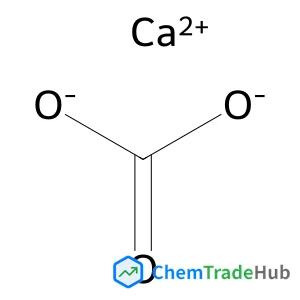
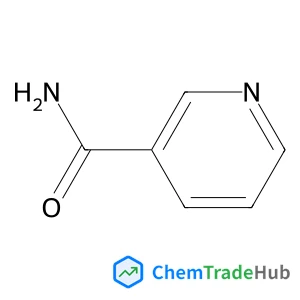
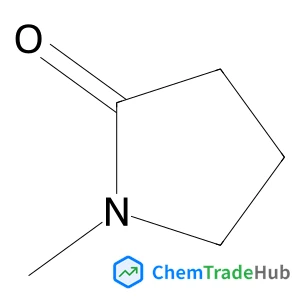
Recommended Compounds
Recommended Suppliers



Disclaimer
This page provides academic journal information for reference and research purposes only. We are not affiliated with any journal publishers and do not handle publication submissions. For publication-related inquiries, please contact the respective journal publishers directly.
If you notice any inaccuracies in the information displayed, please contact us at support@chemtradehub.com. We will promptly review and address your concerns.