












Intermolecular exciton coupling and vibronic effects in solid-state circular dichroism: a case study
Literature Information
Publication Date
2012-11-12
DOI
10.1039/C2CP43660D
Impact Factor
3.676
Authors
Gennaro Pescitelli, Daniele Padula, Fabrizio Santoro
View Original
Abstract
The electronic circular dichroism (CD) spectrum of the sesquiterpenoid 1β,10β-epoxydesacetoxymatricarin (1) measured in the microcrystalline solid state differs from the solution one in the appearance of a pronounced vibrational fine structure in the long-wavelength region (n–π* enone transition) and of a new moderately intense band in the π–π* region. TDDFT CD calculations were run on input structures derived from the X-ray geometry of 1 to reproduce the impact of exciton-type couplings between proximate molecules in the crystals. The vibrational structure of the CD spectrum was also reproduced for the isolated molecule by modelling the potential energy surfaces at the harmonic level and taking into account Duschinsky and Herzberg–Teller effects.
Related Literature
A bio-inspired strategy for the interfacial assembly of graphene oxide with in situ generated Ag/AgCl: designing sustainable hybrid photocatalysts
Gousia Begum
2017-02-14
Paper
DOI: 10.1039/C6CP07854K
Evolution of nanostructured single-phase CoSb3 thin films by low-energy ion beam induced mixing and their thermoelectric performance
Srashti Gupta, Sanjeev K. Srivastava, Sankarakumar Amrithapandian, Tripurari S. Tripathi, Surya K. Tripathi, Chung-Li Dong, Chi-Liang Chen, Devesh K. Avasthi, Kandasami Asokan
2017-08-21
Paper
DOI: 10.1039/C7CP03527F
Statistical thermodynamics unveils the dissolution mechanism of cellobiose
Noriyuki Isobe, James H. Clark, Seishi Shimizu
2017-08-18
Paper
DOI: 10.1039/C7CP04647B
Quantitative correlation of the effects of crystallinity and additives on nanomorphology and solar cell performance of isoindigo-based copolymers
Chun-Yu Chang, Yu-Ching Huang, Chien-An Chen, Chun-Jen Su
2017-08-08
Paper
DOI: 10.1039/C7CP04238H
Determinants of the efficiency of photon upconversion by triplet–triplet annihilation in the solid state: zinc porphyrin derivatives in PVA
Ranjana Rautela, Neeraj K. Joshi, Sacha Novakovic, Wallace W. H. Wong, Jonathan M. White, Kenneth P. Ghiggino, Matthew F. Paige, Ronald P. Steer
2017-08-15
Paper
DOI: 10.1039/C7CP04746K
Tailoring the physical properties of the mixtures of ionic liquids: a microscopic point of view
O. Palumbo, M. A. Navarra, J.-B. Brubach, P. Roy, A. Paolone
2017-02-27
Paper
DOI: 10.1039/C7CP00850C
On the calculation of second-order magnetic properties using subsystem approaches in a relativistic framework
Małgorzata Olejniczak, Radovan Bast, André Severo Pereira Gomes
2017-02-17
Paper
DOI: 10.1039/C6CP08561J
Influence of co-non-solvency on hydrophobic molecules driven by excluded volume effect
2017-08-15
Communication
DOI: 10.1039/C7CP04152G
Constructing accurate interaction potentials to describe the microsolvation of protonated methane by helium atoms
Felix Uhl, Harald Forbert, Dominik Marx
2017-03-03
Paper
DOI: 10.1039/C7CP00652G
You might also like
Compound Q&A
Is 6-(3-Fluorophenyl)picolinic acid (CAS: 887982-40-3) safe?
6-(3-Fluorophenyl)picolinic acid is generally considered safe for laboratory use...
887982-40-36-(3-Fluorophenyl)pi...
Compound Q&A
What industries use (3R)-3-Pyrrolidinol (CAS: 2799-21-5)?
(3R)-3-Pyrrolidinol is used in the pharmaceutical industry as a precursor for dr...
2799-21-5(3R)-3-Pyrrolidinol
Compound Q&A
What precautions should be taken when handling (4R,5R)-4,5-Diethoxycarbonyl-2,2-dimethyldioxolane (CAS: 59779-75-8)?
When handling (4R,5R)-4,5-Diethoxycarbonyl-2,2-dimethyldioxolane (CAS: 59779-75-...
59779-75-8(4R,5R)-4,5-Diethoxy...
Compound Q&A
How is 1-(6-Chloroimidazo[1,2-b]pyridazin-3-yl)ethanone (CAS: 90734-71-7) typically synthesized?
1-(6-Chloroimidazo[1,2-b]pyridazin-3-yl)ethanone is often synthesized via a mult...
90734-71-71-(6-Chloroimidazo[1...
Compound Q&A
What is the market or research trend for N-Ethyl-3,4-dimethylbenzylamine (CAS: 39180-83-1)?
The market for N-Ethyl-3,4-dimethylbenzylamine (CAS: 39180-83-1) remains steady,...
39180-83-1N-Ethyl-3,4-dimethyl...
Compound Q&A
What is Tert-butyl 3-(pyrrolidin-1-yl)azetidine-1-carboxylate (CAS: 1019008-21-9)?
Tert-butyl 3-(pyrrolidin-1-yl)azetidine-1-carboxylate is a chemical compound wit...
1019008-21-9Tert-butyl 3-(pyrrol...
Compound Q&A
What regulatory guidelines apply to 1-Bromo-3-chloro-2,4-dimethoxybenzene (CAS: 1228956-93-1)?
1-Bromo-3-chloro-2,4-dimethoxybenzene (CAS: 1228956-93-1) falls under the classi...
1228956-93-11-Bromo-3-chloro-2,4...
Compound Q&A
Is 8-Bromo-2-methyl-3,4-dihydroisoquinolin-1(2H)-one (CAS: 1368622-07-4) safe?
The safety of 8-Bromo-2-methyl-3,4-dihydroisoquinolin-1(2H)-one (CAS: 1368622-07...
1368622-07-48-Bromo-2-methyl-3,4...
Compound Q&A
Is Benzyl [(3S)-2,6-dioxo-3-piperidinyl]carbamate (CAS: 22785-43-9) safe?
Benzyl [(3S)-2,6-dioxo-3-piperidinyl]carbamate is generally safe when handled wi...
22785-43-9Benzyl [(3S)-2,6-dio...
Compound Q&A
How should 1-{[4-(4,4,5,5-Tetramethyl-1,3,2-dioxaborolan-2-yl)phenyl]sulfonyl}pyrrolidine (CAS: 928657-21-0) be stored?
1-{[4-(4,4,5,5-Tetramethyl-1,3,2-dioxaborolan-2-yl)phenyl]sulfonyl}pyrrolidine s...
928657-21-01-{[4-(4,4,5,5-Tetra...
Source Journal
Physical Chemistry Chemical Physics

CiteScore:
5.5
Self-citation Rate:
10.3%
Articles per Year:
3036
Physical Chemistry Chemical Physics (PCCP) is an international journal co-owned by 19 physical chemistry and physics societies from around the world. This journal publishes original, cutting-edge research in physical chemistry, chemical physics and biophysical chemistry. To be suitable for publication in PCCP, articles must include significant innovation and/or insight into physical chemistry; this is the most important criterion that reviewers and Editors will judge against when evaluating submissions. The journal has a broad scope and welcomes contributions spanning experiment, theory, computation and data science. Topical coverage includes spectroscopy, dynamics, kinetics, statistical mechanics, thermodynamics, electrochemistry, catalysis, surface science, quantum mechanics, quantum computing and machine learning. Interdisciplinary research areas such as polymers and soft matter, materials, nanoscience, energy, surfaces/interfaces, and biophysical chemistry are welcomed if they demonstrate significant innovation and/or insight into physical chemistry. Joined experimental/theoretical studies are particularly appreciated when complementary and based on up-to-date approaches.
Recommended Compounds
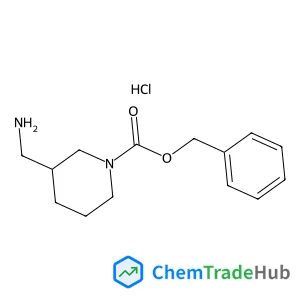
Benzyl 3-(aminomethyl)piperidine-1-carboxylate hydrochloride
CAS Number:
1186663-23-9
Molecular Formula:
C14H21ClN2O2
Recommended Suppliers






Disclaimer
This page provides academic journal information for reference and research purposes only. We are not affiliated with any journal publishers and do not handle publication submissions. For publication-related inquiries, please contact the respective journal publishers directly.
If you notice any inaccuracies in the information displayed, please contact us at support@chemtradehub.com. We will promptly review and address your concerns.