












Quantitative correlation of the effects of crystallinity and additives on nanomorphology and solar cell performance of isoindigo-based copolymers
Literature Information
Publication Date
2017-08-08
DOI
10.1039/C7CP04238H
Impact Factor
3.676
Authors
Chun-Yu Chang, Yu-Ching Huang, Chien-An Chen, Chun-Jen Su
View Original
Abstract
The high power conversion efficiency of bulk heterojunction (BHJ) polymer solar cells can be achieved from either low crystallinity (P3TI) or high crystallinity (P6TI) of isoindigo-based donor–acceptor alternating copolymers blended with PC71BM by controlling nanophase separation using additives. P3TI shows similar device performance regardless of the type of additives, while P6TI is significantly affected by whether the additive is aliphatic or aromatic. To understand the interplays of crystallinity of polymers and the type of additive on the formation of nanomorphology of BHJ, we employed the simultaneous grazing-incidence small- and wide-angle X-ray scattering (GISAXS and GIWAXS) technique to perform the quantitative investigation. By incorporating additives, the PC71BM molecules can be easily intercalated into the P3TI polymer-rich domain and the size of the PC71BM clusters is reduced from about 24 nm to about 5 nm by either aliphatic 1,8-diiodooctane (DIO) or aromatic 1-chloronaphthalene (CN). On comparison, it is found to be more difficult for PC71BM molecules to be intercalated into the highly crystalline P6TI dense domain, and the PC71BM molecules have a higher tendency to be self-aggregated, which results in a larger size of PC71BM clusters of about 58 nm. The clusters can be reduced to about 7 nm by DIO and 13 nm by CN. The presence of crystallites in the P6TI domain can interact with the additive to tailor the crystallization of PC71BM clusters to a size similar to that of P6TI crystallites (∼12 nm) and form a connected network for efficient charge transportation. Thus, the power conversion efficiency of P6TI:PC71BM reaches its maximum of 7.04% using aromatic CN additives. This is a new finding of the effect of crystallinity, which is not observed in the common low crystalline donor–acceptor alternating copolymers such as PTB7. Our results provide a useful guideline to manipulate the desired morphology of BHJ films constructed from alternating copolymer with different crystallinity, which is critical for achieving high power conversion efficiency of solar cells.
Related Literature
Effect of solvents on polymerization of N-propargylamide monomer and secondary structure of polymer
2010-08-27
Paper
DOI: 10.1039/C0PY00116C
Copolymers from benzodithiophene and benzotriazole: synthesis and photovoltaic applications
Zhenhua Zhang, Bo Liu, Chunyue Pan, Yongfang Li, Yuehui He, Kechao Zhou, Yingping Zou
2010-07-07
Paper
DOI: 10.1039/C0PY00136H
Functional polymers for optoelectronic applications by RAFT polymerization
Graeme Moad, Ming Chen, Matthias Häussler, Almar Postma, Ezio Rizzardo, San H. Thang
2010-09-23
Review Article
DOI: 10.1039/C0PY00179A
Miktoarm core-crosslinked star copolymers with biologically active moieties on peripheries
Irakli Javakhishvili, Søren Hvilsted
2010-09-20
Paper
DOI: 10.1039/C0PY00226G
Single step reductive polymerization of functional 3,4-propylenedioxythiophenes via direct C–H arylation catalyzed by palladium acetate
Anshu Kumar, Anil Kumar
2009-12-21
Communication
DOI: 10.1039/B9PY00265K
Facile and selective synthesis of aldehyde end-functionalized polymers using a combination of catalytic chain transfer and rhodium catalyzed hydroformylation
Niels M. B. Smeets, Jan Meuldijk, Johan P. A. Heuts, Ard C. J. Koeken
2010-05-28
Paper
DOI: 10.1039/C0PY00111B
Thermo-responsive cellulose-based architectures: tailoring LCST using poly(ethylene glycol) methacrylates‡
Christian Porsch, Susanne Hansson, Niklas Nordgren, Eva Malmström
2011-02-16
Paper
DOI: 10.1039/C0PY00417K
You might also like
Compound Q&A
Is 6-(3-Fluorophenyl)picolinic acid (CAS: 887982-40-3) safe?
6-(3-Fluorophenyl)picolinic acid is generally considered safe for laboratory use...
887982-40-36-(3-Fluorophenyl)pi...
Compound Q&A
What industries use (3R)-3-Pyrrolidinol (CAS: 2799-21-5)?
(3R)-3-Pyrrolidinol is used in the pharmaceutical industry as a precursor for dr...
2799-21-5(3R)-3-Pyrrolidinol
Compound Q&A
What precautions should be taken when handling (4R,5R)-4,5-Diethoxycarbonyl-2,2-dimethyldioxolane (CAS: 59779-75-8)?
When handling (4R,5R)-4,5-Diethoxycarbonyl-2,2-dimethyldioxolane (CAS: 59779-75-...
59779-75-8(4R,5R)-4,5-Diethoxy...
Compound Q&A
How is 1-(6-Chloroimidazo[1,2-b]pyridazin-3-yl)ethanone (CAS: 90734-71-7) typically synthesized?
1-(6-Chloroimidazo[1,2-b]pyridazin-3-yl)ethanone is often synthesized via a mult...
90734-71-71-(6-Chloroimidazo[1...
Compound Q&A
What is the market or research trend for N-Ethyl-3,4-dimethylbenzylamine (CAS: 39180-83-1)?
The market for N-Ethyl-3,4-dimethylbenzylamine (CAS: 39180-83-1) remains steady,...
39180-83-1N-Ethyl-3,4-dimethyl...
Compound Q&A
What is Tert-butyl 3-(pyrrolidin-1-yl)azetidine-1-carboxylate (CAS: 1019008-21-9)?
Tert-butyl 3-(pyrrolidin-1-yl)azetidine-1-carboxylate is a chemical compound wit...
1019008-21-9Tert-butyl 3-(pyrrol...
Compound Q&A
What regulatory guidelines apply to 1-Bromo-3-chloro-2,4-dimethoxybenzene (CAS: 1228956-93-1)?
1-Bromo-3-chloro-2,4-dimethoxybenzene (CAS: 1228956-93-1) falls under the classi...
1228956-93-11-Bromo-3-chloro-2,4...
Compound Q&A
Is 8-Bromo-2-methyl-3,4-dihydroisoquinolin-1(2H)-one (CAS: 1368622-07-4) safe?
The safety of 8-Bromo-2-methyl-3,4-dihydroisoquinolin-1(2H)-one (CAS: 1368622-07...
1368622-07-48-Bromo-2-methyl-3,4...
Compound Q&A
Is Benzyl [(3S)-2,6-dioxo-3-piperidinyl]carbamate (CAS: 22785-43-9) safe?
Benzyl [(3S)-2,6-dioxo-3-piperidinyl]carbamate is generally safe when handled wi...
22785-43-9Benzyl [(3S)-2,6-dio...
Compound Q&A
How should 1-{[4-(4,4,5,5-Tetramethyl-1,3,2-dioxaborolan-2-yl)phenyl]sulfonyl}pyrrolidine (CAS: 928657-21-0) be stored?
1-{[4-(4,4,5,5-Tetramethyl-1,3,2-dioxaborolan-2-yl)phenyl]sulfonyl}pyrrolidine s...
928657-21-01-{[4-(4,4,5,5-Tetra...
Source Journal
Physical Chemistry Chemical Physics

CiteScore:
5.5
Self-citation Rate:
10.3%
Articles per Year:
3036
Physical Chemistry Chemical Physics (PCCP) is an international journal co-owned by 19 physical chemistry and physics societies from around the world. This journal publishes original, cutting-edge research in physical chemistry, chemical physics and biophysical chemistry. To be suitable for publication in PCCP, articles must include significant innovation and/or insight into physical chemistry; this is the most important criterion that reviewers and Editors will judge against when evaluating submissions. The journal has a broad scope and welcomes contributions spanning experiment, theory, computation and data science. Topical coverage includes spectroscopy, dynamics, kinetics, statistical mechanics, thermodynamics, electrochemistry, catalysis, surface science, quantum mechanics, quantum computing and machine learning. Interdisciplinary research areas such as polymers and soft matter, materials, nanoscience, energy, surfaces/interfaces, and biophysical chemistry are welcomed if they demonstrate significant innovation and/or insight into physical chemistry. Joined experimental/theoretical studies are particularly appreciated when complementary and based on up-to-date approaches.
Recommended Compounds
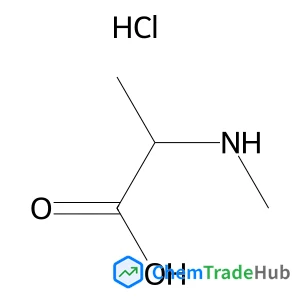
(R)-2-(Methylamino)propanoic acid hydrochloride
CAS Number:
1155878-14-0
Molecular Formula:
C4H10ClNO2
Recommended Suppliers





Disclaimer
This page provides academic journal information for reference and research purposes only. We are not affiliated with any journal publishers and do not handle publication submissions. For publication-related inquiries, please contact the respective journal publishers directly.
If you notice any inaccuracies in the information displayed, please contact us at support@chemtradehub.com. We will promptly review and address your concerns.