












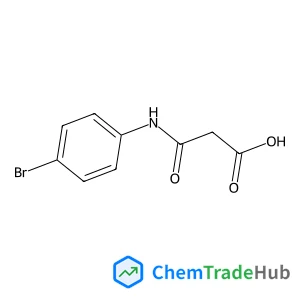
CO assisted N2 functionalization activated by a dinuclear hafnium complex: a DFT mechanistic exploration
Literature Information
Publication Date
2012-11-19
DOI
10.1039/C2CP43401F
Impact Factor
3.676
Authors
Xuelu Ma, Xin Zhang, Wenchao Zhang
View Original
Abstract
In this paper, the reaction mechanisms of CO assisted N2 cleavage and functionalization activated by a dinuclear hafnium complex are studied using a density function theory (DFT) method. Several key intermediates (Ia, Ib, Ic and Id) with axial/equatorial NCO coordination structures are found to be of importance along reaction pathways of CO assisted N2 functionalization, which could provide a profound theoretical insight into the C–N bond formation and N–N bond cleavage. There are two different attack directions to insert the first CO molecule into the Hf–N bonds of the dinuclear hafnium complex, which lead to C–N bond formation. The calculated results imply that CO insertion into the Hf1–N3 bond (Path A1) reacts more easily than that into the Hf2–N3 bond (Path A3). But for the insertion of the second CO insertion to give 2A, there are two possibilities (Path A1 and Path A2) according to this insertion being after/before N–N bond cleavage. Two pathways (Path A1 and Path A2) are proved to be possible to form final dinitrogen functionalized products (oxamidide 2A, 2B and 2C) in this study, which explain the formation of different oxamidide isomers in CO assisted N2 functionalization activated by a dinuclear hafnium complex.
Related Literature
Amphiphilic supramolecular A(B)2A quasi-triblock copolymers
2013-03-13
Communication
DOI: 10.1039/C3PY00216K
Characterization and assembly investigation of a dodecapeptide hydrolyzed from the crystalline domain of Bombyx mori silk fibroin
Ruiwen Hao, Jinming Zhang, Tao Xu, Lei Huang, Jinrong Yao, Xin Chen, Zhengzhong Shao
2013-02-07
Paper
DOI: 10.1039/C3PY21096K
Synthesis and characterisation of end-functionalised poly(N-vinylpyrrolidone) additives by reversible addition–fragmentation transfer polymerisation
William N. A. Bergius, Lian R. Hutchings, Richard L. Thompson, Michael Jeschke, Rosemary Fisher
2013-03-14
Paper
DOI: 10.1039/C3PY00041A
Simultaneous enhancements of toughness and tensile strength for thermoplastic/elastomer blends through interfacial photocrosslinking with UV radiation
Hongjun Xu, Yaqiong Zhang, Jingjing Yang, Lei Ye, Qianghua Wu, Baojun Qu, Qiao Wang, Zhigang Wang
2013-03-25
Paper
DOI: 10.1039/C3PY00185G
Photo-responsive linear and cross-linked supramolecular polymers based on host–guest interactions
Shengyi Dong, Lingyan Gao, Jinying Li, Donghua Xu, Qizhong Zhou
2013-05-01
Paper
DOI: 10.1039/C3PY00494E
Ruthenium catalyzed equilibrium ring-opening metathesis polymerization of cyclopentene
Robert Tuba
2013-05-30
Paper
DOI: 10.1039/C3PY00584D
Organic microporous polymer from a hexaphenylbenzene based triptycene monomer: synthesis and its gas storage properties
Chun Zhang, Lian-Hui Peng, Buyi Li, Ying Liu, Peng-Cheng Zhu, Zhen Wang, Deng-Huang Zhan, Bien Tan, Xiang-Liang Yang, Hui-Bi Xu
2013-05-08
Communication
DOI: 10.1039/C3PY00499F
Smart heparin-based bioconjugates synthesized by a combination of ATRP and click chemistry
Saadyah E. Averick, Krzysztof Matyjaszewski
2013-02-25
Paper
DOI: 10.1039/C3PY00055A
You might also like
Compound Q&A
Is 6-(3-Fluorophenyl)picolinic acid (CAS: 887982-40-3) safe?
6-(3-Fluorophenyl)picolinic acid is generally considered safe for laboratory use...
887982-40-36-(3-Fluorophenyl)pi...
Compound Q&A
What industries use (3R)-3-Pyrrolidinol (CAS: 2799-21-5)?
(3R)-3-Pyrrolidinol is used in the pharmaceutical industry as a precursor for dr...
2799-21-5(3R)-3-Pyrrolidinol
Compound Q&A
What precautions should be taken when handling (4R,5R)-4,5-Diethoxycarbonyl-2,2-dimethyldioxolane (CAS: 59779-75-8)?
When handling (4R,5R)-4,5-Diethoxycarbonyl-2,2-dimethyldioxolane (CAS: 59779-75-...
59779-75-8(4R,5R)-4,5-Diethoxy...
Compound Q&A
How is 1-(6-Chloroimidazo[1,2-b]pyridazin-3-yl)ethanone (CAS: 90734-71-7) typically synthesized?
1-(6-Chloroimidazo[1,2-b]pyridazin-3-yl)ethanone is often synthesized via a mult...
90734-71-71-(6-Chloroimidazo[1...
Compound Q&A
What is the market or research trend for N-Ethyl-3,4-dimethylbenzylamine (CAS: 39180-83-1)?
The market for N-Ethyl-3,4-dimethylbenzylamine (CAS: 39180-83-1) remains steady,...
39180-83-1N-Ethyl-3,4-dimethyl...
Compound Q&A
What is Tert-butyl 3-(pyrrolidin-1-yl)azetidine-1-carboxylate (CAS: 1019008-21-9)?
Tert-butyl 3-(pyrrolidin-1-yl)azetidine-1-carboxylate is a chemical compound wit...
1019008-21-9Tert-butyl 3-(pyrrol...
Compound Q&A
What regulatory guidelines apply to 1-Bromo-3-chloro-2,4-dimethoxybenzene (CAS: 1228956-93-1)?
1-Bromo-3-chloro-2,4-dimethoxybenzene (CAS: 1228956-93-1) falls under the classi...
1228956-93-11-Bromo-3-chloro-2,4...
Compound Q&A
Is 8-Bromo-2-methyl-3,4-dihydroisoquinolin-1(2H)-one (CAS: 1368622-07-4) safe?
The safety of 8-Bromo-2-methyl-3,4-dihydroisoquinolin-1(2H)-one (CAS: 1368622-07...
1368622-07-48-Bromo-2-methyl-3,4...
Compound Q&A
Is Benzyl [(3S)-2,6-dioxo-3-piperidinyl]carbamate (CAS: 22785-43-9) safe?
Benzyl [(3S)-2,6-dioxo-3-piperidinyl]carbamate is generally safe when handled wi...
22785-43-9Benzyl [(3S)-2,6-dio...
Compound Q&A
How should 1-{[4-(4,4,5,5-Tetramethyl-1,3,2-dioxaborolan-2-yl)phenyl]sulfonyl}pyrrolidine (CAS: 928657-21-0) be stored?
1-{[4-(4,4,5,5-Tetramethyl-1,3,2-dioxaborolan-2-yl)phenyl]sulfonyl}pyrrolidine s...
928657-21-01-{[4-(4,4,5,5-Tetra...
Source Journal
Physical Chemistry Chemical Physics

CiteScore:
5.5
Self-citation Rate:
10.3%
Articles per Year:
3036
Physical Chemistry Chemical Physics (PCCP) is an international journal co-owned by 19 physical chemistry and physics societies from around the world. This journal publishes original, cutting-edge research in physical chemistry, chemical physics and biophysical chemistry. To be suitable for publication in PCCP, articles must include significant innovation and/or insight into physical chemistry; this is the most important criterion that reviewers and Editors will judge against when evaluating submissions. The journal has a broad scope and welcomes contributions spanning experiment, theory, computation and data science. Topical coverage includes spectroscopy, dynamics, kinetics, statistical mechanics, thermodynamics, electrochemistry, catalysis, surface science, quantum mechanics, quantum computing and machine learning. Interdisciplinary research areas such as polymers and soft matter, materials, nanoscience, energy, surfaces/interfaces, and biophysical chemistry are welcomed if they demonstrate significant innovation and/or insight into physical chemistry. Joined experimental/theoretical studies are particularly appreciated when complementary and based on up-to-date approaches.
Recommended Compounds


Recommended Suppliers






Disclaimer
This page provides academic journal information for reference and research purposes only. We are not affiliated with any journal publishers and do not handle publication submissions. For publication-related inquiries, please contact the respective journal publishers directly.
If you notice any inaccuracies in the information displayed, please contact us at support@chemtradehub.com. We will promptly review and address your concerns.