


Unraveling the potential and pore-size dependent capacitance of slit-shaped graphitic carbon pores in aqueous electrolytes
Literature Information
Publication Date
2012-12-18
DOI
10.1039/C2CP43361C
Impact Factor
3.676
Authors
R. K. Kalluri, M. M. Biener, M. D. Merrill, M. Stadermann, J. G. Santiago, T. F. Baumann, J. Biener, A. Striolo
View Original
Abstract
Understanding and leveraging physicochemical processes at the pore scale are believed to be essential to future performance improvements of supercapacitors and capacitive desalination (CD) cells. Here, we report on a combination of electrochemical experiments and fully atomistic simulations to study the effect of pore size and surface charge density on the capacitance of graphitic nanoporous carbon electrodes. Specifically, we used cyclic voltammetry (CV) and electrochemical impedance spectroscopy (EIS) to study the effect of potential and pore size on the capacitance of nanoporous carbon foams. Molecular dynamics simulations were performed to study the pore-size dependent accumulation of aqueous electrolytes in slit-shaped graphitic carbon pores of different widths (0.65 to 1.6 nm). Experimentally, we observe a pronounced increase of the capacitance of sub-nm pores as the applied potential window gets wider, from a few F g−1 for narrow potential ranges (−0.3 to 0.3 V vs. Ag/AgCl) to ∼40 F g−1 for wider potential windows (−0.9 V to 0.9 V vs. Ag/AgCl). By contrast, the capacitance of wider pores does not depend significantly on the applied potential window. Molecular dynamics simulations confirm that the penetration of ions into pores becomes more difficult with decreasing pore width and increasing strength of the hydration shell. Consistent with our experimental results, we observe a pore- and ion-size dependent threshold-like charging behavior when the pore width becomes comparable to the size of the hydrated ion (0.65 nm pores for Na+ and 0.79 nm pores for Cl− ions). The observed pore-size and potential dependent accumulation of ions in slit-shaped carbon pores can be explained by the hydration structure of the ions entering the charged pores. The results are discussed in view of their effect on energy-storage and desalination efficiency.
Recommended Journals

Russian Journal of Bioorganic Chemistry

Russian Journal of Coordination Chemistry

Drug Discovery Today

Current Opinion in Solid State & Materials Science

Journal of Natural Medicines

Russian Journal of General Chemistry

Nature Medicine

Organic Process Research & Development

Russian Journal of Organic Chemistry

Chemical Communications
Related Literature
Construction of key building blocks towards the synthesis of cortistatins
Satrajit Indu, Rahul D. Telore, Krishna P. Kaliappan
2020-03-02
Paper
DOI: 10.1039/D0OB00170H
CuBr2-catalyzed diastereoselective allylation: total synthesis of decytospolides A and B and their C6-epimers
Birakishore Padhi, G. Sudhakar Reddy, N. Arjunreddy Mallampudi, Utkal Mani Choudhury, Debendra K. Mohapatra
2020-03-09
Paper
DOI: 10.1039/C9OB02689D
Modular synthesis of oligoacetylacetones via site-selective silylation of acetylacetone derivatives
Parantap Sarkar, Yuya Inaba, Hayato Shirakura, Tomoki Yoneda
2020-04-08
Paper
DOI: 10.1039/D0OB00501K
Chemoselective photocatalytic oxidation of alcohols to aldehydes and ketones by nitromethane on titanium dioxide under violet 400 nm LED light irradiation
Azam Rahimi Niaraki, Mohammad Reza Saraee, Babak Kaboudin
2020-03-07
Paper
DOI: 10.1039/C9OB02183C
A base-promoted tandem approach to bicyclic 8-membered ring ketones
Emerson E. F. dos Santos, Gabriela F. P. de Souza, Deborah A. Simoni, Airton G. Salles, Jr
2020-04-13
Communication
DOI: 10.1039/D0OB00618A
Toward the total synthesis of grayanane diterpene mollanol A by a Prins [3 + 2] strategy
Jianzhuang Miao, Yi-Xuan Zheng, Shi-Chao Lu, Shi-Peng Zhang, Ya-Ling Gong, Shu Xu
2020-02-15
Communication
DOI: 10.1039/D0OB00160K
Multiphosphorylated peptides: importance, synthetic strategies, and applications for studying biological mechanisms
Mamidi Samarasimhareddy, Guy Mayer, Mattan Hurevich, Assaf Friedler
2020-04-01
Review Article
DOI: 10.1039/D0OB00499E
Structure elucidation of bacterial nonribosomal lipopeptides
Sebastian Götze, Pierre Stallforth
2020-02-03
Review Article
DOI: 10.1039/C9OB02539A
You might also like
Compound Q&A
What regulatory guidelines apply to 6-Bromo-2-methylimidazo[1,2-a]pyrimidine (CAS: 1111638-05-1)?
6-Bromo-2-methylimidazo[1,2-a]pyrimidine (CAS: 1111638-05-1) falls under various...
1111638-05-16-Bromo-2-methylimid...
Compound Q&A
Are there alternatives to 1-Pyrrolidineethanol, β-methyl-α-phenyl-, (αS,βR) (CAS: 123620-80-4) in synthesis?
While there are no direct alternatives, similar compounds like 1-Pyrrolidineetha...
123620-80-41-Pyrrolidineethanol...
Compound Q&A
Is 4-Methyl-2,6-bis(2-methyl-2-propanyl)phenyl methylcarbamate (CAS: 1918-11-2) safe?
4-Methyl-2,6-bis(2-methyl-2-propanyl)phenyl methylcarbamate (CAS: 1918-11-2) is ...
1918-11-24-Methyl-2,6-bis(2-m...
Compound Q&A
How should 2-(3-Bromo-4-fluorophenyl)-1,3-dioxolane (CAS: 77771-04-1) be stored?
2-(3-Bromo-4-fluorophenyl)-1,3-dioxolane (CAS: 77771-04-1) should be stored in a...
77771-04-12-(3-Bromo-4-fluorop...
Compound Q&A
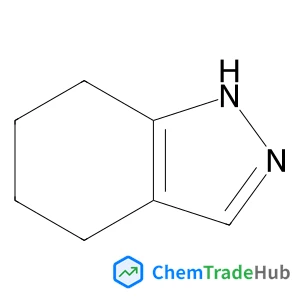
What are the physical and chemical properties of 4,5,6,7-Tetrahydro-1H-indazole hydrochloride (CAS: 18161-11-0)?
4,5,6,7-Tetrahydro-1H-indazole hydrochloride is a white crystalline solid with a...
18161-11-04,5,6,7-Tetrahydro-1...
Compound Q&A
What is (2R)-1-Methoxy-3-phenyl-2-propanamine (CAS: 59919-07-2)?
(2R)-1-Methoxy-3-phenyl-2-propanamine is a chiral organic compound with the CAS ...
59919-07-2(2R)-1-Methoxy-3-phe...
Compound Q&A
What industries use Ethyl 1-(1-phenylethyl)-1H-imidazole-5-carboxylate (CAS: 56649-47-9)?
Ethyl 1-(1-phenylethyl)-1H-imidazole-5-carboxylate is used in various industries...
56649-47-9Ethyl 1-(1-phenyleth...
Compound Q&A
What regulatory guidelines apply to 4-[(1E,3S)-1-(4-Hydroxyphenyl)-1,4-pentadien-3-yl]phenol (CAS: 17676-24-3)?
4-[(1E,3S)-1-(4-Hydroxyphenyl)-1,4-pentadien-3-yl]phenol (CAS: 17676-24-3) falls...
17676-24-34-[(1E,3S)-1-(4-Hydr...
Compound Q&A
What industries use (S)-3-Amino-5-phenylpentanoic acid hydrochloride (CAS: 331846-97-0)?
(S)-3-Amino-5-phenylpentanoic acid hydrochloride is primarily used in the pharma...
331846-97-0(S)-3-Amino-5-phenyl...
Compound Q&A
How is 7-methoxy-1-benzothiophene-2-carboxylic acid (CAS: 88791-07-5) typically synthesized?
7-Methoxy-1-benzothiophene-2-carboxylic acid is typically synthesized by reactin...
88791-07-57-methoxy-1-benzothi...
Source Journal
Physical Chemistry Chemical Physics

CiteScore:
5.5
Self-citation Rate:
10.3%
Articles per Year:
3036
Physical Chemistry Chemical Physics (PCCP) is an international journal co-owned by 19 physical chemistry and physics societies from around the world. This journal publishes original, cutting-edge research in physical chemistry, chemical physics and biophysical chemistry. To be suitable for publication in PCCP, articles must include significant innovation and/or insight into physical chemistry; this is the most important criterion that reviewers and Editors will judge against when evaluating submissions. The journal has a broad scope and welcomes contributions spanning experiment, theory, computation and data science. Topical coverage includes spectroscopy, dynamics, kinetics, statistical mechanics, thermodynamics, electrochemistry, catalysis, surface science, quantum mechanics, quantum computing and machine learning. Interdisciplinary research areas such as polymers and soft matter, materials, nanoscience, energy, surfaces/interfaces, and biophysical chemistry are welcomed if they demonstrate significant innovation and/or insight into physical chemistry. Joined experimental/theoretical studies are particularly appreciated when complementary and based on up-to-date approaches.
Recommended Compounds


Recommended Suppliers




Disclaimer
This page provides academic journal information for reference and research purposes only. We are not affiliated with any journal publishers and do not handle publication submissions. For publication-related inquiries, please contact the respective journal publishers directly.
If you notice any inaccuracies in the information displayed, please contact us at support@chemtradehub.com. We will promptly review and address your concerns.