












Structural flexibility of DNA-like conformers of canonical 2′-deoxyribonucleosides
Literature Information
Publication Date
2012-10-02
DOI
10.1039/C2CP43120C
Impact Factor
3.676
Authors
Tymofii Yu. Nikolaienko, Leonid A. Bulavin
View Original
Abstract
Relaxed force constants (RFC) and vibrational root-mean-square (VRMS) deviations are used for comparative characterization of mechanical properties of canonical 2′-deoxyribonucleosides (2DRs) and 1,2-dideoxyribose molecule, their model sugar residue. It has been shown that RFC and VRMS should be preferred over traditional force constants when one needs to obtain the quantitative measure of the ‘collective’ parameter flexibility (furanose sugar pseudorotation phase P in particular) and compare it with classical torsion angles (β, γ, ε, χ). It has been found that torsions ε and β determining the 2DRs backbone hydroxyl orientations are as soft as the pseudorotation phase P with RFC values within 1–10 kcal mol−1 rad−2 depending on conformation. Torsion γ is the most rigid one with RFC 15–30 kcal mol−1 rad−2, while the glycosidic torsion χ is characterized by intermediate values of RFC (typically 5–10 kcal mol−1 rad−2) and its RFC changes by 10 times, depending on the furanose sugar conformation (Kχ ≈ 3 kcal mol−1 rad−2 in B- vs. Kχ ≈ 21 kcal mol−1 rad−2 in A-DNA-like conformation of 2′-deoxycytidine). Quantum zero-point motion of the nuclei makes the dominant contribution to VRMS deviations of molecules structural parameters: 9–22° for β, ε and P, 5–7° for γ and χ at the temperature of 0 K, and 15–38° for β, ε and P, 9–26° for γ and χ at the room temperature (298.15 K). Obtained results can be used in constructing simple dynamical models of the DNA fragments.
Related Literature
Effects of substituents on fluorometric detection of cyanide anions by indolium–coumarin dyads
Masaya Nakamura, Takayuki Hirai
2015-08-27
Paper
DOI: 10.1039/C5CP03877D
Replica exchange reactive molecular dynamics simulations of initial reactions in zeolite synthesis
Zhifeng Jing
2015-08-25
Paper
DOI: 10.1039/C5CP03063C
Ion segregation in an ionic liquid confined within chitosan based chemical ionogels
A. Guyomard-Lack, N. Buchtová, B. Humbert, J. Le Bideau
2015-08-10
Paper
DOI: 10.1039/C5CP04198H
Alkali metal ion induced cube shaped mesoporous hematite particles for improved magnetic properties and efficient degradation of water pollutants
Mouni Roy, Milan Kanti Naskar
2016-07-01
Paper
DOI: 10.1039/C6CP02442D
Methanol electro-oxidation on platinum modified tungsten carbides in direct methanol fuel cells: a DFT study
Xiao Lin, Zhao-Yang Chen, P. Hu, Shi-Gang Sun, You-Qun Chu
2015-08-25
Paper
DOI: 10.1039/C5CP02072G
Theoretical study of the reactions of Criegee intermediates with ozone, alkylhydroperoxides, and carbon monoxide
L. Vereecken, W. J. Bloss
2015-08-20
Paper
DOI: 10.1039/C5CP03862F
A chemical chaperone induces inhomogeneous conformational changes in flexible proteins
Djemel Hamdane, Christophe Velours, David Cornu, Magali Nicaise, Murielle Lombard, Marc Fontecave
2016-07-01
Paper
DOI: 10.1039/C6CP03635J
Computational insights into CdSe quantum dots' interactions with acetate ligands
Patrick K. Tamukong, Wadumesthrige D. N. Peiris, Svetlana Kilina
2016-07-04
Paper
DOI: 10.1039/C6CP01665K
Separation of thorium ions from wolframite and scandium concentrates using graphene oxide
Ondřej Jankovský, David Sedmidubský, Petr Šimek, Kateřina Klímová, Daniel Bouša, Chris Boothroyd, Zdeněk Sofer
2015-08-27
Paper
DOI: 10.1039/C5CP04384K
Formation of a thermally stable bilayer of coadsorbed intact and deprotonated thymine exploiting the surface corrugation of rutile TiO2(110)
J. H. K. Pfisterer, P. S. Deimel, R. G. Acres, M. Fritton, P. Feulner, J. V. Barth, F. Allegretti
2016-07-05
Paper
DOI: 10.1039/C6CP02541B
You might also like
Compound Q&A
What precautions should be taken when handling 4-Methyl-6-(trifluoromethyl)quinoline (CAS: 40716-16-3)?
When handling 4-Methyl-6-(trifluoromethyl)quinoline (CAS: 40716-16-3), safety go...
40716-16-34-Methyl-6-(trifluor...
Compound Q&A
What is 4-(3,5-Difluorophenyl)aniline (CAS: 405058-00-6)?
4-(3,5-Difluorophenyl)aniline is an aromatic organic compound with the CAS numbe...
405058-00-64-(3,5-Difluoropheny...
Compound Q&A
How is 5-{[4-(Trifluoromethyl)phenyl]sulfanyl}-1,2,3-thiadiazole-4-carboxylic acid (CAS: 338982-07-3) typically synthesized?
5-{[4-(Trifluoromethyl)phenyl]sulfanyl}-1,2,3-thiadiazole-4-carboxylic acid can ...
338982-07-35-{[4-(Trifluorometh...
Compound Q&A
What is the market or research trend for 4-Benzylaniline hydrochloride (CAS: 6317-57-3)?
The market for 4-Benzylaniline hydrochloride (CAS: 6317-57-3) is steadily growin...
6317-57-34-Benzylaniline hydr...
Compound Q&A
Is [3-(Diethylsulfamoyl)phenyl]boronic acid (CAS: 871329-58-7) safe?
[3-(Diethylsulfamoyl)phenyl]boronic acid is generally considered safe when handl...
871329-58-7[3-(Diethylsulfamoyl...
Compound Q&A
What are the main uses of 3-Bromo-2,5-dimethoxyaniline (CAS: 115929-62-9)?
3-Bromo-2,5-dimethoxyaniline is mainly used in the pharmaceutical and chemical i...
115929-62-93-Bromo-2,5-dimethox...
Compound Q&A
What regulatory guidelines apply to N-Methyl-1-(5-methyl-1H-indol-3-yl)methanamine (CAS: 915922-67-7)?
N-Methyl-1-(5-methyl-1H-indol-3-yl)methanamine (CAS: 915922-67-7) is subject to ...
915922-67-7N-Methyl-1-(5-methyl...
Compound Q&A
What industries use Carbamic acid, N-[(5S)-5,6-diamino-6-oxohexyl]-, 1,1-dimethylethyl ester (CAS: 24828-96-4)?
This compound is primarily used in the pharmaceutical industry for the synthesis...
24828-96-4Carbamic acid, N-[(5...
Compound Q&A
How should 2-Methyl-2-propanyl [(1S,3R)-3-aminocyclohexyl]carbamate (CAS: 1298101-47-9) be stored?
2-Methyl-2-propanyl [(1S,3R)-3-aminocyclohexyl]carbamate (CAS: 1298101-47-9) sho...
1298101-47-92-Methyl-2-propanyl ...
Compound Q&A
What industries use Ethyl 2-bromo-4,4,4-trifluorobutanoate (CAS: 367-33-9)?
Ethyl 2-bromo-4,4,4-trifluorobutanoate (CAS: 367-33-9) is utilized in the pharma...
367-33-9Ethyl 2-bromo-4,4,4-...
Source Journal
Physical Chemistry Chemical Physics

CiteScore:
5.5
Self-citation Rate:
10.3%
Articles per Year:
3036
Physical Chemistry Chemical Physics (PCCP) is an international journal co-owned by 19 physical chemistry and physics societies from around the world. This journal publishes original, cutting-edge research in physical chemistry, chemical physics and biophysical chemistry. To be suitable for publication in PCCP, articles must include significant innovation and/or insight into physical chemistry; this is the most important criterion that reviewers and Editors will judge against when evaluating submissions. The journal has a broad scope and welcomes contributions spanning experiment, theory, computation and data science. Topical coverage includes spectroscopy, dynamics, kinetics, statistical mechanics, thermodynamics, electrochemistry, catalysis, surface science, quantum mechanics, quantum computing and machine learning. Interdisciplinary research areas such as polymers and soft matter, materials, nanoscience, energy, surfaces/interfaces, and biophysical chemistry are welcomed if they demonstrate significant innovation and/or insight into physical chemistry. Joined experimental/theoretical studies are particularly appreciated when complementary and based on up-to-date approaches.
Recommended Compounds
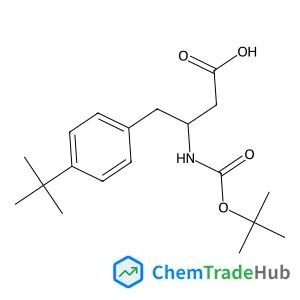
(S)-3-((tert-Butoxycarbonyl)amino)-4-(4-(tert-butyl)phenyl)butanoic acid
CAS Number:
403661-85-8
Molecular Formula:
C19H29NO4
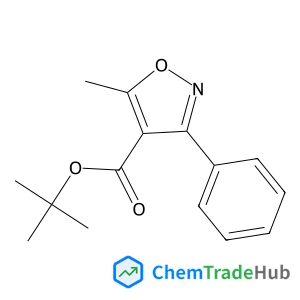
2-Methyl-2-propanyl 5-methyl-3-phenyl-1,2-oxazole-4-carboxylate
CAS Number:
211429-79-7
Molecular Formula:
C15H17NO3
![N-{3-[Benzyl(methyl)amino]propyl}-9-chloro-5,6,7,8-tetrahydro-2-acridinecarboxamide structure](https://static.chemtradehub.com/structs/142/1426944-49-1-1e4c.webp "N-{3-[Benzyl(methyl)amino]propyl}-9-chloro-5,6,7,8-tetrahydro-2-acridinecarboxamide structure")
N-{3-[Benzyl(methyl)amino]propyl}-9-chloro-5,6,7,8-tetrahydro-2-acridinecarboxamide
CAS Number:
1426944-49-1
Molecular Formula:
C25H28ClN3O
Recommended Suppliers








Disclaimer
This page provides academic journal information for reference and research purposes only. We are not affiliated with any journal publishers and do not handle publication submissions. For publication-related inquiries, please contact the respective journal publishers directly.
If you notice any inaccuracies in the information displayed, please contact us at support@chemtradehub.com. We will promptly review and address your concerns.