












Theoretical and experimental studies of water interaction in acetate based ionic liquids
Literature Information
Publication Date
2012-10-08
DOI
10.1039/C2CP42975F
Impact Factor
3.676
Authors
Krishnan Damodaran, Hunaid B. Nulwala, David R. Luebke
View Original
Abstract
Water interactions in 1-ethyl-3-methylimidazolium acetate ([emim][CH3COO]) were studied utilizing classical and ab initio simulation methods. The self-diffusivities for water and the ionic liquid (IL) were studied experimentally using pulse field gradient NMR spectroscopy and correlated with computational results. Water forms hydrogen bonding networks with the ionic liquid, and depending on the concentration of water, there are profound effects on the self-diffusivities of the various species. Both simulation and experiments show that the self-diffusivities for species in the water–[emim][CH3COO] system exhibit minima at 40–50 mol% water. Water interaction with the [CH3COO]− anion predominates over the water–water and water–cation interactions at most water concentrations. Simulations further indicate that decreasing water–[CH3COO]− interaction will increase the IL and water self-diffusivities. Self-diffusivities in the water–IL systems are dependent upon the cation in a complex way. Water interactions with [P4444][CH3COO] are reduced compared to [emim][CH3COO]. The [P4444]+ cation is bulkier than the [emim]+ cation and has a smaller self-diffusivity, but when water was introduced to [P4444] [CH3COO], the water–[CH3COO]− hydrogen bonding network in the [P4444][CH3COO] was much smaller than the one observed in [emim][CH3COO].
Recommended Journals
Related Literature
Interaction of l-alanyl-l-valine and l-valyl-l-alanine with organic vapors: thermal stability of clathrates, sorption capacity and the change in the morphology of dipeptide films
Marat A. Ziganshin, Nadezhda S. Gubina, Alexander V. Gerasimov, Valery V. Gorbatchuk, Sufia A. Ziganshina, Anton P. Chuklanov, Anastas A. Bukharaev
2015-07-08
Paper
DOI: 10.1039/C5CP03309H
Vertical heterostructures of MoS2 and graphene nanoribbons grown by two-step chemical vapor deposition for high-gain photodetectors
Rozan Mohamad Yunus, Hiroko Endo
2015-09-01
Paper
DOI: 10.1039/C5CP03958D
Near infrared electroluminescence of ZnMgO/InN core–shell nanorod heterostructures grown on Si substrate
Guoguang Wu, Weitao Zheng, Fubin Gao, Hang Yang, Yang Zhao, Jingzhi Yin, Wei Zheng, Wancheng Li, Baolin Zhang, Guotong Du
2016-06-07
Paper
DOI: 10.1039/C6CP03199D
Photoionization access to cyclodextrin-encapsulated resveratrol phenoxy radicals and their repair by ascorbate across the phase boundary
Christoph Kerzig, Martin Goez
2016-06-24
Paper
DOI: 10.1039/C6CP03742A
On the fractality of the Freundlich adsorption isotherm in equilibrium and non-equilibrium cases
Przemysław Borys, Zbigniew J. Grzywna
2016-07-04
Paper
DOI: 10.1039/C6CP03356C
Electrical impedance spectroscopy of a PET chip sandwiched between two disk electrodes: understanding the contribution of the polymer/electrode interface
L. Chaal, V. Vivier, B. Tribollet, J. Gamby
2016-06-29
Paper
DOI: 10.1039/C6CP03042D
Theoretical study of the reactions of Criegee intermediates with ozone, alkylhydroperoxides, and carbon monoxide
L. Vereecken, W. J. Bloss
2015-08-20
Paper
DOI: 10.1039/C5CP03862F
TEMPO-mediated oxidized winter melon-based carbonaceous aerogel as an ultralight 3D support for enhanced photodegradation of organic pollutants
Miao Miao, Gangling Wang, Shaomei Cao, Xin Feng, Jianhui Fang, Liyi Shi
2015-08-27
Paper
DOI: 10.1039/C5CP04679C
Inverse internal conversion in C4− below the electron detachment threshold
Naoko Kono, Takeshi Furukawa, Hajime Tanuma, Jun Matsumoto, Haruo Shiromaru, Toshiyuki Azuma, Kaveh Najafian, Maria Susanne Pettersson, Bertil Dynefors, Klavs Hansen
2015-07-07
Paper
DOI: 10.1039/C5CP02549D
Ion-specific adsorption and electroosmosis in charged amorphous porous silica
Bertrand Siboulet, Jean-François Dufrêche
2015-08-28
Paper
DOI: 10.1039/C5CP03818A
You might also like
Compound Q&A
What precautions should be taken when handling 4-Methyl-6-(trifluoromethyl)quinoline (CAS: 40716-16-3)?
When handling 4-Methyl-6-(trifluoromethyl)quinoline (CAS: 40716-16-3), safety go...
40716-16-34-Methyl-6-(trifluor...
Compound Q&A
What is 4-(3,5-Difluorophenyl)aniline (CAS: 405058-00-6)?
4-(3,5-Difluorophenyl)aniline is an aromatic organic compound with the CAS numbe...
405058-00-64-(3,5-Difluoropheny...
Compound Q&A
How is 5-{[4-(Trifluoromethyl)phenyl]sulfanyl}-1,2,3-thiadiazole-4-carboxylic acid (CAS: 338982-07-3) typically synthesized?
5-{[4-(Trifluoromethyl)phenyl]sulfanyl}-1,2,3-thiadiazole-4-carboxylic acid can ...
338982-07-35-{[4-(Trifluorometh...
Compound Q&A
What is the market or research trend for 4-Benzylaniline hydrochloride (CAS: 6317-57-3)?
The market for 4-Benzylaniline hydrochloride (CAS: 6317-57-3) is steadily growin...
6317-57-34-Benzylaniline hydr...
Compound Q&A
Is [3-(Diethylsulfamoyl)phenyl]boronic acid (CAS: 871329-58-7) safe?
[3-(Diethylsulfamoyl)phenyl]boronic acid is generally considered safe when handl...
871329-58-7[3-(Diethylsulfamoyl...
Compound Q&A
What are the main uses of 3-Bromo-2,5-dimethoxyaniline (CAS: 115929-62-9)?
3-Bromo-2,5-dimethoxyaniline is mainly used in the pharmaceutical and chemical i...
115929-62-93-Bromo-2,5-dimethox...
Compound Q&A
What regulatory guidelines apply to N-Methyl-1-(5-methyl-1H-indol-3-yl)methanamine (CAS: 915922-67-7)?
N-Methyl-1-(5-methyl-1H-indol-3-yl)methanamine (CAS: 915922-67-7) is subject to ...
915922-67-7N-Methyl-1-(5-methyl...
Compound Q&A
What industries use Carbamic acid, N-[(5S)-5,6-diamino-6-oxohexyl]-, 1,1-dimethylethyl ester (CAS: 24828-96-4)?
This compound is primarily used in the pharmaceutical industry for the synthesis...
24828-96-4Carbamic acid, N-[(5...
Compound Q&A
How should 2-Methyl-2-propanyl [(1S,3R)-3-aminocyclohexyl]carbamate (CAS: 1298101-47-9) be stored?
2-Methyl-2-propanyl [(1S,3R)-3-aminocyclohexyl]carbamate (CAS: 1298101-47-9) sho...
1298101-47-92-Methyl-2-propanyl ...
Compound Q&A
What industries use Ethyl 2-bromo-4,4,4-trifluorobutanoate (CAS: 367-33-9)?
Ethyl 2-bromo-4,4,4-trifluorobutanoate (CAS: 367-33-9) is utilized in the pharma...
367-33-9Ethyl 2-bromo-4,4,4-...
Source Journal
Physical Chemistry Chemical Physics

CiteScore:
5.5
Self-citation Rate:
10.3%
Articles per Year:
3036
Physical Chemistry Chemical Physics (PCCP) is an international journal co-owned by 19 physical chemistry and physics societies from around the world. This journal publishes original, cutting-edge research in physical chemistry, chemical physics and biophysical chemistry. To be suitable for publication in PCCP, articles must include significant innovation and/or insight into physical chemistry; this is the most important criterion that reviewers and Editors will judge against when evaluating submissions. The journal has a broad scope and welcomes contributions spanning experiment, theory, computation and data science. Topical coverage includes spectroscopy, dynamics, kinetics, statistical mechanics, thermodynamics, electrochemistry, catalysis, surface science, quantum mechanics, quantum computing and machine learning. Interdisciplinary research areas such as polymers and soft matter, materials, nanoscience, energy, surfaces/interfaces, and biophysical chemistry are welcomed if they demonstrate significant innovation and/or insight into physical chemistry. Joined experimental/theoretical studies are particularly appreciated when complementary and based on up-to-date approaches.
Recommended Compounds
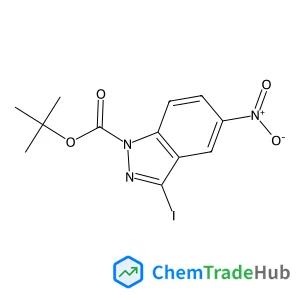
Tert-butyl 3-iodo-5-nitro-1H-indazole-1-carboxylate
CAS Number:
459133-69-8
Molecular Formula:
C12H12IN3O4
Recommended Suppliers




Disclaimer
This page provides academic journal information for reference and research purposes only. We are not affiliated with any journal publishers and do not handle publication submissions. For publication-related inquiries, please contact the respective journal publishers directly.
If you notice any inaccuracies in the information displayed, please contact us at support@chemtradehub.com. We will promptly review and address your concerns.