












Bicellar systems to modify the phase behaviour of skin stratum corneum lipids
Literature Information
Publication Date
2012-08-29
DOI
10.1039/C2CP42421E
Impact Factor
3.676
Authors
Gelen Rodríguez, Mercedes Cócera, Laia Rubio, Cristina Alonso, Ramon Pons, Christophe Sandt, Paul Dumas, Carmen López-Iglesias, Alfons de la Maza, Olga López
View Original
Abstract
Bicellar systems are a fascinating category of versatile lipid assemblies that comprise bilayered disk-shaped nanoaggregates formed in water by long and short alkyl chain phospholipids. Bicelles bridge the gap between micelles and lipid vesicles by combining the attractive properties of both systems. These structures have recently been proposed in dermatological, cosmetic and pharmaceutical applications. Two new binary bicellar systems composed of cholesterol sulphate (SCHOL) and long-chain phospholipids (dimyristoyl-phosphatidylcholine, DMPC, or dipalmitoyl-phosphatidylcholine, DPPC) are characterised herein by differential scanning calorimetry, fluorescence spectroscopy, X-ray scattering and microscopy. Additionally, a comparative study on skin treated with the new SCHOL systems (DMPC/SCHOL and DPPC/SCHOL) and classic DHPC systems (DMPC/DHPC and DPPC/DHPC) was performed. These studies were conducted to determinate how deeply bicelles penetrate into the skin and the extension of their effect on the phase behaviour of stratum corneum (SC) lipids using attenuated total reflectance-Fourier transform infrared spectroscopy and two-photon excitation fluorescence microscopy. Our results show that SCHOL modified the typical discoidal morphology and the phase behaviour of the systems, inducing coexistence of two phases, liquid-ordered and ripple phases. The effect of the systems on SC lipids depends on their composition and is related to the fluidity of the SC lipid alkyl chains. Thus, systems with DMPC induced more disorder in SC lipids than systems with DPPC, and SCHOL did not modify the lipid arrangement. Perdeuterated systems in the infrared spectroscopy technique supported a different distribution in the tissue for every system. DMPC systems were primarily at the first layers of the SC, whereas DPPC systems were more widely distributed. Systems with SCHOL had enhanced distribution and penetration of bicellar systems throughout the SC.
Related Literature
Quantum mechanical study of the β- and δ-lyase reactions during the base excision repair process: application to FPG
Shahin Sowlati-Hashjin, Stacey D. Wetmore
2015-09-02
Paper
DOI: 10.1039/C5CP04250J
New organophilic kaolin clays based on single-point grafted 3-aminopropyl dimethylethoxysilane
A. Zaharia, F.-X. Perrin, M. Teodorescu, A.-L. Radu, T.-V. Iordache, A.-M. Florea, D. Donescu, A. Sarbu
2015-08-27
Paper
DOI: 10.1039/C5CP04395F
Strong solvent dependence of linear and non-linear optical properties of donor–acceptor type pyrrolo[3,2-b]pyrroles
Rafał Orłowski, Marzena Banasiewicz, Guillaume Clermont, Frédéric Castet, Rashid Nazir, Mireille Blanchard-Desce, Daniel T. Gryko
2015-07-08
Paper
DOI: 10.1039/C5CP03523F
Acetylene as an essential building block for prebiotic formation of pyrimidine bases on Titan
Yassin A. Jeilani, Chelesa Fearce, Minh Tho Nguyen
2015-08-24
Paper
DOI: 10.1039/C5CP03247D
Ultrafast excited-state dynamics of isocytosine
Rafał Szabla, Robert W. Góra
2016-06-10
Paper
DOI: 10.1039/C6CP01391K
Troponin structure: its modulation by Ca2+ and phosphorylation studied by molecular dynamics simulations
Juan Eiros Zamora, Maria Papadaki, Andrew E. Messer, Steven B. Marston, Ian R. Gould
2016-07-06
Paper
DOI: 10.1039/C6CP02610A
Probing of molecular replication and accumulation in shallow heat gradients through numerical simulations
Lorenz Keil, Michael Hartmann, Simon Lanzmich, Dieter Braun
2016-05-06
Paper
DOI: 10.1039/C6CP00577B
Non-adiabatic effects in thermochemistry, spectroscopy and kinetics: the general importance of all three Born–Oppenheimer breakdown corrections
Ross H. McKenzie
2015-07-08
Paper
DOI: 10.1039/C5CP02238J
The fracture behaviors of monolayer phosphorene with grain boundaries under tension: a molecular dynamics study
Chong Qiao, Aihua Wang, Jinping Zhang, Songyou Wang, Wan-Sheng Su, Yu Jia
2016-06-30
Paper
DOI: 10.1039/C6CP03655D
Interaction of l-alanyl-l-valine and l-valyl-l-alanine with organic vapors: thermal stability of clathrates, sorption capacity and the change in the morphology of dipeptide films
Marat A. Ziganshin, Nadezhda S. Gubina, Alexander V. Gerasimov, Valery V. Gorbatchuk, Sufia A. Ziganshina, Anton P. Chuklanov, Anastas A. Bukharaev
2015-07-08
Paper
DOI: 10.1039/C5CP03309H
You might also like
Compound Q&A
What precautions should be taken when handling 4-Methyl-6-(trifluoromethyl)quinoline (CAS: 40716-16-3)?
When handling 4-Methyl-6-(trifluoromethyl)quinoline (CAS: 40716-16-3), safety go...
40716-16-34-Methyl-6-(trifluor...
Compound Q&A
What is 4-(3,5-Difluorophenyl)aniline (CAS: 405058-00-6)?
4-(3,5-Difluorophenyl)aniline is an aromatic organic compound with the CAS numbe...
405058-00-64-(3,5-Difluoropheny...
Compound Q&A
How is 5-{[4-(Trifluoromethyl)phenyl]sulfanyl}-1,2,3-thiadiazole-4-carboxylic acid (CAS: 338982-07-3) typically synthesized?
5-{[4-(Trifluoromethyl)phenyl]sulfanyl}-1,2,3-thiadiazole-4-carboxylic acid can ...
338982-07-35-{[4-(Trifluorometh...
Compound Q&A
What is the market or research trend for 4-Benzylaniline hydrochloride (CAS: 6317-57-3)?
The market for 4-Benzylaniline hydrochloride (CAS: 6317-57-3) is steadily growin...
6317-57-34-Benzylaniline hydr...
Compound Q&A
Is [3-(Diethylsulfamoyl)phenyl]boronic acid (CAS: 871329-58-7) safe?
[3-(Diethylsulfamoyl)phenyl]boronic acid is generally considered safe when handl...
871329-58-7[3-(Diethylsulfamoyl...
Compound Q&A
What are the main uses of 3-Bromo-2,5-dimethoxyaniline (CAS: 115929-62-9)?
3-Bromo-2,5-dimethoxyaniline is mainly used in the pharmaceutical and chemical i...
115929-62-93-Bromo-2,5-dimethox...
Compound Q&A
What regulatory guidelines apply to N-Methyl-1-(5-methyl-1H-indol-3-yl)methanamine (CAS: 915922-67-7)?
N-Methyl-1-(5-methyl-1H-indol-3-yl)methanamine (CAS: 915922-67-7) is subject to ...
915922-67-7N-Methyl-1-(5-methyl...
Compound Q&A
What industries use Carbamic acid, N-[(5S)-5,6-diamino-6-oxohexyl]-, 1,1-dimethylethyl ester (CAS: 24828-96-4)?
This compound is primarily used in the pharmaceutical industry for the synthesis...
24828-96-4Carbamic acid, N-[(5...
Compound Q&A
How should 2-Methyl-2-propanyl [(1S,3R)-3-aminocyclohexyl]carbamate (CAS: 1298101-47-9) be stored?
2-Methyl-2-propanyl [(1S,3R)-3-aminocyclohexyl]carbamate (CAS: 1298101-47-9) sho...
1298101-47-92-Methyl-2-propanyl ...
Compound Q&A
What industries use Ethyl 2-bromo-4,4,4-trifluorobutanoate (CAS: 367-33-9)?
Ethyl 2-bromo-4,4,4-trifluorobutanoate (CAS: 367-33-9) is utilized in the pharma...
367-33-9Ethyl 2-bromo-4,4,4-...
Source Journal
Physical Chemistry Chemical Physics

CiteScore:
5.5
Self-citation Rate:
10.3%
Articles per Year:
3036
Physical Chemistry Chemical Physics (PCCP) is an international journal co-owned by 19 physical chemistry and physics societies from around the world. This journal publishes original, cutting-edge research in physical chemistry, chemical physics and biophysical chemistry. To be suitable for publication in PCCP, articles must include significant innovation and/or insight into physical chemistry; this is the most important criterion that reviewers and Editors will judge against when evaluating submissions. The journal has a broad scope and welcomes contributions spanning experiment, theory, computation and data science. Topical coverage includes spectroscopy, dynamics, kinetics, statistical mechanics, thermodynamics, electrochemistry, catalysis, surface science, quantum mechanics, quantum computing and machine learning. Interdisciplinary research areas such as polymers and soft matter, materials, nanoscience, energy, surfaces/interfaces, and biophysical chemistry are welcomed if they demonstrate significant innovation and/or insight into physical chemistry. Joined experimental/theoretical studies are particularly appreciated when complementary and based on up-to-date approaches.
Recommended Compounds

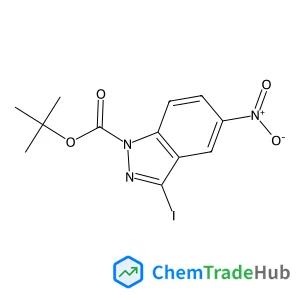
Tert-butyl 3-iodo-5-nitro-1H-indazole-1-carboxylate
CAS Number:
459133-69-8
Molecular Formula:
C12H12IN3O4

Recommended Suppliers





Disclaimer
This page provides academic journal information for reference and research purposes only. We are not affiliated with any journal publishers and do not handle publication submissions. For publication-related inquiries, please contact the respective journal publishers directly.
If you notice any inaccuracies in the information displayed, please contact us at support@chemtradehub.com. We will promptly review and address your concerns.