












Ultrafast excited-state dynamics of isocytosine
Literature Information
Publication Date
2016-06-10
DOI
10.1039/C6CP01391K
Impact Factor
3.676
Authors
Rafał Szabla, Robert W. Góra
View Original
Abstract
The alternative nucleobase isocytosine has long been considered as a plausible component of hypothetical primordial informational polymers. To examine this hypothesis we investigated the excited-state dynamics of the two most abundant forms of isocytosine in the gas phase (keto and enol). Our surface-hopping nonadiabatic molecular dynamics simulations employing the algebraic diagrammatic construction to the second order [ADC(2)] method for the electronic structure calculations suggest that both tautomers undergo efficient radiationless deactivation to the electronic ground state with time constants which amount to τketo = 182 fs and τenol = 533 fs. The dominant photorelaxation pathways correspond to ring-puckering (ππ* surface) and CO stretching/N–H tilting (nπ* surface) for the enol and keto forms respectively. Based on these findings, we infer that isocytosine is a relatively photostable compound in the gas phase and in these terms resembles biologically relevant nucleobases. The estimated S1 T1 intersystem crossing rate constant of 8.02 × 10¹⁰ s−1 suggests that triplet states might also play an important role in the overall excited-state dynamics of the keto tautomer. The reliability of ADC(2)-based surface-hopping molecular dynamics simulations was tested against multireference quantum-chemical calculations and the potential limitations of the employed ADC(2) approach are briefly discussed.
Related Literature
Hydrolysis of green-tide forming Ulva spp. by microwave irradiation with polyoxometalate clusters
Shuntaro Tsubaki, Kiriyo Oono, Masanori Hiraoka, Tadaharu Ueda, Ayumu Onda, Kazumichi Yanagisawa, Jun-ichi Azuma
2013-12-12
Paper
DOI: 10.1039/C3GC42027B
Design and evaluation of switchable-hydrophilicity solvents
Jesse R. Vanderveen, Jeremy Durelle, Philip G. Jessop
2013-12-18
Paper
DOI: 10.1039/C3GC42164C
Efficient and selective alcoholysis of furfuryl alcohol to alkyl levulinates catalyzed by double SO3H-functionalized ionic liquids
Guofeng Wang, Zhanquan Zhang, Linhua Song
2013-11-11
Paper
DOI: 10.1039/C3GC41693C
Synthesis of a morphology controllable Fe3O4 nanoparticle/hydrogel magnetic nanocomposite inspired by magnetotactic bacteria and its application in H2O2 detection
Yang Gao, Zhao Wei, Fei Li, Zhi Mao Yang, Yong Mei Chen, Miklos Zrinyi, Yoshihito Osada
2013-10-11
Paper
DOI: 10.1039/C3GC41535J
Synthesis of soluble core cross-linked polystyrene star polymer by application of acrylate-nitrile oxide ‘click chemistry’ using metal-free reagents
Rakesh Banerjee, Saikat Maiti, Dibakar Dhara
2013-11-04
Paper
DOI: 10.1039/C3GC41722K
Regioselective synthesis of renewable bisphenols from 2,3-pentanedione and their application as plasticizers
Wouter Schutyser, Steven-Friso Koelewijn, Michiel Dusselier, Joice Thomas, Feng Yu, Maria Josefina Carbone, Mario Smet, Peter Van Puyvelde, Wim Dehaen, Bert F. Sels
2014-02-24
Paper
DOI: 10.1039/C4GC00250D
Electrocarboxylation of acetophenone in ionic liquids: the influence of proton availability on product distribution
Mike Horne, Alan M. Bond, Jie Zhang
2014-01-06
Paper
DOI: 10.1039/C3GC42404A
Efficient biocatalytic processes for highly valuable terminally phosphorylated C5 to C9 d-ketoses
P. Clapés, A. Szekrenyi
2013-11-26
Communication
DOI: 10.1039/C3GC42140F
Aerobic oxidation of isosorbide and isomannide employing TEMPO/laccase
Johannes Gross, Katharina Tauber, Michael Fuchs, Nina G. Schmidt, Aashrita Rajagopalan, Kurt Faber, Walter M. F. Fabian, Jan Pfeffer, Thomas Haas, Wolfgang Kroutil
2014-01-30
Communication
DOI: 10.1039/C3GC41855C
Catalyst-free chemo-/regio-/stereo-selective amination of alk-3-ynones. Synthesis of 1,5-benzodiazepines and 3-amino-2-alkenones
Agnes Solan, Bilal Nişanci, Miranda Belcher, Jonathon Young, Christian Schäfer, Kraig A. Wheeler, Béla Török, Roman Dembinski
2013-12-19
Communication
DOI: 10.1039/C3GC41898G
You might also like
Compound Q&A
What precautions should be taken when handling 4-Methyl-6-(trifluoromethyl)quinoline (CAS: 40716-16-3)?
When handling 4-Methyl-6-(trifluoromethyl)quinoline (CAS: 40716-16-3), safety go...
40716-16-34-Methyl-6-(trifluor...
Compound Q&A
What is 4-(3,5-Difluorophenyl)aniline (CAS: 405058-00-6)?
4-(3,5-Difluorophenyl)aniline is an aromatic organic compound with the CAS numbe...
405058-00-64-(3,5-Difluoropheny...
Compound Q&A
How is 5-{[4-(Trifluoromethyl)phenyl]sulfanyl}-1,2,3-thiadiazole-4-carboxylic acid (CAS: 338982-07-3) typically synthesized?
5-{[4-(Trifluoromethyl)phenyl]sulfanyl}-1,2,3-thiadiazole-4-carboxylic acid can ...
338982-07-35-{[4-(Trifluorometh...
Compound Q&A
What is the market or research trend for 4-Benzylaniline hydrochloride (CAS: 6317-57-3)?
The market for 4-Benzylaniline hydrochloride (CAS: 6317-57-3) is steadily growin...
6317-57-34-Benzylaniline hydr...
Compound Q&A
Is [3-(Diethylsulfamoyl)phenyl]boronic acid (CAS: 871329-58-7) safe?
[3-(Diethylsulfamoyl)phenyl]boronic acid is generally considered safe when handl...
871329-58-7[3-(Diethylsulfamoyl...
Compound Q&A
What are the main uses of 3-Bromo-2,5-dimethoxyaniline (CAS: 115929-62-9)?
3-Bromo-2,5-dimethoxyaniline is mainly used in the pharmaceutical and chemical i...
115929-62-93-Bromo-2,5-dimethox...
Compound Q&A
What regulatory guidelines apply to N-Methyl-1-(5-methyl-1H-indol-3-yl)methanamine (CAS: 915922-67-7)?
N-Methyl-1-(5-methyl-1H-indol-3-yl)methanamine (CAS: 915922-67-7) is subject to ...
915922-67-7N-Methyl-1-(5-methyl...
Compound Q&A
What industries use Carbamic acid, N-[(5S)-5,6-diamino-6-oxohexyl]-, 1,1-dimethylethyl ester (CAS: 24828-96-4)?
This compound is primarily used in the pharmaceutical industry for the synthesis...
24828-96-4Carbamic acid, N-[(5...
Compound Q&A
How should 2-Methyl-2-propanyl [(1S,3R)-3-aminocyclohexyl]carbamate (CAS: 1298101-47-9) be stored?
2-Methyl-2-propanyl [(1S,3R)-3-aminocyclohexyl]carbamate (CAS: 1298101-47-9) sho...
1298101-47-92-Methyl-2-propanyl ...
Compound Q&A
What industries use Ethyl 2-bromo-4,4,4-trifluorobutanoate (CAS: 367-33-9)?
Ethyl 2-bromo-4,4,4-trifluorobutanoate (CAS: 367-33-9) is utilized in the pharma...
367-33-9Ethyl 2-bromo-4,4,4-...
Source Journal
Physical Chemistry Chemical Physics

CiteScore:
5.5
Self-citation Rate:
10.3%
Articles per Year:
3036
Physical Chemistry Chemical Physics (PCCP) is an international journal co-owned by 19 physical chemistry and physics societies from around the world. This journal publishes original, cutting-edge research in physical chemistry, chemical physics and biophysical chemistry. To be suitable for publication in PCCP, articles must include significant innovation and/or insight into physical chemistry; this is the most important criterion that reviewers and Editors will judge against when evaluating submissions. The journal has a broad scope and welcomes contributions spanning experiment, theory, computation and data science. Topical coverage includes spectroscopy, dynamics, kinetics, statistical mechanics, thermodynamics, electrochemistry, catalysis, surface science, quantum mechanics, quantum computing and machine learning. Interdisciplinary research areas such as polymers and soft matter, materials, nanoscience, energy, surfaces/interfaces, and biophysical chemistry are welcomed if they demonstrate significant innovation and/or insight into physical chemistry. Joined experimental/theoretical studies are particularly appreciated when complementary and based on up-to-date approaches.
Recommended Compounds
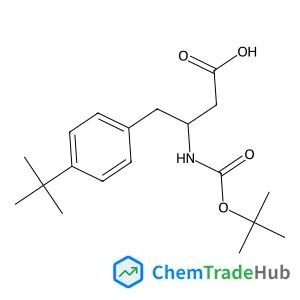
(S)-3-((tert-Butoxycarbonyl)amino)-4-(4-(tert-butyl)phenyl)butanoic acid
CAS Number:
403661-85-8
Molecular Formula:
C19H29NO4
![N-{3-[Benzyl(methyl)amino]propyl}-9-chloro-5,6,7,8-tetrahydro-2-acridinecarboxamide structure](https://static.chemtradehub.com/structs/142/1426944-49-1-1e4c.webp "N-{3-[Benzyl(methyl)amino]propyl}-9-chloro-5,6,7,8-tetrahydro-2-acridinecarboxamide structure")
N-{3-[Benzyl(methyl)amino]propyl}-9-chloro-5,6,7,8-tetrahydro-2-acridinecarboxamide
CAS Number:
1426944-49-1
Molecular Formula:
C25H28ClN3O
Recommended Suppliers






Disclaimer
This page provides academic journal information for reference and research purposes only. We are not affiliated with any journal publishers and do not handle publication submissions. For publication-related inquiries, please contact the respective journal publishers directly.
If you notice any inaccuracies in the information displayed, please contact us at support@chemtradehub.com. We will promptly review and address your concerns.