


![Imidazo[1,2-c]pyrimidine structure](https://static.chemtradehub.com/structs/274/274-78-2-8b4c.webp "Imidazo[1,2-c]pyrimidine structure")
Contrasting preferences of N and P substituted heteroaromatics towards metal binding: probing the regioselectivity of Li+ and Mg2+ binding to (CH)6−m−nNmPn
Literature Information
Publication Date
2012-08-10
DOI
10.1039/C2CP41834G
Impact Factor
3.676
Authors
Bhaskar Sharma, Deivasigamani Umadevi, G. Narahari Sastry
View Original
Abstract
High level ab initio and hybrid DFT methods have been employed to investigate the interactions of metal ions (Li+ and Mg2+) with N and P substituted six membered heteroaromatics (CH)6−m−nNmPn. The binding energy (BE) of metal ions with the N and P substituted heteroaromatics has been computed at the CCSD(T)/cc-pVTZ//MP2/cc-pVTZ level with counterpoise correction. In the present study we systematically examined the preferential modes of binding of metal ions to the heteroaromatics. N-Substituted heteroaromatics show a strong preference for cation–σ mode of binding whereas the P-substituted heteroaromatics prefer cation–π mode of binding with the metal ions. Energy decomposition analysis (EDA) using the DFT-SAPT scheme has been carried out to analyse the contribution of various energy components to the BE. The results illustrate that for the cation–π complexes, the contribution of the induction term is more whereas in the case of cation–σ there is a competition between induction and electrostatic terms in the interaction energy.
Recommended Journals

Proceedings of the National Academy of Sciences of the United States of America

Journal of Physics and Chemistry of Solids

Kinetics and Catalysis

Journal of Organometallic Chemistry

Journal of Medicinal Chemistry

Israel Journal of Chemistry

Russian Chemical Reviews

Pure and Applied Chemistry

Organic Preparations and Procedures International

Nature
Related Literature
Photoinduced electron transfer from quantum dots to TiO2: elucidating the involvement of excitonic and surface states
Saurabh Chauhan, David F. Watson
2016-07-05
Paper
DOI: 10.1039/C6CP03813A
Chain length, temperature and solvent effects on the structural properties of α-aminoisobutyric acid homooligopeptides
Sonja Grubišić
2016-06-29
Paper
DOI: 10.1039/C6CP01120A
TEMPO-mediated oxidized winter melon-based carbonaceous aerogel as an ultralight 3D support for enhanced photodegradation of organic pollutants
Miao Miao, Gangling Wang, Shaomei Cao, Xin Feng, Jianhui Fang, Liyi Shi
2015-08-27
Paper
DOI: 10.1039/C5CP04679C
Quantification and classification of substituent effects in organic chemistry: a theoretical molecular electrostatic potential study‡
Geetha S. Remya, Cherumuttathu H. Suresh
2016-07-04
Paper
DOI: 10.1039/C6CP02936A
Phosphoryl transfer reaction catalyzed by membrane diacylglycerol kinase: a theoretical mechanism study
Yafei Jiang, Hongwei Tan, Jimin Zheng, Xichen Li, Guangju Chen, Zongchao Jia
2015-08-24
Paper
DOI: 10.1039/C5CP03342J
Inverse internal conversion in C4− below the electron detachment threshold
Naoko Kono, Takeshi Furukawa, Hajime Tanuma, Jun Matsumoto, Haruo Shiromaru, Toshiyuki Azuma, Kaveh Najafian, Maria Susanne Pettersson, Bertil Dynefors, Klavs Hansen
2015-07-07
Paper
DOI: 10.1039/C5CP02549D
Flexible band gap tuning of hexagonal boron nitride sheets interconnected by acetylenic bonds
Hongyu Zhang, Youhua Luo, Xiaojuan Feng, Lixia Zhao, Meng Zhang
2015-07-07
Paper
DOI: 10.1039/C5CP02346G
Ion segregation in an ionic liquid confined within chitosan based chemical ionogels
A. Guyomard-Lack, N. Buchtová, B. Humbert, J. Le Bideau
2015-08-10
Paper
DOI: 10.1039/C5CP04198H
Hole-transfer induced energy transfer in perylene diimide dyads with a donor–spacer–acceptor motif
Patrick Kölle, Igor Pugliesi, Heinz Langhals, Roland Wilcken, Andreas J. Esterbauer, Regina de Vivie-Riedle, Eberhard Riedle
2015-08-24
Paper
DOI: 10.1039/C5CP02981C
THz time-domain spectroscopy of mixed CO2–CH3OH interstellar ice analogs
2016-06-07
Paper
DOI: 10.1039/C6CP00632A
You might also like
Compound Q&A
What precautions should be taken when handling 4-Methyl-6-(trifluoromethyl)quinoline (CAS: 40716-16-3)?
When handling 4-Methyl-6-(trifluoromethyl)quinoline (CAS: 40716-16-3), safety go...
40716-16-34-Methyl-6-(trifluor...
Compound Q&A
What is 4-(3,5-Difluorophenyl)aniline (CAS: 405058-00-6)?
4-(3,5-Difluorophenyl)aniline is an aromatic organic compound with the CAS numbe...
405058-00-64-(3,5-Difluoropheny...
Compound Q&A
How is 5-{[4-(Trifluoromethyl)phenyl]sulfanyl}-1,2,3-thiadiazole-4-carboxylic acid (CAS: 338982-07-3) typically synthesized?
5-{[4-(Trifluoromethyl)phenyl]sulfanyl}-1,2,3-thiadiazole-4-carboxylic acid can ...
338982-07-35-{[4-(Trifluorometh...
Compound Q&A
What is the market or research trend for 4-Benzylaniline hydrochloride (CAS: 6317-57-3)?
The market for 4-Benzylaniline hydrochloride (CAS: 6317-57-3) is steadily growin...
6317-57-34-Benzylaniline hydr...
Compound Q&A
Is [3-(Diethylsulfamoyl)phenyl]boronic acid (CAS: 871329-58-7) safe?
[3-(Diethylsulfamoyl)phenyl]boronic acid is generally considered safe when handl...
871329-58-7[3-(Diethylsulfamoyl...
Compound Q&A
What are the main uses of 3-Bromo-2,5-dimethoxyaniline (CAS: 115929-62-9)?
3-Bromo-2,5-dimethoxyaniline is mainly used in the pharmaceutical and chemical i...
115929-62-93-Bromo-2,5-dimethox...
Compound Q&A
What regulatory guidelines apply to N-Methyl-1-(5-methyl-1H-indol-3-yl)methanamine (CAS: 915922-67-7)?
N-Methyl-1-(5-methyl-1H-indol-3-yl)methanamine (CAS: 915922-67-7) is subject to ...
915922-67-7N-Methyl-1-(5-methyl...
Compound Q&A
What industries use Carbamic acid, N-[(5S)-5,6-diamino-6-oxohexyl]-, 1,1-dimethylethyl ester (CAS: 24828-96-4)?
This compound is primarily used in the pharmaceutical industry for the synthesis...
24828-96-4Carbamic acid, N-[(5...
Compound Q&A
How should 2-Methyl-2-propanyl [(1S,3R)-3-aminocyclohexyl]carbamate (CAS: 1298101-47-9) be stored?
2-Methyl-2-propanyl [(1S,3R)-3-aminocyclohexyl]carbamate (CAS: 1298101-47-9) sho...
1298101-47-92-Methyl-2-propanyl ...
Compound Q&A
What industries use Ethyl 2-bromo-4,4,4-trifluorobutanoate (CAS: 367-33-9)?
Ethyl 2-bromo-4,4,4-trifluorobutanoate (CAS: 367-33-9) is utilized in the pharma...
367-33-9Ethyl 2-bromo-4,4,4-...
Source Journal
Physical Chemistry Chemical Physics

CiteScore:
5.5
Self-citation Rate:
10.3%
Articles per Year:
3036
Physical Chemistry Chemical Physics (PCCP) is an international journal co-owned by 19 physical chemistry and physics societies from around the world. This journal publishes original, cutting-edge research in physical chemistry, chemical physics and biophysical chemistry. To be suitable for publication in PCCP, articles must include significant innovation and/or insight into physical chemistry; this is the most important criterion that reviewers and Editors will judge against when evaluating submissions. The journal has a broad scope and welcomes contributions spanning experiment, theory, computation and data science. Topical coverage includes spectroscopy, dynamics, kinetics, statistical mechanics, thermodynamics, electrochemistry, catalysis, surface science, quantum mechanics, quantum computing and machine learning. Interdisciplinary research areas such as polymers and soft matter, materials, nanoscience, energy, surfaces/interfaces, and biophysical chemistry are welcomed if they demonstrate significant innovation and/or insight into physical chemistry. Joined experimental/theoretical studies are particularly appreciated when complementary and based on up-to-date approaches.
Recommended Compounds

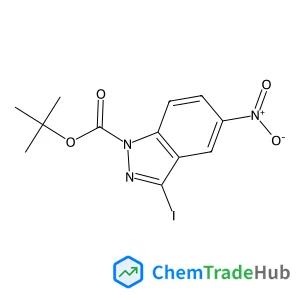
Tert-butyl 3-iodo-5-nitro-1H-indazole-1-carboxylate
CAS Number:
459133-69-8
Molecular Formula:
C12H12IN3O4
Recommended Suppliers



Disclaimer
This page provides academic journal information for reference and research purposes only. We are not affiliated with any journal publishers and do not handle publication submissions. For publication-related inquiries, please contact the respective journal publishers directly.
If you notice any inaccuracies in the information displayed, please contact us at support@chemtradehub.com. We will promptly review and address your concerns.