


![(1R,6R)-6-({[(2-Methyl-2-propanyl)oxy]carbonyl}amino)-3-cyclohexene-1-carboxylic acid structure](https://static.chemtradehub.com/structs/865/865689-24-3-5fef.webp "(1R,6R)-6-({[(2-Methyl-2-propanyl)oxy]carbonyl}amino)-3-cyclohexene-1-carboxylic acid structure")
(1R,6R)-6-({[(2-Methyl-2-propanyl)oxy]carbonyl}amino)-3-cyclohexene-1-carboxylic acid
CAS Number:
865689-24-3
Molecular Formula:
C12H19NO4
Yuqing Xu, Bin Cui, Guomin Ji, Dongmei Li
Molecular devices with nitro groups display unique electronic transport properties in experiments. By applying the non-equilibrium Green's function combined with density functional theory, we find that the orientation of the nitro group with respect to the backbone of the molecule has a crucial effect on the device performance and can show unusual experimental phenomena. Furthermore, molecular devices with a nitro group are sensitive to gate voltage and suitable for making effective single molecular field-effect transistors. These results provide an important theoretical support to experiments and the design of future molecular devices by using nitro groups.

Main Group Chemistry

Bioorganic & Medicinal Chemistry

Bioorganic & Medicinal Chemistry Letters

Topics in Catalysis

Journal of Asian Natural Products Research

Critical Reviews in Solid State and Materials Sciences

Cellulose

Journal of the Indian Institute of Science

Acta Metallurgica Sinica-English Letters

Atomization and Sprays
Ahmad Nuruddin, Muhammad Iqbal, Hutomo Suryo Wasisto
DOI: 10.1039/D3TB01327H
DOI: 10.1039/D3TB90200E
Xiao Wen, Zhipeng Deng, Hui Wang, Jianyang Shi, Shuang Wang, Haibo Wang, Yueming Song, Zongliang Du, Jinghong Qiu, Xu Cheng
DOI: 10.1039/D3TB01570J
Wei-Nan Zhao, Hongjuan Li, Shiguo Sun, Yongqian Xu
DOI: 10.1039/D3TB01564E
Anqi Ju, Shuxian Zhang, Dong Li, Kunming Li, Xuepeng Ni, Yi Li, Yang Jiang
DOI: 10.1039/D3NJ04456D
Yi Yao, Xiaoxin Shi, Zihong Zhao, Afang Zhang, Wen Li
DOI: 10.1039/D3TB01803B
Hong-Liang Wang, Yu-Ting Du, Xiao-Juan Zhang, Hai-Xian Ren, Lu Qin, Xiao-Bo Luo, Pei-Yang Gu, Lingyun Xu, Shi-Yuan Zhou
DOI: 10.1039/D3NJ04177H
6-(3-Fluorophenyl)picolinic acid is generally considered safe for laboratory use...
(3R)-3-Pyrrolidinol is used in the pharmaceutical industry as a precursor for dr...
When handling (4R,5R)-4,5-Diethoxycarbonyl-2,2-dimethyldioxolane (CAS: 59779-75-...
1-(6-Chloroimidazo[1,2-b]pyridazin-3-yl)ethanone is often synthesized via a mult...
The market for N-Ethyl-3,4-dimethylbenzylamine (CAS: 39180-83-1) remains steady,...
Tert-butyl 3-(pyrrolidin-1-yl)azetidine-1-carboxylate is a chemical compound wit...
1-Bromo-3-chloro-2,4-dimethoxybenzene (CAS: 1228956-93-1) falls under the classi...
The safety of 8-Bromo-2-methyl-3,4-dihydroisoquinolin-1(2H)-one (CAS: 1368622-07...
Benzyl [(3S)-2,6-dioxo-3-piperidinyl]carbamate is generally safe when handled wi...
1-{[4-(4,4,5,5-Tetramethyl-1,3,2-dioxaborolan-2-yl)phenyl]sulfonyl}pyrrolidine s...

Physical Chemistry Chemical Physics (PCCP) is an international journal co-owned by 19 physical chemistry and physics societies from around the world. This journal publishes original, cutting-edge research in physical chemistry, chemical physics and biophysical chemistry. To be suitable for publication in PCCP, articles must include significant innovation and/or insight into physical chemistry; this is the most important criterion that reviewers and Editors will judge against when evaluating submissions. The journal has a broad scope and welcomes contributions spanning experiment, theory, computation and data science. Topical coverage includes spectroscopy, dynamics, kinetics, statistical mechanics, thermodynamics, electrochemistry, catalysis, surface science, quantum mechanics, quantum computing and machine learning. Interdisciplinary research areas such as polymers and soft matter, materials, nanoscience, energy, surfaces/interfaces, and biophysical chemistry are welcomed if they demonstrate significant innovation and/or insight into physical chemistry. Joined experimental/theoretical studies are particularly appreciated when complementary and based on up-to-date approaches.
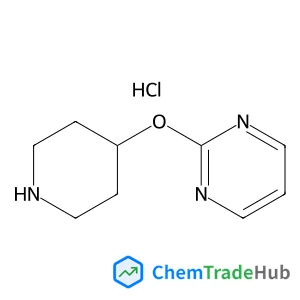
![1-Benzyl-1,7-diazaspiro[4.4]nonane dihydrochloride structure](https://static.chemtradehub.com/structs/115/1159822-71-5-0320.webp "1-Benzyl-1,7-diazaspiro[4.4]nonane dihydrochloride structure")
![1H-Imidazo[4,5-c]pyridine-7-carboxylic acid structure](https://static.chemtradehub.com/structs/123/1234616-39-7-1344.webp "1H-Imidazo[4,5-c]pyridine-7-carboxylic acid structure")
![5-Bromo-3-isopropyl-1H-pyrrolo[2,3-b]pyridine structure](https://static.chemtradehub.com/structs/125/1256819-54-1-8620.webp "5-Bromo-3-isopropyl-1H-pyrrolo[2,3-b]pyridine structure")





