


The role of gap states in the energy level alignment at the organic–organic heterojunction interfaces
Literature Information
Publication Date
2012-08-17
DOI
10.1039/C2CP41107E
Impact Factor
3.676
Authors
Shu Zhong, Jian Qiang Zhong, Hong Ying Mao, Jia Lin Zhang, Jia Dan Lin
View Original
Abstract
The interface properties of organic–organic heterojunctions (OOHs), such as interface energy level alignment (ELA), interfacial charge transfer, interface nanostructuring, molecular orientation and so on, play an essential role in determining the device performance for some technologically important organic electronic devices, encompassing organic solar cells, bipolar organic field-effect-transistors, and organic light-emitting-diodes. The aim of this article is to provide a balanced assessment on the understanding of the ELA at the small-molecule based OOH interfaces with well-defined molecular orientation, with particular emphasis on the role of gap states in organic thin films. A generalized picture of gap states determined ELA at the OOH interfaces is provided and their implications in relevant organic electronic devices have been discussed.
Recommended Journals

Russian Chemical Bulletin

Russian Journal of Bioorganic Chemistry

Journal of Natural Medicines

Current Opinion in Colloid & Interface Science

Nature Medicine

Saudi Pharmaceutical Journal

Chemical Communications

Organic Process Research & Development

Chemistry Education Research and Practice

Russian Journal of General Chemistry
Related Literature
Zeolite membrane reactors: from preparation to application in heterogeneous catalytic reactions
W. Rahmah, Z. Wang, S. Kawi
2020-12-11
Review Article
DOI: 10.1039/D0RE00388C
Fluorescent dextran-based nanogels: efficient imaging nanoprobes for adipose-derived stem cells
Shuyan Zhou, Hongjing Dou, Zhaofeng Zhang, Kang Sun, Yuqing Jin, Tingting Dai, Guangdong Zhou, Zunli Shen
2013-06-03
Paper
DOI: 10.1039/C3PY00522D
Synthesis of high refractive index and low-birefringence acrylate polymers with a tetraphenylethane skeleton in the side chain
Yusuke Tojo, Yuki Arakwa, Junji Watanabe, Gen-ichi Konishi
2013-04-26
Paper
DOI: 10.1039/C3PY00377A
Novel isoindigo-based conjugated polymers for solar cells and field effect transistors
Khalid Mahmood, Zheng-Ping Liu, Cuihong Li, Zhen Lu, Tao Fang, Xiao Liu, Jianjun Zhou, Ting Lei, Jian Pei, Zhishan Bo
2013-04-04
Paper
DOI: 10.1039/C3PY00341H
A facile approach for the synthesis of cyclic poly(N-isopropylacrylamide) based on an anthracene–thiol click reaction
Binyuan Liu, Huili Wang, Li Zhang, Guofu Yang, Xiaoxia Liu, Il Kim
2013-03-04
Communication
DOI: 10.1039/C3PY00184A
pH-responsive high internal phase emulsions stabilized by core cross-linked star (CCS) polymers
Qijing Chen, Xueteng Cao, Hao Liu, Wei Zhou, Lianjie Qin, Zesheng An
2013-06-04
Paper
DOI: 10.1039/C3PY00488K
Jacket temperature regulation allowing well-defined non-adiabatic lab-scale solution free radical polymerization of acrylates
Mariya Edeleva, Yoshi W. Marien, Paul H. M. Van Steenberge
2021-04-12
Paper
DOI: 10.1039/D1RE00099C
Polysialic acid as a drug carrier: evaluation of a new polysialic acid–epirubicin conjugate and its comparison against established drug carriers
Francesca Greco, Inam Arif, Ruth Botting, Cristina Fante, Luigi Quintieri, Chiara Clementi, Oddone Schiavon, Gianfranco Pasut
2012-11-30
Paper
DOI: 10.1039/C2PY20876H
You might also like
Compound Q&A
What are the main uses of 4-Nitrophenyl phosphate disodium salt hexahydrate (CAS: 333338-18-4)?
4-Nitrophenyl phosphate disodium salt hexahydrate is primarily used as a substra...
333338-18-44-Nitrophenyl phosph...
Compound Q&A
What are the main uses of 2-(Trifluoromethyl)-1,3-oxazole-4-carboxylic Acid (CAS: 1060816-01-4)?
2-(Trifluoromethyl)-1,3-oxazole-4-carboxylic Acid (CAS: 1060816-01-4) is widely ...
1060816-01-42-(Trifluoromethyl)-...
Compound Q&A
How should 2-Fluoro-4-biphenylcarboxylic acid (CAS: 137045-30-8) be stored?
2-Fluoro-4-biphenylcarboxylic acid should be stored in a cool, dry place at room...
137045-30-82-Fluoro-4-biphenylc...
Compound Q&A
What industries use Prednisolone-21-Carboxylic Acid (CAS: 61549-70-0)?
Prednisolone-21-Carboxylic Acid is primarily used in the pharmaceutical industry...
61549-70-0Prednisolone-21-Carb...
Compound Q&A
How should 4-(Hydrazinomethyl)-1,2,3-benzenetriol (CAS: 3614-72-0) be stored?
4-(Hydrazinomethyl)-1,2,3-benzenetriol (CAS: 3614-72-0) should be stored in a co...
3614-72-04-(Hydrazinomethyl)-...
Compound Q&A
What industries use 4-Amino-1-methyl-1H-pyrazole-5-carboxylic acid hydrochloride (CAS: 92534-70-8)?
4-Amino-1-methyl-1H-pyrazole-5-carboxylic acid hydrochloride (CAS: 92534-70-8) i...
92534-70-84-Amino-1-methyl-1H-...
Compound Q&A
What regulatory guidelines apply to dehydropachymic acid (CAS: 77012-31-8)?
Dehydropachymic acid (CAS: 77012-31-8) is regulated by various agencies. It fall...
77012-31-8Dehydropachymic acid
Compound Q&A
What is the market or research trend for 6-[(2,2-Dimethylpropanoyl)amino]nicotinic acid (CAS: 898561-66-5)?
The market and research trends for 6-[(2,2-Dimethylpropanoyl)amino]nicotinic aci...
898561-66-56-[(2,2-Dimethylprop...
Compound Q&A
How should 1,10-Phenanthroline-2,9-dicarbaldehyde (CAS: 57709-62-3) be stored?
1,10-Phenanthroline-2,9-dicarbaldehyde should be stored in a cool, dry place awa...
57709-62-31,10-Phenanthroline-...
Compound Q&A
How is 5-Carbamoyl-11-oxo-10,11-dihydro-5H-dibenzo[b,f]azepin-10-yl acetate (CAS: 113952-21-9) typically synthesized?
5-Carbamoyl-11-oxo-10,11-dihydro-5H-dibenzo[b,f]azepin-10-yl acetate can be synt...
113952-21-95-Carbamoyl-11-oxo-1...
Source Journal
Physical Chemistry Chemical Physics

CiteScore:
5.5
Self-citation Rate:
10.3%
Articles per Year:
3036
Physical Chemistry Chemical Physics (PCCP) is an international journal co-owned by 19 physical chemistry and physics societies from around the world. This journal publishes original, cutting-edge research in physical chemistry, chemical physics and biophysical chemistry. To be suitable for publication in PCCP, articles must include significant innovation and/or insight into physical chemistry; this is the most important criterion that reviewers and Editors will judge against when evaluating submissions. The journal has a broad scope and welcomes contributions spanning experiment, theory, computation and data science. Topical coverage includes spectroscopy, dynamics, kinetics, statistical mechanics, thermodynamics, electrochemistry, catalysis, surface science, quantum mechanics, quantum computing and machine learning. Interdisciplinary research areas such as polymers and soft matter, materials, nanoscience, energy, surfaces/interfaces, and biophysical chemistry are welcomed if they demonstrate significant innovation and/or insight into physical chemistry. Joined experimental/theoretical studies are particularly appreciated when complementary and based on up-to-date approaches.
Recommended Compounds
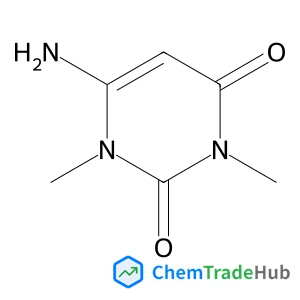
6-amino-1,3-dimethyl-1,2,3,4-tetrahydropyrimidine-2,4-dione
CAS Number:
6642-31-5
Molecular Formula:
C6H9N3O2
![1,1',1'',1'''-[Disulfanediylbis(carbonothioylnitrilo)]tetraethane structure](https://static.chemtradehub.com/structs/97-/97-77-8-f3e4.webp "1,1',1'',1'''-[Disulfanediylbis(carbonothioylnitrilo)]tetraethane structure")
1,1',1'',1'''-[Disulfanediylbis(carbonothioylnitrilo)]tetraethane
CAS Number:
97-77-8
Molecular Formula:
C10H20N2S4

Recommended Suppliers







Disclaimer
This page provides academic journal information for reference and research purposes only. We are not affiliated with any journal publishers and do not handle publication submissions. For publication-related inquiries, please contact the respective journal publishers directly.
If you notice any inaccuracies in the information displayed, please contact us at support@chemtradehub.com. We will promptly review and address your concerns.