












Theoretical and experimental study of low band gap polymers for organic solar cells
Literature Information
Publication Date
2012-02-28
DOI
10.1039/C2CP40170C
Impact Factor
3.676
Authors
F. Ouhib, A. Chaalane, Roger C. Hiorns, C. Dagron-Lartigau, P. Iratçabal, J. Desbrieres, C. Pouchan
View Original
Abstract
A combined theoretical and experimental investigation of the electronic structure and optical properties of poly(3-hexylthiophene) (P3HT), poly[3-(4-octylphenyl)thiophene] (POPT) and poly[3-(4-octylphenoxy)thiophene] (POPOT) is reported. In comparison with P3HT, POPT and POPOT exhibit better stabilities and the presence of an oxygen atom and/or a phenyl ring in the side chains enhances conjugation. Quantum chemical calculations have been performed on oligomers of increasing chain length to establish the changes in the electronic and optical properties when going from P3HT to the new derivative POPOT. The knowledge of the structure of these polymers is of utmost importance in understanding their optical properties in different phases (solution and condensed phase). The calculations indicate that, in opposition to P3HT and POPT polymers where the introduction of alkyl chains and the pendant phenyl disturbs the planarity of the backbone of the conjugated segment, POPOT has a better degree of organization in both states: the conjugated chain remains planar even in the presence of the phenoxy groups. Finally, the exciton binding energy is evaluated for these polymers and allows us to conclude that the POPOT is a promising polymer for photovoltaic applications when compared to P3HT and POPT.
Related Literature
Determination of total phenol and six polyphenolic components in the polyphenol extract of Cinnamomi cortex by quantitative nuclear magnetic resonance spectroscopy
Dan-Yang Shi, Yu Zheng, Qiang-Sheng Guo, Can Gong, Xu Xu, Jian-Ping Gao
2023-11-13
Paper
DOI: 10.1039/D3AY01501G
Preparation and performance study of rhodamine B naphthylamide, a fluorescent probe, for the detection of Fe3+
Jialin Wang, Shenghua Lv, Jingjing Zuo, Shan Liang, Juhui Yang, Leipeng Liu, Dequan Wei
2023-12-05
Paper
DOI: 10.1039/D3AY01809A
Spectroscopic/colorimetric dual-mode rapid and ultrasensitive detection of reactive oxygen species based on shape-dependent silver nanostructures
Varsha UshaVipinachandran, Susanta Kumar Bhunia
2023-11-14
Paper
DOI: 10.1039/D3AY01749D
Low-cost electronic-nose (LC-e-nose) systems for the evaluation of plantation and fruit crops: recent advances and future trends
Jose Lucena Barbosa, Jr, Mohammed Kamruzzaman, Douglas Fernandes Barbin
2023-10-18
Critical Review
DOI: 10.1039/D3AY01192E
A rapid and direct method for dating blue pen ink in documents using multiset modeling of infrared spectroscopy and mass spectrometry data
Kauanny B. N. Braga, Lanaia Í. L. Maciel, Boniek G. Vaz, Licarion Pinto, Jandyson M. Santos
2023-11-14
Paper
DOI: 10.1039/D3AY01732J
Preparation and characterization of iron(iii) nitrilotriacetate complex in aqueous solutions for quantitative protein binding experiments
Valentina Borko, Tomislav Friganović, Tin Weitner
2023-11-09
Technical Note
DOI: 10.1039/D3AY01261A
On site separation of inorganic forms of thallium and arsenic in sea water systems followed by ICP-MS determination
Joanna Kowalska, Alicja Drwal, Klaudia Tutaj, Lidiia Kovshun, Beata Krasnodębska-Ostręga
2023-11-06
Paper
DOI: 10.1039/D3AY01292A
A simple, quick and non-destructive approach for sampling drugs of abuse in tablets and blotter for qualitative analysis by paper spray mass spectrometry
Mariana C. C. Diniz, Yuri Machado, Evandro Piccin
2023-10-20
Paper
DOI: 10.1039/D3AY01393F
You might also like
Compound Q&A
What regulatory guidelines apply to 6-Bromo-2-methylimidazo[1,2-a]pyrimidine (CAS: 1111638-05-1)?
6-Bromo-2-methylimidazo[1,2-a]pyrimidine (CAS: 1111638-05-1) falls under various...
1111638-05-16-Bromo-2-methylimid...
Compound Q&A
Are there alternatives to 1-Pyrrolidineethanol, β-methyl-α-phenyl-, (αS,βR) (CAS: 123620-80-4) in synthesis?
While there are no direct alternatives, similar compounds like 1-Pyrrolidineetha...
123620-80-41-Pyrrolidineethanol...
Compound Q&A
Is 4-Methyl-2,6-bis(2-methyl-2-propanyl)phenyl methylcarbamate (CAS: 1918-11-2) safe?
4-Methyl-2,6-bis(2-methyl-2-propanyl)phenyl methylcarbamate (CAS: 1918-11-2) is ...
1918-11-24-Methyl-2,6-bis(2-m...
Compound Q&A
How should 2-(3-Bromo-4-fluorophenyl)-1,3-dioxolane (CAS: 77771-04-1) be stored?
2-(3-Bromo-4-fluorophenyl)-1,3-dioxolane (CAS: 77771-04-1) should be stored in a...
77771-04-12-(3-Bromo-4-fluorop...
Compound Q&A
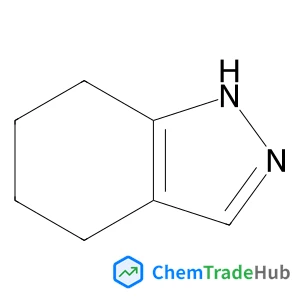
What are the physical and chemical properties of 4,5,6,7-Tetrahydro-1H-indazole hydrochloride (CAS: 18161-11-0)?
4,5,6,7-Tetrahydro-1H-indazole hydrochloride is a white crystalline solid with a...
18161-11-04,5,6,7-Tetrahydro-1...
Compound Q&A
What is (2R)-1-Methoxy-3-phenyl-2-propanamine (CAS: 59919-07-2)?
(2R)-1-Methoxy-3-phenyl-2-propanamine is a chiral organic compound with the CAS ...
59919-07-2(2R)-1-Methoxy-3-phe...
Compound Q&A
What industries use Ethyl 1-(1-phenylethyl)-1H-imidazole-5-carboxylate (CAS: 56649-47-9)?
Ethyl 1-(1-phenylethyl)-1H-imidazole-5-carboxylate is used in various industries...
56649-47-9Ethyl 1-(1-phenyleth...
Compound Q&A
What regulatory guidelines apply to 4-[(1E,3S)-1-(4-Hydroxyphenyl)-1,4-pentadien-3-yl]phenol (CAS: 17676-24-3)?
4-[(1E,3S)-1-(4-Hydroxyphenyl)-1,4-pentadien-3-yl]phenol (CAS: 17676-24-3) falls...
17676-24-34-[(1E,3S)-1-(4-Hydr...
Compound Q&A
What industries use (S)-3-Amino-5-phenylpentanoic acid hydrochloride (CAS: 331846-97-0)?
(S)-3-Amino-5-phenylpentanoic acid hydrochloride is primarily used in the pharma...
331846-97-0(S)-3-Amino-5-phenyl...
Compound Q&A
How is 7-methoxy-1-benzothiophene-2-carboxylic acid (CAS: 88791-07-5) typically synthesized?
7-Methoxy-1-benzothiophene-2-carboxylic acid is typically synthesized by reactin...
88791-07-57-methoxy-1-benzothi...
Source Journal
Physical Chemistry Chemical Physics

CiteScore:
5.5
Self-citation Rate:
10.3%
Articles per Year:
3036
Physical Chemistry Chemical Physics (PCCP) is an international journal co-owned by 19 physical chemistry and physics societies from around the world. This journal publishes original, cutting-edge research in physical chemistry, chemical physics and biophysical chemistry. To be suitable for publication in PCCP, articles must include significant innovation and/or insight into physical chemistry; this is the most important criterion that reviewers and Editors will judge against when evaluating submissions. The journal has a broad scope and welcomes contributions spanning experiment, theory, computation and data science. Topical coverage includes spectroscopy, dynamics, kinetics, statistical mechanics, thermodynamics, electrochemistry, catalysis, surface science, quantum mechanics, quantum computing and machine learning. Interdisciplinary research areas such as polymers and soft matter, materials, nanoscience, energy, surfaces/interfaces, and biophysical chemistry are welcomed if they demonstrate significant innovation and/or insight into physical chemistry. Joined experimental/theoretical studies are particularly appreciated when complementary and based on up-to-date approaches.
Recommended Compounds
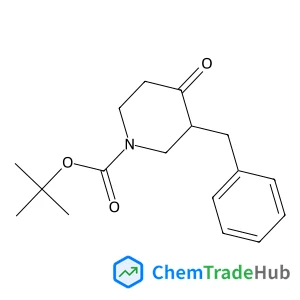
2-Methyl-2-propanyl 3-benzyl-4-oxo-1-piperidinecarboxylate
CAS Number:
193274-82-7
Molecular Formula:
C17H23NO3
Recommended Suppliers




Disclaimer
This page provides academic journal information for reference and research purposes only. We are not affiliated with any journal publishers and do not handle publication submissions. For publication-related inquiries, please contact the respective journal publishers directly.
If you notice any inaccuracies in the information displayed, please contact us at support@chemtradehub.com. We will promptly review and address your concerns.