












Low-cost electronic-nose (LC-e-nose) systems for the evaluation of plantation and fruit crops: recent advances and future trends
Literature Information
Publication Date
2023-10-18
DOI
10.1039/D3AY01192E
Impact Factor
2.896
Authors
Jose Lucena Barbosa, Jr, Mohammed Kamruzzaman, Douglas Fernandes Barbin
View Original
Abstract
An electronic nose (e-nose) is a device designed to recognize and classify odors. The equipment is built around a series of sensors that detect the presence of odors, especially volatile organic compounds (VOCs), and generate an electric signal (voltage), known as e-nose data, which contains chemical information. In the food business, the use of e-noses for analyses and quality control of fruits and plantation crops has increased in recent years. Their use is particularly relevant due to the lack of non-invasive and inexpensive methods to detect VOCs in crops. However, the majority of reports in the literature involve commercial e-noses, with only a few studies addressing low-cost e-nose (LC-e-nose) devices or providing a data-oriented description to assist researchers in choosing their setup and appropriate statistical methods to analyze crop data. Therefore, the objective of this study is to discuss the hardware of the two most common e-nose sensors: electrochemical (EC) sensors and metal oxide sensors (MOSs), as well as a critical review of the literature reporting MOS-based low-cost e-nose devices used for investigating plantations and fruit crops, including the main features of such devices. Miniaturization of equipment from lab-scale to portable and convenient gear, allowing producers to take it into the field, as shown in many appraised systems, is one of the future advancements in this area. By utilizing the low-cost designs provided in this review, researchers can develop their own devices based on practical demands such as quality control and compare results with those reported in the literature. Overall, this review thoroughly discusses the applications of low-cost e-noses based on MOSs for fruits, tea, and coffee, as well as the key features of their equipment (i.e., advantages and disadvantages) based on their technical parameters (i.e., electronic and physical parts). As a final remark, LC-e-nose technology deserves significant attention as it has the potential to be a valuable quality control tool for emerging countries.
Related Literature
Factors governing when a metal-bound water is deprotonated in proteins
Cédric Grauffel
2018-11-05
Paper
DOI: 10.1039/C8CP04776F
Quantum anomalous Hall effect in metal-bis(dithiolene), magnetic properties, doping and interfacing graphene
F. Crasto de Lima, Gerson J. Ferreira, R. H. Miwa
2018-08-10
Paper
DOI: 10.1039/C8CP03792B
van der Waals interaction-induced photoluminescence weakening and multilayer growth in epitaxially aligned WS2
Hyun Goo Ji, Mina Maruyama, Adha Sukma Aji, Susumu Okada, Kazunari Matsuda
2018-11-07
Paper
DOI: 10.1039/C8CP04418J
The role of hydrophobic, aromatic and electrostatic interactions between amino acid residues and a titanium dioxide surface
Avia Leader, Daniel Mandler, Meital Reches
2018-11-06
Paper
DOI: 10.1039/C8CP05775C
The evolution in graphitic surface wettability with first-principles quantum simulations: the counterintuitive role of water
Jin-You Lu, Chia-Yun Lai, Ibraheem Almansoori
2018-08-08
Paper
DOI: 10.1039/C8CP03633K
Protonation-induced molecular permeation at the oil/water interface in an electric field
2018-09-15
Paper
DOI: 10.1039/C8CP04028A
You might also like
Compound Q&A
What are the main uses of 4-Nitrophenyl phosphate disodium salt hexahydrate (CAS: 333338-18-4)?
4-Nitrophenyl phosphate disodium salt hexahydrate is primarily used as a substra...
333338-18-44-Nitrophenyl phosph...
Compound Q&A
What are the main uses of 2-(Trifluoromethyl)-1,3-oxazole-4-carboxylic Acid (CAS: 1060816-01-4)?
2-(Trifluoromethyl)-1,3-oxazole-4-carboxylic Acid (CAS: 1060816-01-4) is widely ...
1060816-01-42-(Trifluoromethyl)-...
Compound Q&A
How should 2-Fluoro-4-biphenylcarboxylic acid (CAS: 137045-30-8) be stored?
2-Fluoro-4-biphenylcarboxylic acid should be stored in a cool, dry place at room...
137045-30-82-Fluoro-4-biphenylc...
Compound Q&A
What industries use Prednisolone-21-Carboxylic Acid (CAS: 61549-70-0)?
Prednisolone-21-Carboxylic Acid is primarily used in the pharmaceutical industry...
61549-70-0Prednisolone-21-Carb...
Compound Q&A
How should 4-(Hydrazinomethyl)-1,2,3-benzenetriol (CAS: 3614-72-0) be stored?
4-(Hydrazinomethyl)-1,2,3-benzenetriol (CAS: 3614-72-0) should be stored in a co...
3614-72-04-(Hydrazinomethyl)-...
Compound Q&A
What industries use 4-Amino-1-methyl-1H-pyrazole-5-carboxylic acid hydrochloride (CAS: 92534-70-8)?
4-Amino-1-methyl-1H-pyrazole-5-carboxylic acid hydrochloride (CAS: 92534-70-8) i...
92534-70-84-Amino-1-methyl-1H-...
Compound Q&A
What regulatory guidelines apply to dehydropachymic acid (CAS: 77012-31-8)?
Dehydropachymic acid (CAS: 77012-31-8) is regulated by various agencies. It fall...
77012-31-8Dehydropachymic acid
Compound Q&A
What is the market or research trend for 6-[(2,2-Dimethylpropanoyl)amino]nicotinic acid (CAS: 898561-66-5)?
The market and research trends for 6-[(2,2-Dimethylpropanoyl)amino]nicotinic aci...
898561-66-56-[(2,2-Dimethylprop...
Compound Q&A
How should 1,10-Phenanthroline-2,9-dicarbaldehyde (CAS: 57709-62-3) be stored?
1,10-Phenanthroline-2,9-dicarbaldehyde should be stored in a cool, dry place awa...
57709-62-31,10-Phenanthroline-...
Compound Q&A
How is 5-Carbamoyl-11-oxo-10,11-dihydro-5H-dibenzo[b,f]azepin-10-yl acetate (CAS: 113952-21-9) typically synthesized?
5-Carbamoyl-11-oxo-10,11-dihydro-5H-dibenzo[b,f]azepin-10-yl acetate can be synt...
113952-21-95-Carbamoyl-11-oxo-1...
Source Journal
Analytical Methods
CiteScore:
5.1
Self-citation Rate:
3.7%
Articles per Year:
655
Analytical Methods welcomes early applications of new analytical and bioanalytical methods and technology demonstrating the potential for societal impact. We require that methods and technology reported in the journal are sufficiently innovative, robust, accurate, and compared to other available methods for the intended application. Developments with interdisciplinary approaches are particularly welcome. Systems should be proven with suitably complex and analytically challenging samples. We encourage developments within, but not limited to, the following technologies and applications: global health, point-of-care and molecular diagnostics biosensors and bioengineering drug development and pharmaceutical analysis applied microfluidics and nanotechnology omics studies, such as proteomics, metabolomics or glycomics environmental, agricultural and food science neuroscience biochemical and clinical analysis forensic analysis industrial process and method development
Recommended Compounds


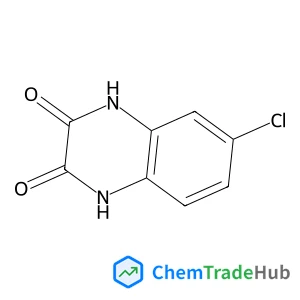
6-CHLORO-2,3-DIOXO-1,2,3,4-TETRAHYDROQUINOXALINE, 97
CAS Number:
169-14-2
Molecular Formula:
C8H5ClN2O2
![N-[2-(4-Hydroxyphenoxy)-4-nitrophenyl]methanesulfonamide structure](https://static.chemtradehub.com/structs/109/109032-22-6-7c88.webp "N-[2-(4-Hydroxyphenoxy)-4-nitrophenyl]methanesulfonamide structure")
N-[2-(4-Hydroxyphenoxy)-4-nitrophenyl]methanesulfonamide
CAS Number:
109032-22-6
Molecular Formula:
C13H12N2O6S
Recommended Suppliers







Disclaimer
This page provides academic journal information for reference and research purposes only. We are not affiliated with any journal publishers and do not handle publication submissions. For publication-related inquiries, please contact the respective journal publishers directly.
If you notice any inaccuracies in the information displayed, please contact us at support@chemtradehub.com. We will promptly review and address your concerns.