












Interface properties of ionic liquids containing metal ions: features and potentialities
Literature Information
Publication Date
2012-02-09
DOI
10.1039/C2CP24012B
Impact Factor
3.676
Authors
View Original
Abstract
Interfaces and surfaces are the regions where important events happen: catalysis, molecular recognition, charge transfer, polymerization, and many other critical processes take place at the boundary between one medium and another. In this article we discuss the interface (liquid/air) properties of ionic liquids (ILs) containing dissolved metal ions with the aim to show the possibility to use metal salts to transform ILs and their surfaces into engineered liquid supports to apply in material sciences, separation procedures or to use as optical devices.
Related Literature
Perturbation theory of polar Kihara molecule mixtures applied to supercritical fluid extraction systems
2002-02-26
Paper
DOI: 10.1039/B108703G
The effect of flexibility on the phase diagram of simple molecular models
Carlos Vega, Carl McBride, Luis G. MacDowell
2002-01-08
Paper
DOI: 10.1039/B107988N
On the chemical properties of sedimentary sulfur in estuarine environments
G. Billon, B. Ouddane, L. Gengembre, A. Boughriet
2002-01-23
Paper
DOI: 10.1039/B108638N
Gibbs solution of the van der Waals–Maxwell problem and universality of the liquid–gas coexistence curve
Vitaly B. Rogankov, Leonid Z. Boshkov
2002-02-18
Paper
DOI: 10.1039/B107989C
Geometric foundation of thermo-statistics, phase transitions, second law of thermodynamics, but without thermodynamic limit
2002-02-19
Paper
DOI: 10.1039/B108775D
Synchrotron radiation studies of the kinetics of cBN crystallization in the NH4F–BN system
2002-02-06
Paper
DOI: 10.1039/B107483K
Rate constants for the reaction of HO2 radicals with cyclopentane and propane between 673 and 783 K
S. M. Handford-Styring, R. W. Walker
2002-01-21
Paper
DOI: 10.1039/B108578F
Elementary reactions of the antioxidant action of trans-stilbene derivatives: resveratrol, pinosylvin and 4-hydroxystilbene
Sandra Stojanović, Ortwin Brede
2002-01-29
Paper
DOI: 10.1039/B109063C
Infrared and Raman spectra, conformational stability, vibrational assignment, ab initio calculations and r0 structural parameters for N-methylpropargyl amine
Gamil A. Guirgis, Stephen Bell, Chao Zheng, James R. Durig
2002-03-19
Paper
DOI: 10.1039/B109222G
You might also like
Compound Q&A
What regulatory guidelines apply to 6-Bromo-2-methylimidazo[1,2-a]pyrimidine (CAS: 1111638-05-1)?
6-Bromo-2-methylimidazo[1,2-a]pyrimidine (CAS: 1111638-05-1) falls under various...
1111638-05-16-Bromo-2-methylimid...
Compound Q&A
Are there alternatives to 1-Pyrrolidineethanol, β-methyl-α-phenyl-, (αS,βR) (CAS: 123620-80-4) in synthesis?
While there are no direct alternatives, similar compounds like 1-Pyrrolidineetha...
123620-80-41-Pyrrolidineethanol...
Compound Q&A
Is 4-Methyl-2,6-bis(2-methyl-2-propanyl)phenyl methylcarbamate (CAS: 1918-11-2) safe?
4-Methyl-2,6-bis(2-methyl-2-propanyl)phenyl methylcarbamate (CAS: 1918-11-2) is ...
1918-11-24-Methyl-2,6-bis(2-m...
Compound Q&A
How should 2-(3-Bromo-4-fluorophenyl)-1,3-dioxolane (CAS: 77771-04-1) be stored?
2-(3-Bromo-4-fluorophenyl)-1,3-dioxolane (CAS: 77771-04-1) should be stored in a...
77771-04-12-(3-Bromo-4-fluorop...
Compound Q&A
What are the physical and chemical properties of 4,5,6,7-Tetrahydro-1H-indazole hydrochloride (CAS: 18161-11-0)?
4,5,6,7-Tetrahydro-1H-indazole hydrochloride is a white crystalline solid with a...
18161-11-04,5,6,7-Tetrahydro-1...
Compound Q&A
What is (2R)-1-Methoxy-3-phenyl-2-propanamine (CAS: 59919-07-2)?
(2R)-1-Methoxy-3-phenyl-2-propanamine is a chiral organic compound with the CAS ...
59919-07-2(2R)-1-Methoxy-3-phe...
Compound Q&A
What industries use Ethyl 1-(1-phenylethyl)-1H-imidazole-5-carboxylate (CAS: 56649-47-9)?
Ethyl 1-(1-phenylethyl)-1H-imidazole-5-carboxylate is used in various industries...
56649-47-9Ethyl 1-(1-phenyleth...
Compound Q&A
What regulatory guidelines apply to 4-[(1E,3S)-1-(4-Hydroxyphenyl)-1,4-pentadien-3-yl]phenol (CAS: 17676-24-3)?
4-[(1E,3S)-1-(4-Hydroxyphenyl)-1,4-pentadien-3-yl]phenol (CAS: 17676-24-3) falls...
17676-24-34-[(1E,3S)-1-(4-Hydr...
Compound Q&A
What industries use (S)-3-Amino-5-phenylpentanoic acid hydrochloride (CAS: 331846-97-0)?
(S)-3-Amino-5-phenylpentanoic acid hydrochloride is primarily used in the pharma...
331846-97-0(S)-3-Amino-5-phenyl...
Compound Q&A
How is 7-methoxy-1-benzothiophene-2-carboxylic acid (CAS: 88791-07-5) typically synthesized?
7-Methoxy-1-benzothiophene-2-carboxylic acid is typically synthesized by reactin...
88791-07-57-methoxy-1-benzothi...
Source Journal
Physical Chemistry Chemical Physics

CiteScore:
5.5
Self-citation Rate:
10.3%
Articles per Year:
3036
Physical Chemistry Chemical Physics (PCCP) is an international journal co-owned by 19 physical chemistry and physics societies from around the world. This journal publishes original, cutting-edge research in physical chemistry, chemical physics and biophysical chemistry. To be suitable for publication in PCCP, articles must include significant innovation and/or insight into physical chemistry; this is the most important criterion that reviewers and Editors will judge against when evaluating submissions. The journal has a broad scope and welcomes contributions spanning experiment, theory, computation and data science. Topical coverage includes spectroscopy, dynamics, kinetics, statistical mechanics, thermodynamics, electrochemistry, catalysis, surface science, quantum mechanics, quantum computing and machine learning. Interdisciplinary research areas such as polymers and soft matter, materials, nanoscience, energy, surfaces/interfaces, and biophysical chemistry are welcomed if they demonstrate significant innovation and/or insight into physical chemistry. Joined experimental/theoretical studies are particularly appreciated when complementary and based on up-to-date approaches.
Recommended Compounds
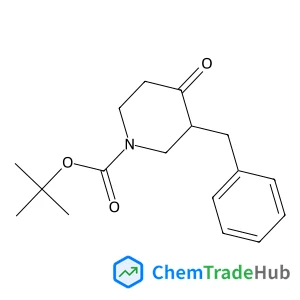
2-Methyl-2-propanyl 3-benzyl-4-oxo-1-piperidinecarboxylate
CAS Number:
193274-82-7
Molecular Formula:
C17H23NO3
Recommended Suppliers





Disclaimer
This page provides academic journal information for reference and research purposes only. We are not affiliated with any journal publishers and do not handle publication submissions. For publication-related inquiries, please contact the respective journal publishers directly.
If you notice any inaccuracies in the information displayed, please contact us at support@chemtradehub.com. We will promptly review and address your concerns.