![(3R)-4-(4-Chlorophenyl)-3-({[(2-methyl-2-propanyl)oxy]carbonyl}amino)butanoic acid structure](https://static.chemtradehub.com/structs/218/218608-96-9-f871.webp "(3R)-4-(4-Chlorophenyl)-3-({[(2-methyl-2-propanyl)oxy]carbonyl}amino)butanoic acid structure")
(3R)-4-(4-Chlorophenyl)-3-({[(2-methyl-2-propanyl)oxy]carbonyl}amino)butanoic acid
CAS Number:
218608-96-9
Molecular Formula:
C15H20ClNO4
Carlos Vega, Carl McBride, Luis G. MacDowell
In this paper the effect of molecular flexibility on the phase diagram is studied. Three groups of models are used; a pearl-necklace model, a linear tangent hard sphere model and a hybrid model consisting of a rigid section and a flexible section. Each of these models are built up from hard sphere interaction sites. Calculations of the virial coefficients show significant differences between each of the models. In spite of this the equation of state is hardly affected by flexibility in the medium density range. However, at higher densities flexible and linear rigid chains display significant differences; the former having only fluid and solid phases whereas the the rigid model also forms mesophases (nematic and smectic A). The introduction of flexibility into a rigid model has the effect of moving the onset of liquid crystal formation to higher densities. Flexibility is also seen to stabilize the smectic phase at the expense of the nematic phase. Critical properties have been obtained from Wertheim's thermodynamic perturbation theory (TPT1) in the limit of infinitely long chains. Zero number density of chains, zero mass density and pressure and finite non-zero values of the critical temperature and compressibility factor are predicted at the critical point. For very long chains the critical temperature (i.e. the Θ temperature) is seen to be the Boyle temperature. From Wertheim's theory it is possible to analytically determine the temperature Θ for square well chains.

Current Opinion in Colloid & Interface Science

Russian Journal of Organic Chemistry

New Journal of Chemistry

Russian Journal of Applied Chemistry

Russian Journal of Coordination Chemistry

Chemistry Education Research and Practice

Current Opinion in Solid State & Materials Science

Crystallography Reports

Journal of Natural Medicines

Organic Process Research & Development
Amit Bhowmik, Mahesh Yadav, Rodney A. Fernandes
DOI: 10.1039/D0OB00244E
Roderick W. Bates, Weiting Ko, Viktor Barát
DOI: 10.1039/C9OB02388G
Zi-juan Wan, Xiao-feng Yuan, Jun Luo
DOI: 10.1039/D0OB00480D
Yongqi Yao, Wen Yang, Yun Tan, Shuqi Chen, Donghan Chen, Dingqiao Yang
DOI: 10.1039/D0OB00659A
Renaud Zelli, Pascal Dumy, Alberto Marra
DOI: 10.1039/D0OB00198H
DOI: 10.1039/D0OB00529K
Ke Li, Siqin Ye, Qingzhu Liu, Ying Peng, Gaochao Lv
DOI: 10.1039/D0OB00690D
6-Bromo-2-methylimidazo[1,2-a]pyrimidine (CAS: 1111638-05-1) falls under various...
While there are no direct alternatives, similar compounds like 1-Pyrrolidineetha...
4-Methyl-2,6-bis(2-methyl-2-propanyl)phenyl methylcarbamate (CAS: 1918-11-2) is ...
2-(3-Bromo-4-fluorophenyl)-1,3-dioxolane (CAS: 77771-04-1) should be stored in a...
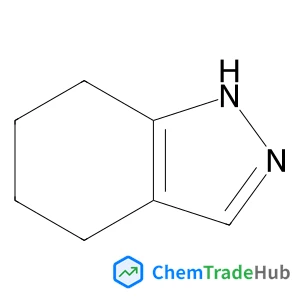
4,5,6,7-Tetrahydro-1H-indazole hydrochloride is a white crystalline solid with a...
(2R)-1-Methoxy-3-phenyl-2-propanamine is a chiral organic compound with the CAS ...
Ethyl 1-(1-phenylethyl)-1H-imidazole-5-carboxylate is used in various industries...
4-[(1E,3S)-1-(4-Hydroxyphenyl)-1,4-pentadien-3-yl]phenol (CAS: 17676-24-3) falls...
(S)-3-Amino-5-phenylpentanoic acid hydrochloride is primarily used in the pharma...
7-Methoxy-1-benzothiophene-2-carboxylic acid is typically synthesized by reactin...

Physical Chemistry Chemical Physics (PCCP) is an international journal co-owned by 19 physical chemistry and physics societies from around the world. This journal publishes original, cutting-edge research in physical chemistry, chemical physics and biophysical chemistry. To be suitable for publication in PCCP, articles must include significant innovation and/or insight into physical chemistry; this is the most important criterion that reviewers and Editors will judge against when evaluating submissions. The journal has a broad scope and welcomes contributions spanning experiment, theory, computation and data science. Topical coverage includes spectroscopy, dynamics, kinetics, statistical mechanics, thermodynamics, electrochemistry, catalysis, surface science, quantum mechanics, quantum computing and machine learning. Interdisciplinary research areas such as polymers and soft matter, materials, nanoscience, energy, surfaces/interfaces, and biophysical chemistry are welcomed if they demonstrate significant innovation and/or insight into physical chemistry. Joined experimental/theoretical studies are particularly appreciated when complementary and based on up-to-date approaches.