












Metal–organic framework supported ionic liquid membranes for CO2 capture: anion effects
Literature Information
Publication Date
2012-03-20
DOI
10.1039/C2CP23972H
Impact Factor
3.676
Authors
Krishna M. Gupta, Yifei Chen, Zhongqiao Hu, Jianwen Jiang
View Original
Abstract
IRMOF-1 supported ionic liquid (IL) membranes are investigated for CO2 capture by atomistic simulation. The ILs consist of identical cation 1-n-butyl-3-methylimidazolium [BMIM]+, but four different anions, namely hexafluorophosphate [PF6]−, tetrafluoroborate [BF4]−, bis(trifluoromethylsulfonyl)imide [Tf2N]−, and thiocyanate [SCN]−. As compared with the cation, the anion has a stronger interaction with IRMOF-1 and a more ordered structure in IRMOF-1. The small anions [PF6]−, [BF4]−, and [SCN]− prefer to locate near to the metal-cluster, particularly the quasi-spherical [PF6]− and [BF4]−. In contrast, the bulky and chain-like [BMIM]+ and [Tf2N]− reside near the phenyl ring. Among the four anions, [Tf2N]− has the weakest interaction with IRMOF-1 and thus the strongest interaction with [BMIM]+. With increasing the weight ratio of IL to IRMOF-1 (WIL/IRMOF-1), the selectivity of CO2/N2 at infinite dilution is enhanced. At a given WIL/IRMOF-1, the selectivity increases as [Tf2N]− < [PF6]− < [BF4]− < [SCN]−. This hierarchy is predicted by the COSMO-RS method, and largely follows the order of binding energy between CO2 and anion estimated by ab initio calculation. In the [BMIM][SCN]/IRMOF-1 membrane with WIL/IRMOF-1 = 1, [SCN]− is identified to be the most favorable site for CO2 adsorption. [BMIM][SCN]/IRMOF-1 outperforms polymer membranes and polymer-supported ILs in CO2 permeability, and its performance surpasses Robeson's upper bound. This simulation study reveals that the anion has strong effects on the microscopic properties of ILs and suggests that MOF-supported ILs are potentially intriguing for CO2 capture.
Related Literature
Electronic and optical properties of two-dimensional heterostructures and heterojunctions between doped-graphene and C- and N-containing materials
Daniela Gogova, Mohamed M. Fadlallah, Nguyen V. Chuong, Mitra Ghergherehchi, Mehrdad Faraji, Seyed Amir Hossein Feghhi, Mohamad Oskoeian
2021-02-04
Paper
DOI: 10.1039/D0CP06213H
Singlet fission in naturally-organized carotenoid molecules
Annamaria Quaranta, Anja Krieger-Liszkay, Andrew A. Pascal, François Perreau, Bruno Robert, Mikas Vengris, Manuel J. Llansola-Portoles
2021-02-10
Paper
DOI: 10.1039/D0CP04493H
Anion–anion and anion–neutral triel bonds
Rafał Wysokiński, Mariusz Michalczyk, Wiktor Zierkiewicz, Steve Scheiner
2021-02-11
Paper
DOI: 10.1039/D0CP06547A
Surface contacts strongly influence the elasticity and thermal conductivity of silica nanoparticle fibers
Bohai Liu, Sudatta Das, Xiangfan Xu, Jingli Xie, Xu Deng, George Fytas
2020-12-10
Paper
DOI: 10.1039/D0CP05377E
Microwave-assisted coherent control of ultracold polar molecules in a ladder-type configuration of rotational states
2021-01-29
Paper
DOI: 10.1039/D1CP00202C
A comparative study on heterogeneous nucleation and mechanical properties of the fcc-Al/L12-Al3M (M = Sc, Ti, V, Y, Zr, Nb) interface from first-principles calculations
Yu Liu, Jin-Chuan Wen, Xie-Yi Zhang, Yuan-Chun Huang
2021-02-05
Paper
DOI: 10.1039/D0CP05832G
Shape changes and budding of giant vesicles induced by an internal chemical trigger: an interplay between osmosis and pH change
Gábor Holló, Ylenia Miele, Federico Rossi, István Lagzi
2021-02-03
Paper
DOI: 10.1039/D0CP05952H
Possibility of making aerophobic surfaces by nanoprotrusions: an investigation of atomic-scale friction of the air–solid interfaces
Omid Bavi, Farhad Ghadak
2021-02-04
Paper
DOI: 10.1039/D0CP06404A
Peculiarities of high-pressure hydrogen adsorption on Pt catalyzed Cu-BTC metal–organic framework
S. V. Chuvikov, E. A. Berdonosova, A. Krautsou, J. V. Kostina, V. V. Minin, E. A. Ugolkova, S. N. Klyamkin
2021-02-15
Paper
DOI: 10.1039/D0CP03900D
You might also like
Compound Q&A
Is 6-(3-Fluorophenyl)picolinic acid (CAS: 887982-40-3) safe?
6-(3-Fluorophenyl)picolinic acid is generally considered safe for laboratory use...
887982-40-36-(3-Fluorophenyl)pi...
Compound Q&A
What industries use (3R)-3-Pyrrolidinol (CAS: 2799-21-5)?
(3R)-3-Pyrrolidinol is used in the pharmaceutical industry as a precursor for dr...
2799-21-5(3R)-3-Pyrrolidinol
Compound Q&A
What precautions should be taken when handling (4R,5R)-4,5-Diethoxycarbonyl-2,2-dimethyldioxolane (CAS: 59779-75-8)?
When handling (4R,5R)-4,5-Diethoxycarbonyl-2,2-dimethyldioxolane (CAS: 59779-75-...
59779-75-8(4R,5R)-4,5-Diethoxy...
Compound Q&A
How is 1-(6-Chloroimidazo[1,2-b]pyridazin-3-yl)ethanone (CAS: 90734-71-7) typically synthesized?
1-(6-Chloroimidazo[1,2-b]pyridazin-3-yl)ethanone is often synthesized via a mult...
90734-71-71-(6-Chloroimidazo[1...
Compound Q&A
What is the market or research trend for N-Ethyl-3,4-dimethylbenzylamine (CAS: 39180-83-1)?
The market for N-Ethyl-3,4-dimethylbenzylamine (CAS: 39180-83-1) remains steady,...
39180-83-1N-Ethyl-3,4-dimethyl...
Compound Q&A
What is Tert-butyl 3-(pyrrolidin-1-yl)azetidine-1-carboxylate (CAS: 1019008-21-9)?
Tert-butyl 3-(pyrrolidin-1-yl)azetidine-1-carboxylate is a chemical compound wit...
1019008-21-9Tert-butyl 3-(pyrrol...
Compound Q&A
What regulatory guidelines apply to 1-Bromo-3-chloro-2,4-dimethoxybenzene (CAS: 1228956-93-1)?
1-Bromo-3-chloro-2,4-dimethoxybenzene (CAS: 1228956-93-1) falls under the classi...
1228956-93-11-Bromo-3-chloro-2,4...
Compound Q&A
Is 8-Bromo-2-methyl-3,4-dihydroisoquinolin-1(2H)-one (CAS: 1368622-07-4) safe?
The safety of 8-Bromo-2-methyl-3,4-dihydroisoquinolin-1(2H)-one (CAS: 1368622-07...
1368622-07-48-Bromo-2-methyl-3,4...
Compound Q&A
Is Benzyl [(3S)-2,6-dioxo-3-piperidinyl]carbamate (CAS: 22785-43-9) safe?
Benzyl [(3S)-2,6-dioxo-3-piperidinyl]carbamate is generally safe when handled wi...
22785-43-9Benzyl [(3S)-2,6-dio...
Compound Q&A
How should 1-{[4-(4,4,5,5-Tetramethyl-1,3,2-dioxaborolan-2-yl)phenyl]sulfonyl}pyrrolidine (CAS: 928657-21-0) be stored?
1-{[4-(4,4,5,5-Tetramethyl-1,3,2-dioxaborolan-2-yl)phenyl]sulfonyl}pyrrolidine s...
928657-21-01-{[4-(4,4,5,5-Tetra...
Source Journal
Physical Chemistry Chemical Physics

CiteScore:
5.5
Self-citation Rate:
10.3%
Articles per Year:
3036
Physical Chemistry Chemical Physics (PCCP) is an international journal co-owned by 19 physical chemistry and physics societies from around the world. This journal publishes original, cutting-edge research in physical chemistry, chemical physics and biophysical chemistry. To be suitable for publication in PCCP, articles must include significant innovation and/or insight into physical chemistry; this is the most important criterion that reviewers and Editors will judge against when evaluating submissions. The journal has a broad scope and welcomes contributions spanning experiment, theory, computation and data science. Topical coverage includes spectroscopy, dynamics, kinetics, statistical mechanics, thermodynamics, electrochemistry, catalysis, surface science, quantum mechanics, quantum computing and machine learning. Interdisciplinary research areas such as polymers and soft matter, materials, nanoscience, energy, surfaces/interfaces, and biophysical chemistry are welcomed if they demonstrate significant innovation and/or insight into physical chemistry. Joined experimental/theoretical studies are particularly appreciated when complementary and based on up-to-date approaches.
Recommended Compounds
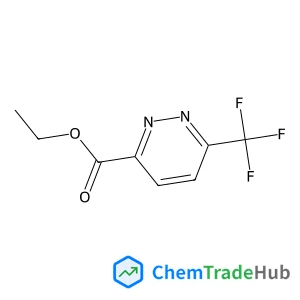
Ethyl 6-(trifluoromethyl)pyridazine-3-carboxylate
CAS Number:
1192155-06-8
Molecular Formula:
C8H7F3N2O2
![[4-Chloro-3-(diethylcarbamoyl)phenyl]boronic acid structure](https://static.chemtradehub.com/structs/871/871332-68-2-0e3b.webp "[4-Chloro-3-(diethylcarbamoyl)phenyl]boronic acid structure")
[4-Chloro-3-(diethylcarbamoyl)phenyl]boronic acid
CAS Number:
871332-68-2
Molecular Formula:
C11H15BClNO3
Recommended Suppliers






Disclaimer
This page provides academic journal information for reference and research purposes only. We are not affiliated with any journal publishers and do not handle publication submissions. For publication-related inquiries, please contact the respective journal publishers directly.
If you notice any inaccuracies in the information displayed, please contact us at support@chemtradehub.com. We will promptly review and address your concerns.