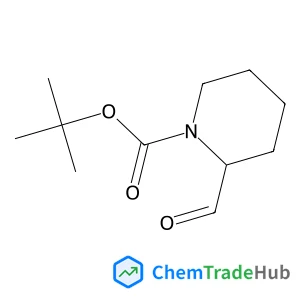
2-Methyl-2-propanyl (2R)-2-formyl-1-piperidinecarboxylate
CAS Number:
134526-69-5
Molecular Formula:
C11H19NO3
Omid Bavi, Farhad Ghadak
Emerging, new atomic-scale fabrication methods have enabled scientists to design and manufacture nanostructured devices for the investigation and application of nanoscale regimes in fluid mechanics. One of the most significant goals in designing these devices is finding an efficient way to reduce the friction of the fluid flow in/on the nanochannels and surfaces. Herein, a set of surfaces with various engineered nanoscale roughnesses (nanoprotrusions) was designed. In addition, a triple point charge/mass model of air molecules was developed based on realistic physicochemical characteristics. All-atom, non-equilibrium molecular dynamics simulations were employed to evaluate the atomic interaction of airflow/solid surfaces for various conditions, such as different fluid velocity, surface material, and geometry of nanoscale roughness. Our results show that there is a significant difference (more than six times) between the fluid/surface interaction energy for graphene and silicone surfaces. However, the interaction energy of the fluid/solid interface does not vary for atomic-scale roughnesses (<10 nm). Our results indicate that for solid surfaces coated by few-layer graphene in high Reynolds (supersonic) regimes, the outer graphene layers are confronted with delamination due to the high shear stress of airflow, which is a serious problem for the structure's strength and durability. We suggest that our computational findings shed light on designing aerophobic surface coatings in a wide range of applications, from nanodevices to conventional aircraft.
Wenjun Luo, Jiajia Wang, Xin Zhao, Zongyan Zhao, Zhigang Zou
DOI: 10.1039/C2CP43408C
Xiangjie Bo, Liping Guo
DOI: 10.1039/C2CP43541A
Yifeng Liao, Emily Hoffman, Markus Wimmer, Alfons Fischer, Joshua Jacobs, Laurence Marks
DOI: 10.1039/C2CP42968C
Morteza Mohammadi, Masumeh Foroutan
DOI: 10.1039/C2CP43522E
Maximiliano A. Burgos Paci, Julian Few, Sarah Gowrie, Gus Hancock
DOI: 10.1039/C2CP43878J
Emiel J. M. Hensen, Rutger A. van Santen, Na Tian, Shi-Gang Sun, Payam Kaghazchi, Timo Jacob
DOI: 10.1039/C2CP44252C
Julibeth M. Martínez de la Hoz, Perla B. Balbuena
DOI: 10.1039/C2CP43517A
Kathryn E. Toghill, Patrick Voyame, Dmitry Momotenko, Astrid J. Olaya, Hubert H. Girault
DOI: 10.1039/C2CP42856C
Heng-Rui Liu, Ji-Hui Yang, Yue-Yu Zhang, Shiyou Chen, Aron Walsh, Hongjun Xiang, Xingao Gong, Su-Huai Wei
DOI: 10.1039/C2CP44484D
Amy Tapley, Daniel Vaccarello, Jason Hedges, Falong Jia, David A. Love, Zhifeng Ding
DOI: 10.1039/C2CP42753B
6-(3-Fluorophenyl)picolinic acid is generally considered safe for laboratory use...
(3R)-3-Pyrrolidinol is used in the pharmaceutical industry as a precursor for dr...
When handling (4R,5R)-4,5-Diethoxycarbonyl-2,2-dimethyldioxolane (CAS: 59779-75-...
1-(6-Chloroimidazo[1,2-b]pyridazin-3-yl)ethanone is often synthesized via a mult...
The market for N-Ethyl-3,4-dimethylbenzylamine (CAS: 39180-83-1) remains steady,...
Tert-butyl 3-(pyrrolidin-1-yl)azetidine-1-carboxylate is a chemical compound wit...
1-Bromo-3-chloro-2,4-dimethoxybenzene (CAS: 1228956-93-1) falls under the classi...
The safety of 8-Bromo-2-methyl-3,4-dihydroisoquinolin-1(2H)-one (CAS: 1368622-07...
Benzyl [(3S)-2,6-dioxo-3-piperidinyl]carbamate is generally safe when handled wi...
1-{[4-(4,4,5,5-Tetramethyl-1,3,2-dioxaborolan-2-yl)phenyl]sulfonyl}pyrrolidine s...

Physical Chemistry Chemical Physics (PCCP) is an international journal co-owned by 19 physical chemistry and physics societies from around the world. This journal publishes original, cutting-edge research in physical chemistry, chemical physics and biophysical chemistry. To be suitable for publication in PCCP, articles must include significant innovation and/or insight into physical chemistry; this is the most important criterion that reviewers and Editors will judge against when evaluating submissions. The journal has a broad scope and welcomes contributions spanning experiment, theory, computation and data science. Topical coverage includes spectroscopy, dynamics, kinetics, statistical mechanics, thermodynamics, electrochemistry, catalysis, surface science, quantum mechanics, quantum computing and machine learning. Interdisciplinary research areas such as polymers and soft matter, materials, nanoscience, energy, surfaces/interfaces, and biophysical chemistry are welcomed if they demonstrate significant innovation and/or insight into physical chemistry. Joined experimental/theoretical studies are particularly appreciated when complementary and based on up-to-date approaches.