


Kinetic model for supercritical water gasification of algae
Literature Information
Publication Date
2012-01-05
DOI
10.1039/C2CP23792J
Impact Factor
3.676
Authors
Chaohai Wei, Phillip E. Savage
View Original
Abstract
The article reports the first quantitative kinetics model for supercritical water gasification (SCWG) of real biomass (algae) that describes the formation of the individual gaseous products. The phenomenological model is based on a set of reaction pathways that includes two types of compounds being intermediate between the algal biomass and the final gaseous products. To best correlate the experimental gas yields obtained at 450, 500 and 550 °C, the model allowed one type of intermediate to react to gases more quickly than the other type of intermediate. The model parameters indicate that gas yields increase with temperature because higher temperatures favor production of the more easily gasified intermediate and the production of gas at the expense of char. The model can accurately predict the qualitative influence of the biomass loading and water density on the gas yields. Sensitivity analysis and reaction rate analysis indicate that steam reforming of intermediates is an important source of H2, whereas direct decomposition of the intermediate species is the main source of CO, CO2 and CH4.
Recommended Journals

Biocatalysis and Biotransformation

Critical Reviews in Solid State and Materials Sciences

Journal of Chemical Sciences

Topics in Catalysis

Acta Metallurgica Sinica-English Letters

NDT & E International

Atomization and Sprays

Bioorganic & Medicinal Chemistry

Journal of Asian Natural Products Research

Polycyclic Aromatic Compounds
Related Literature
Simple devising of N-doped carbon dots (N-CDs) as a low-cost probe for selective environmental toxin detection and security applications
Kumaresan Annamalai, Arun Annamalai, Ramya Ravichandran, Anandhavalli Jeevarathinam, Padmanaban Annamalai, Hector Valdes, Sundaravadivel Elumalai
2023-11-17
Paper
DOI: 10.1039/D3NJ04571D
Synthesis of a water-based TEOS–PDMS sol–gel coating for hydrophobic cotton and polyester fabrics
Nurul Hidayah Abu Bakar, Wan Norfazilah Wan Ismail, Hartina Mohd Yusop, Noreen Farzuhana Mohd Zulkifli
2023-12-15
Paper
DOI: 10.1039/D3NJ03206J
Nitrogen-doped carbon quantum dots for fluorescence sensing, anti-counterfeiting and logic gate operations
Li Xu, Yi Qian, Lei Bao, Wei Wang, Nengmei Deng, Li Zhang, Guanglin Wang, Xucheng Fu, Wei Fu
2023-11-21
Paper
DOI: 10.1039/D3NJ04521H
Flexible electrochemical sensor for highly sensitive and selective non-enzymatic detection of creatinine via electrodeposited copper over polymelamine formaldehyde
Daisy Mehta, Alankar Kafle, Tharamani C. Nagaiah
2023-10-11
Paper
DOI: 10.1039/D3TB01528A
Injectable spontaneously formed asymmetric adhesive hydrogel with controllable removal for wound healing
Lei Liang, Xi Li, Zhouying Tan, Min Liu, Yuwei Qiu, Qingyu Yu, Chaojie Yu, Mengmeng Yao, Bingyan Guo, Pengcheng Che, Hong Zhang
2023-10-26
Paper
DOI: 10.1039/D3TB02014B
Heterobimetallic iridiumIII–europiumIII complex: the role of donor energy on sensitising the EuIII ion
Marian Rosaly Davolos
2023-12-04
Paper
DOI: 10.1039/D3NJ03161F
Correction: Distortion-controlled 1,2-dicarbene reactivity of 3-triflyloxybenzynes: a theoretical approach
Fatemeh Pirouzi, Hossein Eshghi, Hossein Sabet-Sarvestani
2023-12-12
Correction
DOI: 10.1039/D3NJ90185H
Micelle assisted synthesis of bismuth oxide nanoparticles for improved chemocatalytic degradation of toxic Congo red into non-toxic products
Aleena Pious, Shreya Muthukumar, Dharshini Karnan Singaravelu, Periyappan Nantheeswaran, Mariappan Mariappan, Arvind Sivasubramanian, Fuad Ameen, Anbazhagan Veerappan
2023-11-17
Paper
DOI: 10.1039/D3NJ04494G
π-Extended indoloquinoxaline functionalized triarylamines with ethynyl and tetracyanobutadiene bridges for p-channel and ambipolar OFETs
Panneerselvam Devibala, Balu Balambiga, Predhanekar M. Imran, Samuthira Nagarajan
2023-11-21
Paper
DOI: 10.1039/D3NJ03993E
You might also like
Compound Q&A
Is 6-(3-Fluorophenyl)picolinic acid (CAS: 887982-40-3) safe?
6-(3-Fluorophenyl)picolinic acid is generally considered safe for laboratory use...
887982-40-36-(3-Fluorophenyl)pi...
Compound Q&A
What industries use (3R)-3-Pyrrolidinol (CAS: 2799-21-5)?
(3R)-3-Pyrrolidinol is used in the pharmaceutical industry as a precursor for dr...
2799-21-5(3R)-3-Pyrrolidinol
Compound Q&A
What precautions should be taken when handling (4R,5R)-4,5-Diethoxycarbonyl-2,2-dimethyldioxolane (CAS: 59779-75-8)?
When handling (4R,5R)-4,5-Diethoxycarbonyl-2,2-dimethyldioxolane (CAS: 59779-75-...
59779-75-8(4R,5R)-4,5-Diethoxy...
Compound Q&A
How is 1-(6-Chloroimidazo[1,2-b]pyridazin-3-yl)ethanone (CAS: 90734-71-7) typically synthesized?
1-(6-Chloroimidazo[1,2-b]pyridazin-3-yl)ethanone is often synthesized via a mult...
90734-71-71-(6-Chloroimidazo[1...
Compound Q&A
What is the market or research trend for N-Ethyl-3,4-dimethylbenzylamine (CAS: 39180-83-1)?
The market for N-Ethyl-3,4-dimethylbenzylamine (CAS: 39180-83-1) remains steady,...
39180-83-1N-Ethyl-3,4-dimethyl...
Compound Q&A
What is Tert-butyl 3-(pyrrolidin-1-yl)azetidine-1-carboxylate (CAS: 1019008-21-9)?
Tert-butyl 3-(pyrrolidin-1-yl)azetidine-1-carboxylate is a chemical compound wit...
1019008-21-9Tert-butyl 3-(pyrrol...
Compound Q&A
What regulatory guidelines apply to 1-Bromo-3-chloro-2,4-dimethoxybenzene (CAS: 1228956-93-1)?
1-Bromo-3-chloro-2,4-dimethoxybenzene (CAS: 1228956-93-1) falls under the classi...
1228956-93-11-Bromo-3-chloro-2,4...
Compound Q&A
Is 8-Bromo-2-methyl-3,4-dihydroisoquinolin-1(2H)-one (CAS: 1368622-07-4) safe?
The safety of 8-Bromo-2-methyl-3,4-dihydroisoquinolin-1(2H)-one (CAS: 1368622-07...
1368622-07-48-Bromo-2-methyl-3,4...
Compound Q&A
Is Benzyl [(3S)-2,6-dioxo-3-piperidinyl]carbamate (CAS: 22785-43-9) safe?
Benzyl [(3S)-2,6-dioxo-3-piperidinyl]carbamate is generally safe when handled wi...
22785-43-9Benzyl [(3S)-2,6-dio...
Compound Q&A
How should 1-{[4-(4,4,5,5-Tetramethyl-1,3,2-dioxaborolan-2-yl)phenyl]sulfonyl}pyrrolidine (CAS: 928657-21-0) be stored?
1-{[4-(4,4,5,5-Tetramethyl-1,3,2-dioxaborolan-2-yl)phenyl]sulfonyl}pyrrolidine s...
928657-21-01-{[4-(4,4,5,5-Tetra...
Source Journal
Physical Chemistry Chemical Physics

CiteScore:
5.5
Self-citation Rate:
10.3%
Articles per Year:
3036
Physical Chemistry Chemical Physics (PCCP) is an international journal co-owned by 19 physical chemistry and physics societies from around the world. This journal publishes original, cutting-edge research in physical chemistry, chemical physics and biophysical chemistry. To be suitable for publication in PCCP, articles must include significant innovation and/or insight into physical chemistry; this is the most important criterion that reviewers and Editors will judge against when evaluating submissions. The journal has a broad scope and welcomes contributions spanning experiment, theory, computation and data science. Topical coverage includes spectroscopy, dynamics, kinetics, statistical mechanics, thermodynamics, electrochemistry, catalysis, surface science, quantum mechanics, quantum computing and machine learning. Interdisciplinary research areas such as polymers and soft matter, materials, nanoscience, energy, surfaces/interfaces, and biophysical chemistry are welcomed if they demonstrate significant innovation and/or insight into physical chemistry. Joined experimental/theoretical studies are particularly appreciated when complementary and based on up-to-date approaches.
Recommended Compounds
![[1-(5-Methyl-2-pyridinyl)-1H-pyrazol-4-yl]methanol structure](https://static.chemtradehub.com/structs/143/1439822-99-7-6cc9.webp "[1-(5-Methyl-2-pyridinyl)-1H-pyrazol-4-yl]methanol structure")
[1-(5-Methyl-2-pyridinyl)-1H-pyrazol-4-yl]methanol
CAS Number:
1439822-99-7
Molecular Formula:
C10H11N3O
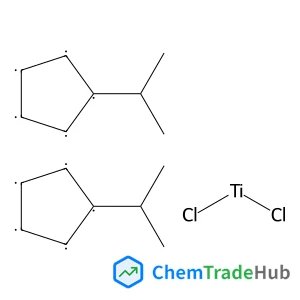
BIS(I-PROPYLCYCLOPENTADIENYL)TITANIUM DICHLORIDE
CAS Number:
12130-65-3
Molecular Formula:
C16H22Cl2Ti
Recommended Suppliers




Disclaimer
This page provides academic journal information for reference and research purposes only. We are not affiliated with any journal publishers and do not handle publication submissions. For publication-related inquiries, please contact the respective journal publishers directly.
If you notice any inaccuracies in the information displayed, please contact us at support@chemtradehub.com. We will promptly review and address your concerns.