












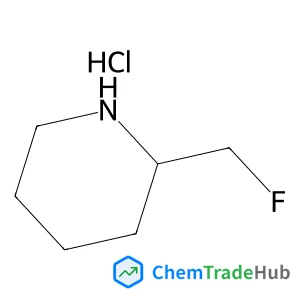
(2S)-2-(Fluoromethyl)piperidine hydrochloride (1:1)
CAS Number:
886216-73-5
Molecular Formula:
C6H13ClFN
Xin-Quan Wang, Han-Dong Li, Jian-Tao Wang
The intriguing electronic and magnetic properties of one-side semihydrogenated silicene and germanene are investigated by means of first-principles calculations. Both one-side semihydrogenated silicene and germanene are confirmed as dynamically stable in the ground state based on phonon-mode analysis. Moreover, we find that semihydrogenation from only one side causes localized and unpaired 3p (4p) electrons in the unhydrogenated Si (Ge) sites and then introduces ferromagnetism to silicene (germanene) sheet with no need for doping, cutting, or etching. One-side semihydrogenated silicene and germanene are both identified as semiconductors with direct energy gaps: their gap values obtained from the HSE06 functional are estimated to be 1.74 eV and 1.32 eV, much greater than the PBE-GGA results of 0.94 eV and 0.41 eV, respectively. From pristine to one-side semihydrogenated and then to fully hydrogenated systems, silicene and germanene change from metallic to magnetic semiconducting and then to nonmagnetic semiconducting. The hydrogenation process provides a novel method to tune the properties of silicene and germanene with unprecedented potentials for future nanoelectronics.
A. K. Bansal, F. Antolini, M. T. Sajjad, L. Stroea, S. G. Ramkumar, K.-J. Kass, S. Allard, U. Scherf, I. D. W. Samuel
DOI: 10.1039/C4CP00727A
Joo Chuan Ang, Mark J. Henderson, Richard A. Campbell, Jhih-Min Lin, Peter N. Yaron, Andrew Nelson, Thomas Faunce, John W. White
DOI: 10.1039/C4CP00293H
Xiao-wang Zhou, Reese E. Jones, Patrick E. Hopkins, Thomas E. Beechem
DOI: 10.1039/C4CP00261J
C. J. Cobos, L. Sölter, E. Tellbach
DOI: 10.1039/C3CP54274B
Aniruddha Ganguly, Soumen Ghosh, Nikhil Guchhait
DOI: 10.1039/C4CP04175E
Lukasz Poltorak, Manuel Dossot, Grégoire Herzog, Alain Walcarius
DOI: 10.1039/C4CP03254C
C. Stefaniu, I. Vilotijevic, G. Brezesinski
DOI: 10.1039/C4CP00567H
Seung Noh Lee, Jaeheung Park, Manho Lim, Taiha Joo
DOI: 10.1039/C3CP54546F
G. Di Santo, M. Caputo, A. Goldoni, M. Kumar, M. Pedio
DOI: 10.1039/C4CP03450C
Waste containing N-Methoxy-N-methyl-1,3-thiazole-5-carboxamide (CAS: 898825-89-3...
N-(4-Biphenylyl)dibenzo[b,d]furan-4-amine should be stored in a tightly sealed c...
The market for 3-Acetamido-5-amino-2,4,6-triiodobenzoic acid (CAS: 1713-07-1) is...
Benzyl 2-O-acetyl-3,4,6-tri-O-benzyl-beta-D-galactopyranoside (CAS: 61820-03-9) ...
2-Ethylpiperazine dihydrochloride (CAS: 438050-52-3) is regulated under the Glob...
1,1'-[1,3-Phenylenebis(methylene)]bis(3-methyl-1H-pyrrole-2,5-dione) (CAS: 11946...
Several alternatives can be used in the synthesis of 5-Fluoro-2-(1-pyrrolidinyl)...
Proper personal protective equipment (PPE) must be worn when handling this compo...
When handling 6-Bromoimidazo[1,2-a]pyridin-8-amine, it is important to wear appr...
Alternatives to (2S,4R)-4-(4-Nitrobenzyl)pyrrolidine-2-carboxylic acid hydrochlo...

Physical Chemistry Chemical Physics (PCCP) is an international journal co-owned by 19 physical chemistry and physics societies from around the world. This journal publishes original, cutting-edge research in physical chemistry, chemical physics and biophysical chemistry. To be suitable for publication in PCCP, articles must include significant innovation and/or insight into physical chemistry; this is the most important criterion that reviewers and Editors will judge against when evaluating submissions. The journal has a broad scope and welcomes contributions spanning experiment, theory, computation and data science. Topical coverage includes spectroscopy, dynamics, kinetics, statistical mechanics, thermodynamics, electrochemistry, catalysis, surface science, quantum mechanics, quantum computing and machine learning. Interdisciplinary research areas such as polymers and soft matter, materials, nanoscience, energy, surfaces/interfaces, and biophysical chemistry are welcomed if they demonstrate significant innovation and/or insight into physical chemistry. Joined experimental/theoretical studies are particularly appreciated when complementary and based on up-to-date approaches.
![tert-Butyl 6-chloro-4-oxospiro[chroman-2,4'-piperidine]-1'-carboxylate structure](https://static.chemtradehub.com/structs/101/1011482-37-3-88a5.webp "tert-Butyl 6-chloro-4-oxospiro[chroman-2,4'-piperidine]-1'-carboxylate structure")

![4-[(2-{2-[2-(2-Aminoethoxy)ethoxy]ethoxy}ethyl)amino]-2-(2,6-dioxo-3-piperidinyl)-1H-isoindole-1,3(2H)-dione structure](https://static.chemtradehub.com/structs/209/2093416-31-8-3162.webp "4-[(2-{2-[2-(2-Aminoethoxy)ethoxy]ethoxy}ethyl)amino]-2-(2,6-dioxo-3-piperidinyl)-1H-isoindole-1,3(2H)-dione structure")





