


The initial step of silicate versusaluminosilicate formation in zeolite synthesis: a reaction mechanism in water with a tetrapropylammonium template
Literature Information
Publication Date
2012-01-12
DOI
10.1039/C2CP23370C
Impact Factor
3.676
Authors
Thuat T. Trinh, Xavier Rozanska, Françoise Delbecq, Philippe Sautet
View Original
Abstract
The initial step for silicate and aluminosilicate condensation is studied in water in the presence of a realistic tetrapropylammonium template under basic conditions. The model corresponds to the synthesis conditions of ZSM5. The free energy profile for the dimer formation ((OH)3Si–O–Si–(OH)2O− or [(OH)3Al–O–Si–(OH)3]−) is calculated with ab initio molecular dynamics and thermodynamic integration. The Si–O–Si dimer formation occurs in a two-step manner with an overall free energy barrier of 75 kJ mol−1. The first step is associated with the Si–O bond formation and results in an intermediate with a five-coordinated Si, and the second one concerns the removal of the water molecule. The template is displaced away from the Si centres upon dimer formation, and a shell of water molecules is inserted between the silicate and the template. The main effect of the template is to slow down the backward hydrolysis reaction with respect to the condensation one. The Al–O–Si dimer formation first requires the formation of a metastable precursor state by proton transfer from Si(OH)4 to Al(OH)4− mediated by a solvent molecule. It then proceeds through a single step with an overall barrier of 70 kJ mol−1. The model with water molecules explicitly included is then compared to a simple calculation using an implicit continuum model for the solvent. The results underline the importance of an explicit and dynamical treatment of the water solvent, which plays a key role in assisting the reaction.
Recommended Journals

Doklady Chemistry

Corrosion Science

Chemical Reviews

Anti-Corrosion Methods and Materials

Journal of the Chinese Chemical Society

Australian Journal of Chemistry

Canadian Metallurgical Quarterly

Journal of the American Chemical Society

Bulletin of the Chemical Society of Japan

Chemical & Pharmaceutical Bulletin
Related Literature
Metal-directed ring-expansion in Schiff-base polypyrrolic macrocycles
Gonzalo Givaja, Alexander J. Blake, Claire Wilson, Martin Schröder, Jason B. Love
2005-07-29
Communication
DOI: 10.1039/B507729J
Ti2C80 is more likely a titanium carbide endohedral metallofullerene (Ti2C2)@C78
Kai Tan, Xin Lu
2005-07-29
Communication
DOI: 10.1039/B507855E
A general and versatile molecular design for host molecules working in water: a duplex-based potassium sensor consisting of three functional regions
Kazuhisa Fujimoto, Yu Muto
2005-09-08
Communication
DOI: 10.1039/B508189K
Strongly luminescent binuclear aluminium chelate with polymer-like molecular packing and solution-processibility
Juan Qiao, Li. D. Wang, Jun. F. Xie, Gang. T. Lei, Guo. S. Wu, Yong Qiu
2005-08-16
Communication
DOI: 10.1039/B506907F
Ultraviolet-emitting conjugated polymer poly(9,9′-alkyl-3,6-silafluorene) with a wide band gap of 4.0 eV
Yueqi Mo, Renyu Tian, Wei Shi, Yong Cao
2005-09-02
Communication
DOI: 10.1039/B507518A
Spatially controlled self-assembly of gold nanoparticles encased in α-helical polypeptide nanospheres
Masa-aki Morikawa, Nobuo Kimizuka
2005-09-07
Communication
DOI: 10.1039/B507818K
Design and synthesis of artificial phospholipid for selective cleavage of integral membrane protein
Takumi Furuta, Minatsu Sakai, Hiroyasu Hayashi, Tomohiro Asakawa, Fumi Kataoka, Satoshi Fujii, Takashi Suzuki, Yasuo Suzuki, Kiyoshi Tanaka, Nathan Fishkin, Koji Nakanishi
2005-08-17
Communication
DOI: 10.1039/B507917A
Stereoselective synthesis of chiral, non-racemic 1,2,3-tri- and 1,3-disubstituted ferrocene derivatives
Marianne Steurer, Karin Tiedl, Yaping Wang, Walter Weissensteiner
2005-09-07
Communication
DOI: 10.1039/B508761A
A novel and facile Zn-mediated intramolecular five-membered cyclization of β-tetraarylporphyrin radicals from β-bromotetraarylporphyrins
Dong-Mei Shen, Chao Liu, Qing-Yun Chen
2005-09-09
Communication
DOI: 10.1039/B509972B
You might also like
Compound Q&A
Is 6-(3-Fluorophenyl)picolinic acid (CAS: 887982-40-3) safe?
6-(3-Fluorophenyl)picolinic acid is generally considered safe for laboratory use...
887982-40-36-(3-Fluorophenyl)pi...
Compound Q&A
What industries use (3R)-3-Pyrrolidinol (CAS: 2799-21-5)?
(3R)-3-Pyrrolidinol is used in the pharmaceutical industry as a precursor for dr...
2799-21-5(3R)-3-Pyrrolidinol
Compound Q&A
What precautions should be taken when handling (4R,5R)-4,5-Diethoxycarbonyl-2,2-dimethyldioxolane (CAS: 59779-75-8)?
When handling (4R,5R)-4,5-Diethoxycarbonyl-2,2-dimethyldioxolane (CAS: 59779-75-...
59779-75-8(4R,5R)-4,5-Diethoxy...
Compound Q&A
How is 1-(6-Chloroimidazo[1,2-b]pyridazin-3-yl)ethanone (CAS: 90734-71-7) typically synthesized?
1-(6-Chloroimidazo[1,2-b]pyridazin-3-yl)ethanone is often synthesized via a mult...
90734-71-71-(6-Chloroimidazo[1...
Compound Q&A
What is the market or research trend for N-Ethyl-3,4-dimethylbenzylamine (CAS: 39180-83-1)?
The market for N-Ethyl-3,4-dimethylbenzylamine (CAS: 39180-83-1) remains steady,...
39180-83-1N-Ethyl-3,4-dimethyl...
Compound Q&A
What is Tert-butyl 3-(pyrrolidin-1-yl)azetidine-1-carboxylate (CAS: 1019008-21-9)?
Tert-butyl 3-(pyrrolidin-1-yl)azetidine-1-carboxylate is a chemical compound wit...
1019008-21-9Tert-butyl 3-(pyrrol...
Compound Q&A
What regulatory guidelines apply to 1-Bromo-3-chloro-2,4-dimethoxybenzene (CAS: 1228956-93-1)?
1-Bromo-3-chloro-2,4-dimethoxybenzene (CAS: 1228956-93-1) falls under the classi...
1228956-93-11-Bromo-3-chloro-2,4...
Compound Q&A
Is 8-Bromo-2-methyl-3,4-dihydroisoquinolin-1(2H)-one (CAS: 1368622-07-4) safe?
The safety of 8-Bromo-2-methyl-3,4-dihydroisoquinolin-1(2H)-one (CAS: 1368622-07...
1368622-07-48-Bromo-2-methyl-3,4...
Compound Q&A
Is Benzyl [(3S)-2,6-dioxo-3-piperidinyl]carbamate (CAS: 22785-43-9) safe?
Benzyl [(3S)-2,6-dioxo-3-piperidinyl]carbamate is generally safe when handled wi...
22785-43-9Benzyl [(3S)-2,6-dio...
Compound Q&A
How should 1-{[4-(4,4,5,5-Tetramethyl-1,3,2-dioxaborolan-2-yl)phenyl]sulfonyl}pyrrolidine (CAS: 928657-21-0) be stored?
1-{[4-(4,4,5,5-Tetramethyl-1,3,2-dioxaborolan-2-yl)phenyl]sulfonyl}pyrrolidine s...
928657-21-01-{[4-(4,4,5,5-Tetra...
Source Journal
Physical Chemistry Chemical Physics

CiteScore:
5.5
Self-citation Rate:
10.3%
Articles per Year:
3036
Physical Chemistry Chemical Physics (PCCP) is an international journal co-owned by 19 physical chemistry and physics societies from around the world. This journal publishes original, cutting-edge research in physical chemistry, chemical physics and biophysical chemistry. To be suitable for publication in PCCP, articles must include significant innovation and/or insight into physical chemistry; this is the most important criterion that reviewers and Editors will judge against when evaluating submissions. The journal has a broad scope and welcomes contributions spanning experiment, theory, computation and data science. Topical coverage includes spectroscopy, dynamics, kinetics, statistical mechanics, thermodynamics, electrochemistry, catalysis, surface science, quantum mechanics, quantum computing and machine learning. Interdisciplinary research areas such as polymers and soft matter, materials, nanoscience, energy, surfaces/interfaces, and biophysical chemistry are welcomed if they demonstrate significant innovation and/or insight into physical chemistry. Joined experimental/theoretical studies are particularly appreciated when complementary and based on up-to-date approaches.
Recommended Compounds
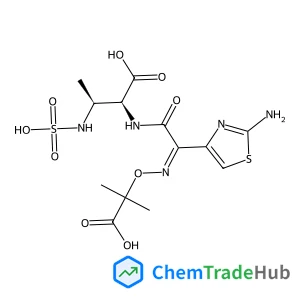
Aztreonam USP Related Compound A (Open-ring Aztreonam)
CAS Number:
87500-74-1
Molecular Formula:
C13H19N5O9S2

4-Cyclohexene-1,2-dicarboxylic acid, 1,2-dimethyl ester, (1R,2R)-rel-
CAS Number:
17673-68-6
Molecular Formula:
C10H14O4
Recommended Suppliers




Disclaimer
This page provides academic journal information for reference and research purposes only. We are not affiliated with any journal publishers and do not handle publication submissions. For publication-related inquiries, please contact the respective journal publishers directly.
If you notice any inaccuracies in the information displayed, please contact us at support@chemtradehub.com. We will promptly review and address your concerns.