












The power of the ring: a pH-responsive hydrophobic epoxide monomer for superior micelle stability
Literature Information
Publication Date
2017-10-06
DOI
10.1039/C7PY01613A
Impact Factor
5.582
Authors
Jaeeun Song, L. Palanikumar, Yeongkyu Choi, Inhye Kim, Tae-young Heo, Eungjin Ahn, Soo-Hyung Choi, Eunji Lee, Yuji Shibasaki, Ja-Hyoung Ryu
View Original
Abstract
Despite the growing interest in amphiphilic block copolymers for their application in micelles as ideal drug delivery carriers, there remain some challenges related to biocompatibility, stability, degradability, and loading efficiency of the micelles. Herein, we report a novel hydrophobic, pH-responsive epoxide monomer, tetrahydropyranyl glycidyl ether (TGE). Anionic ring-opening polymerization affords the controlled synthesis of a series of its homopolymers (PTGE) and amphiphilic polymers, poly(ethylene glycol)-block-poly(tetrahydropyranyl glycidyl ether) (PEG-b-PTGE). Interestingly, these block copolymers with cyclic TGE moieties showed superior stability in biological media, high loading capacity, tunable release, and controllable degradation compared to the block copolymers with its acyclic analogue, 1-ethoxyethyl glycidyl ether (EEGE), widely employed in polyether, which satisfy all the required design principles and address the challenges in drug delivery systems. The superior biocompatibility coupled with the high stability of the novel functional epoxide monomer is anticipated to lead to the development of a versatile platform for smart drug delivery systems.
Related Literature
Water-in-salt electrolytes – molecular insights to the high solubility of lithium-ion salts
Aleksandar Tot, Lars Kloo
2022-08-01
Communication
DOI: 10.1039/D2CC03062D
Hydrophosphinylation of unactivated alkenes with secondary phosphineoxides under visible-light photocatalysis
Woo-Jin Yoo, Shū Kobayashi
2013-05-01
Communication
DOI: 10.1039/C3GC40482J
Structural relationship between a host included chain of spirocyclic water hexamers and bulk water – the role of water clusters in self assembly and crystallization processes
Rolando Luna-García, Berenice M. Damián-Murillo, Victor Barba, Herbert Höpfl, Hiram I. Beltrán, Luis S. Zamudio-Rivera
2005-10-11
Communication
DOI: 10.1039/B509787H
Dinuclear osmium complexes as mitochondrion-targeting antitumor photothermal agents in vivo
Meng-Fan Wang, Yu-Ang Deng, Qing-Fang Li, Shi-Jie Tang, Rong Yang, Run-Yu Zhao, Fu-Dan Liu, Xiaoxia Ren, Dan Zhang, Feng Gao
2022-10-18
Communication
DOI: 10.1039/D2CC05230J
Synthesis of glycerol 1,2-carbonate by transesterification of glycerol with dimethyl carbonate using triethylamine as a facile separable homogeneous catalyst
Olga Gómez-Jiménez-Aberasturi, Camilo Ramírez-López, Belén Maestro-Madurga
2012-10-02
Paper
DOI: 10.1039/C2GC35992H
In situ modification of metal electrode by integrated microbial corrosion and microbial mineralization using Shewanella oneidensis for efficient oxygen evolution
Yang-Chun Yong, Jian-Li Mi
2023-03-06
Paper
DOI: 10.1039/D2CY01981G
A general and practical oxidation of alcohols to primary amides under metal-free conditions‡
Jian-Bo Feng, Helfried Neumann, Anahit Pews-Davtyan, Matthias Beller
2013-05-01
Paper
DOI: 10.1039/C3GC40668G
You might also like
Compound Q&A
What are the main uses of 4-Nitrophenyl phosphate disodium salt hexahydrate (CAS: 333338-18-4)?
4-Nitrophenyl phosphate disodium salt hexahydrate is primarily used as a substra...
333338-18-44-Nitrophenyl phosph...
Compound Q&A
What are the main uses of 2-(Trifluoromethyl)-1,3-oxazole-4-carboxylic Acid (CAS: 1060816-01-4)?
2-(Trifluoromethyl)-1,3-oxazole-4-carboxylic Acid (CAS: 1060816-01-4) is widely ...
1060816-01-42-(Trifluoromethyl)-...
Compound Q&A
How should 2-Fluoro-4-biphenylcarboxylic acid (CAS: 137045-30-8) be stored?
2-Fluoro-4-biphenylcarboxylic acid should be stored in a cool, dry place at room...
137045-30-82-Fluoro-4-biphenylc...
Compound Q&A
What industries use Prednisolone-21-Carboxylic Acid (CAS: 61549-70-0)?
Prednisolone-21-Carboxylic Acid is primarily used in the pharmaceutical industry...
61549-70-0Prednisolone-21-Carb...
Compound Q&A
How should 4-(Hydrazinomethyl)-1,2,3-benzenetriol (CAS: 3614-72-0) be stored?
4-(Hydrazinomethyl)-1,2,3-benzenetriol (CAS: 3614-72-0) should be stored in a co...
3614-72-04-(Hydrazinomethyl)-...
Compound Q&A
What industries use 4-Amino-1-methyl-1H-pyrazole-5-carboxylic acid hydrochloride (CAS: 92534-70-8)?
4-Amino-1-methyl-1H-pyrazole-5-carboxylic acid hydrochloride (CAS: 92534-70-8) i...
92534-70-84-Amino-1-methyl-1H-...
Compound Q&A
What regulatory guidelines apply to dehydropachymic acid (CAS: 77012-31-8)?
Dehydropachymic acid (CAS: 77012-31-8) is regulated by various agencies. It fall...
77012-31-8Dehydropachymic acid
Compound Q&A
What is the market or research trend for 6-[(2,2-Dimethylpropanoyl)amino]nicotinic acid (CAS: 898561-66-5)?
The market and research trends for 6-[(2,2-Dimethylpropanoyl)amino]nicotinic aci...
898561-66-56-[(2,2-Dimethylprop...
Compound Q&A
How should 1,10-Phenanthroline-2,9-dicarbaldehyde (CAS: 57709-62-3) be stored?
1,10-Phenanthroline-2,9-dicarbaldehyde should be stored in a cool, dry place awa...
57709-62-31,10-Phenanthroline-...
Compound Q&A
How is 5-Carbamoyl-11-oxo-10,11-dihydro-5H-dibenzo[b,f]azepin-10-yl acetate (CAS: 113952-21-9) typically synthesized?
5-Carbamoyl-11-oxo-10,11-dihydro-5H-dibenzo[b,f]azepin-10-yl acetate can be synt...
113952-21-95-Carbamoyl-11-oxo-1...
Source Journal
Polymer Chemistry

CiteScore:
8.6
Self-citation Rate:
7.3%
Articles per Year:
457
Polymer Chemistry welcomes submissions in all areas of polymer science that have a strong focus on macromolecular chemistry. Manuscripts may cover a broad range of fields, yet no direct application focus is required.
Recommended Compounds
![[(1S,2S,3R,4S,7R,9S,10S,12R,15S)-4,12-Diacetyloxy-15-[(2R,3S)-3-benzamido-3-phenyl-2-(2,2,2-trichloroethoxycarbonyloxy)propanoyl]oxy-1,9-dihydroxy-10,14,17,17-tetramethyl-11-oxo-6-oxatetracyclo[11.3.1.03,10.04,7]heptadec-13-en-2-yl] benzoate structure](https://static.chemtradehub.com/structs/100/100431-55-8-7104.webp "[(1S,2S,3R,4S,7R,9S,10S,12R,15S)-4,12-Diacetyloxy-15-[(2R,3S)-3-benzamido-3-phenyl-2-(2,2,2-trichloroethoxycarbonyloxy)propanoyl]oxy-1,9-dihydroxy-10,14,17,17-tetramethyl-11-oxo-6-oxatetracyclo[11.3.1.03,10.04,7]heptadec-13-en-2-yl] benzoate structure")
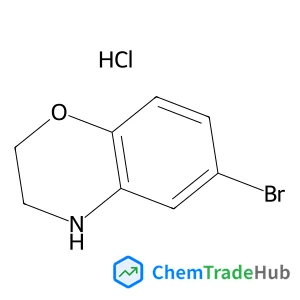
6-Bromo-3,4-dihydro-2H-1,4-benzoxazine hydrochloride (1:1)
CAS Number:
1260803-10-8
Molecular Formula:
C8H9BrClNO
Recommended Suppliers






Disclaimer
This page provides academic journal information for reference and research purposes only. We are not affiliated with any journal publishers and do not handle publication submissions. For publication-related inquiries, please contact the respective journal publishers directly.
If you notice any inaccuracies in the information displayed, please contact us at support@chemtradehub.com. We will promptly review and address your concerns.