












Exploiting CH/π interactions in robust supramolecular adhesives
Literature Information
Publication Date
2018-07-20
DOI
10.1039/C8PY00592C
Impact Factor
5.582
Authors
Taiki Yamate, Takayuki Fujiwara, Toru Yamaguchi, Hiroshi Suzuki, Motohiro Akazome
View Original
Abstract
Supramolecular adhesives (SAs) have attracted great interest as a promising adhesion methodology in many fields. Although various SAs employing well-established non-covalent motifs have been reported to date, examples with marked binding strengths >2 MPa are still limited to SAs based on specific high-energy non-covalent interactions, e.g. hydrogen bonds, ionic bonds, host–guest interactions, and metal–ligand complexations. Reported herein is a new class of SAs based on multiple CH/π interactions. We designed the SAs with multiple-naphthalene-ring-functionalised polyacrylamide as a π donor and a polyolefin consisting of alkyl groups as a π acceptor. The macroscopic supramolecular assemblies achieved binding strengths in the range 2.1–2.6 MPa, comparable to those of SAs based on high-energy non-covalent interactions. Moreover, the adhesive exhibited long-term (i.e. 30 days) stability in wet and humid environments. Finally, we demonstrated potential application of our adhesive as an industrial adhesive. Our SAs will overturn the preconception that adhesion strength driven by low-energy non-covalent interactions is low, and they hold potential for a range of useful applications in chemistry, materials science, and relevant industrial manufacturing.
Related Literature
A novel copper-based nanozyme: fabrication and application for colorimetric detection of resveratrol
Wanxin Li, Jiaxin Sun, Yao Xin, Yu Han, Yanyang Sun, Aijun Li, Zhi Wang
2023-11-13
Paper
DOI: 10.1039/D3AY01666H
A dual-mode green emissive fluorescent probe for real-time detection of doxycycline in milk using a smartphone sensing platform
Ruiqing Sun, Ping Liu, Yingjia Dong, Qingli Yang, Yongchao Ma
2023-11-14
Paper
DOI: 10.1039/D3AY01850D
Construction of Mn–N–C nanoparticles with multienzyme-like properties and photothermal performance for the effective treatment of bacterial infections
Yong Ding, Xiao-Chan Yang, Ya-Ya Yu, Sheng-Nan Song, Bo Li, Xue-Yao Pang, Jian-Jian Cai, Chun-Huan Zhang, Ya-Mu Xia, Wei-Wei Gao
2023-11-22
Paper
DOI: 10.1039/D3BM01228J
Advances in biomedical systems based on microneedles: design, fabrication, and application
Xinghao Wang, Zifeng Wang, Min Xiao, Zhanhong Li, Zhigang Zhu
2023-11-07
Review Article
DOI: 10.1039/D3BM01551C
Recent advances in small-molecule fluorescent probes with the function of targeting cancer receptors
Xinke Li, Caiyun Liu, Hanchuang Zhu, Kun Wang, Xiaohua Ren, Lixue Ma, Xiaohui Zhang, Mengyuan Liu, Baocun Zhu
2023-11-01
Critical Review
DOI: 10.1039/D3AY01387A
Natural products applied in acute kidney injury treatment: polymer matters
Bo Yu, Qiao Jin, Jian Ji
2023-12-06
Minireview
DOI: 10.1039/D3BM01772A
A comprehensive review of Dynamic Chemical Labelling on Luminex xMAP technology: a journey towards Drug-Induced Liver Injury testing
Antonio Marín-Romero, Salvatore Pernagallo
2023-11-03
Critical Review
DOI: 10.1039/D3AY01481A
You might also like
Compound Q&A
What are the main uses of 4-Nitrophenyl phosphate disodium salt hexahydrate (CAS: 333338-18-4)?
4-Nitrophenyl phosphate disodium salt hexahydrate is primarily used as a substra...
333338-18-44-Nitrophenyl phosph...
Compound Q&A
What are the main uses of 2-(Trifluoromethyl)-1,3-oxazole-4-carboxylic Acid (CAS: 1060816-01-4)?
2-(Trifluoromethyl)-1,3-oxazole-4-carboxylic Acid (CAS: 1060816-01-4) is widely ...
1060816-01-42-(Trifluoromethyl)-...
Compound Q&A
How should 2-Fluoro-4-biphenylcarboxylic acid (CAS: 137045-30-8) be stored?
2-Fluoro-4-biphenylcarboxylic acid should be stored in a cool, dry place at room...
137045-30-82-Fluoro-4-biphenylc...
Compound Q&A
What industries use Prednisolone-21-Carboxylic Acid (CAS: 61549-70-0)?
Prednisolone-21-Carboxylic Acid is primarily used in the pharmaceutical industry...
61549-70-0Prednisolone-21-Carb...
Compound Q&A
How should 4-(Hydrazinomethyl)-1,2,3-benzenetriol (CAS: 3614-72-0) be stored?
4-(Hydrazinomethyl)-1,2,3-benzenetriol (CAS: 3614-72-0) should be stored in a co...
3614-72-04-(Hydrazinomethyl)-...
Compound Q&A
What industries use 4-Amino-1-methyl-1H-pyrazole-5-carboxylic acid hydrochloride (CAS: 92534-70-8)?
4-Amino-1-methyl-1H-pyrazole-5-carboxylic acid hydrochloride (CAS: 92534-70-8) i...
92534-70-84-Amino-1-methyl-1H-...
Compound Q&A
What regulatory guidelines apply to dehydropachymic acid (CAS: 77012-31-8)?
Dehydropachymic acid (CAS: 77012-31-8) is regulated by various agencies. It fall...
77012-31-8Dehydropachymic acid
Compound Q&A
What is the market or research trend for 6-[(2,2-Dimethylpropanoyl)amino]nicotinic acid (CAS: 898561-66-5)?
The market and research trends for 6-[(2,2-Dimethylpropanoyl)amino]nicotinic aci...
898561-66-56-[(2,2-Dimethylprop...
Compound Q&A
How should 1,10-Phenanthroline-2,9-dicarbaldehyde (CAS: 57709-62-3) be stored?
1,10-Phenanthroline-2,9-dicarbaldehyde should be stored in a cool, dry place awa...
57709-62-31,10-Phenanthroline-...
Compound Q&A
How is 5-Carbamoyl-11-oxo-10,11-dihydro-5H-dibenzo[b,f]azepin-10-yl acetate (CAS: 113952-21-9) typically synthesized?
5-Carbamoyl-11-oxo-10,11-dihydro-5H-dibenzo[b,f]azepin-10-yl acetate can be synt...
113952-21-95-Carbamoyl-11-oxo-1...
Source Journal
Polymer Chemistry

CiteScore:
8.6
Self-citation Rate:
7.3%
Articles per Year:
457
Polymer Chemistry welcomes submissions in all areas of polymer science that have a strong focus on macromolecular chemistry. Manuscripts may cover a broad range of fields, yet no direct application focus is required.
Recommended Compounds
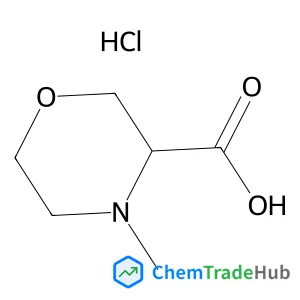
4-Methyl-3-morpholinecarboxylic acid hydrochloride (1:1)
CAS Number:
1240518-90-4
Molecular Formula:
C6H12ClNO3
Recommended Suppliers





Disclaimer
This page provides academic journal information for reference and research purposes only. We are not affiliated with any journal publishers and do not handle publication submissions. For publication-related inquiries, please contact the respective journal publishers directly.
If you notice any inaccuracies in the information displayed, please contact us at support@chemtradehub.com. We will promptly review and address your concerns.